



Source: Al-Wafd Newspaper
Prof. Dr. Ali Mohammed Al-Khouri
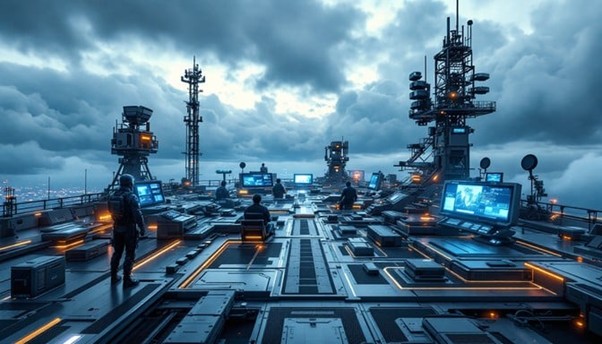
The Middle East has witnessed unprecedented shifts in the nature of conflicts in recent years, with technology becoming a decisive factor in determining the balance of power and the ability to sustain combat. Modern warfare is no longer limited to traditional military confrontations; it has become an advanced testing ground for artificial intelligence systems, drones, cyberattacks, and integrated defense systems. These transformations hold profound lessons that Arab states can utilize to develop their defense and technological systems and build a more independent, secure, and advanced future.
Precision weapons and the transformation of the operational superiority philosophy
Conflicts demonstrate the increasing reliance on precision weapons to target military sites and critical infrastructure, in an attempt to achieve operational superiority while minimizing civilian casualties in complex environments. While this objective has not always been achieved, experience has fostered a growing awareness of the importance of developing indigenous capabilities to understand the mechanisms of these defensive and offensive systems, whether for local production or for building systems capable of effectively countering them.
Drones and the Open Skies Revolution
Amid these developments, drones have emerged as a symbol of the transformation in the nature of warfare. They are no longer the exclusive domain of major armies, but have become accessible to multiple actors, some of them non-state, who are able to use them at a low cost to cripple sophisticated and expensive defense systems.
This reality compels the Arab world to invest systematically in research and development of unmanned aerial vehicle (UAV) systems, whether for reconnaissance and intelligence purposes or for carrying out precision missions. It also opens up vast opportunities for civilian applications, such as monitoring agricultural crops, managing environmental disasters, and overseeing critical infrastructure.
Cyberspace as the new battleground
In parallel, cyber warfare has become a cornerstone of modern conflicts. Attacks on infrastructure are no longer limited to missiles or explosives; electronic code has become an equally lethal weapon. These confrontations have highlighted the importance of building digital protection systems for national infrastructure, including energy, water, and communications, along with the necessity of establishing rapid response teams for attacks and developing human capabilities capable of defending in the complex and ever-changing cyberspace.
Artificial intelligence and digital minds managing conflicts
Artificial intelligence has also established itself as a hidden driver in conflict management, data analysis, and decision-making. Modern missile defense systems are becoming more accurate thanks to machine learning algorithms, and intelligence analysis increasingly relies on intelligent models capable of processing massive amounts of data in moments. From this perspective, Arab states can transform these experiences into opportunities for advancement in various civilian sectors, from managing smart cities to developing education and healthcare systems based on big data analytics.
Air defenses against multiple threats
The unfolding events also highlight the need to build air and missile defense systems capable of countering a diverse range of threats, from short-range missiles to swarms of small drones. This requires investment in new technologies such as ground-penetrating radar systems for tunnel detection, and the development of integrated strategies that combine technological capabilities with specialized field training, creating flexible defense systems adaptable to future threats.
Information warfare in the battle for narrative and control of consciousness
In the information sphere, controlling the media narrative and digital content has become part of the battlefield itself. While wars are fought with weapons, they also rely on the images and information disseminated through digital platforms. This necessitates building collective digital awareness and developing national strategies that enable societies to distinguish between accurate information and misleading propaganda, and to utilize digital tools in service of truth and the national vision.
technological independence
To transform these lessons into opportunities for structural development, the Arab world must shift from being a consumer to a producer and developer. This will only be achieved by allocating clear budgets for scientific research, localizing technology industries, and building strategic partnerships with global research centers and companies, enabling knowledge transfer and the development of an independent industrial base. Investing in quality education in science, engineering, and technology is the cornerstone for building a new generation of scientists and innovators capable of leading the coming transformation.
Knowledge is the most important weapon in the new balance of power.
This historical juncture presents the region with a crucial choice: either to remain trapped in a cycle of dependency, or to embark on building a future based on innovation, knowledge, and the ability to adapt rapidly to change. The undeniable truth is that history will not forgive societies that merely watch from the sidelines while others forge their own power.
Perhaps what the region needs most today is the understanding that power in the 21st century is measured by the ability to control data, generate knowledge, and harness technology to serve humanity, security, and stability. Clearly, the future belongs to those who possess the ability to strategically guide technology and utilize it to protect their interests and build their progress.