




Cairo
Source: Al-Wafd Newspaper
Prof. Dr. Ali Mohammed Al-Khouri
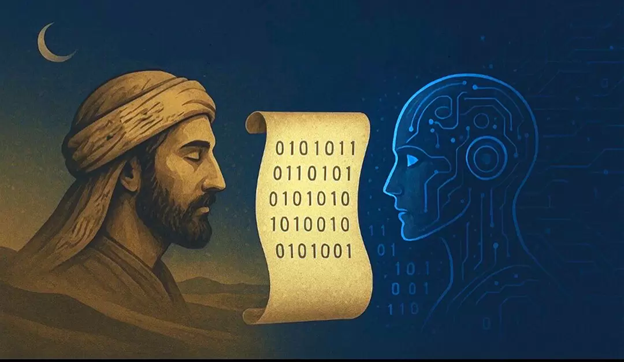
Arab culture today stands at the threshold of a new historical phase, where cultural conflict is no longer merely a symbolic competition over meanings and values, but has become an integral part of the deep structure of the global economy based on knowledge, data, and artificial intelligence. In a world where algorithms control the flow of consciousness and technology reshapes collective perception, Arab culture faces an existential challenge: its ability to redefine itself within the new global knowledge system.
Cultural roots and the legacy of renewal
From its very beginnings, Arab culture was not merely a linguistic or aesthetic system, but a comprehensive civilizational project that successfully blended rationality and spirituality, text and science, existential contemplation and scientific experimentation. This creative duality is what made Arab-Islamic civilization, at its zenith, a global center for the generation and dissemination of knowledge, and made the Arabic language a tool for shaping consciousness and transmitting and exchanging knowledge across cultures. However, this historical legacy cannot be a guarantee in itself; rather, it must be transformed into a renewable intellectual force that can adapt to the current technological shift without losing its ethical compass.
The digital age and market dominance over consciousness
The digital age, with all its promises of openness, is at its core a highly centralized economic and political system that reproduces a new hegemony under the guise of technology. The transnational corporations that control the infrastructure of the internet and artificial intelligence do not only control markets, but also meanings and concepts. Here, the absence of Arab culture from the spaces of knowledge and technological production becomes a matter of sovereignty. The loss of control over content and the excessive reliance on foreign platforms implicitly mean accepting that Arab collective memory is managed from the outside, and that its self-image is reshaped according to the logic of the market, not the logic of identity.
Structural challenges facing cultural renaissance
The challenge here lies not in the language itself, but in the system that encompasses it. The absence of educational policies that keep pace with the digital transformation, and the marginalization of cultural industries in economic plans, are emptying culture of its productive content. In the age of the digital economy, cultural power is shifting from guarding memory to possessing the keys to creating and directing meaning. Therefore, the future of Arab culture depends on its ability to contribute to the creation of new thought that springs from its own identity and history, rather than merely repeating what is said in other cultures.
Digitalization and the cultural economy
Despite its severity, this crisis opens a new horizon that could pave the way for redrawing the map of Arab presence. Digitalization, if employed thoughtfully, can become more than just a means of preserving memory and heritage; it can transform into a project for reviving Arab consciousness and renewing its role in the world. At that point, Arabic content can become a genuine source of value in the global creative economy and a pillar of the knowledge-based economy.
Artificial intelligence, for example, can become a tool for understanding heritage, discovering its underlying intellectual structures, and reconnecting the past with the questions of the present. It does not threaten heritage but rather provides new tools for interpreting and reclaiming it. However, this will only be achieved through parallel intellectual and economic investments that view culture as a strategic resource no less important than energy or technology, considering it a cornerstone of sovereignty in the global knowledge economy.
The Arab digital landscape reveals a striking paradox: Arabic content on the internet constitutes no more than 5% of total global content, despite Arabs comprising over 400 million users. This gap represents an untapped economic and intellectual opportunity, which can be transformed into a vast investment sector by supporting Arabic content platforms, developing artificial intelligence applications for linguistics, and expanding e-learning, translation, podcasting, and digital publishing. All of this constitutes a promising market capable of generating new job opportunities for young people and elevating the Arab presence in the global creative economy.
Digitalization can also make Arab culture tradable and commercially viable. An idea, story, or heritage text can be transformed into a digital product—an e-book, an educational platform, or a virtual experience—that carries cultural value while simultaneously generating economic returns. In this way, culture becomes a digital resource ripe for investment, just as South Korea successfully transformed its language and arts into a music and film industry that now forms one of the pillars of its economy.
soft power
In the modern understanding of political economy, soft power is no longer merely a symbolic tool, but has become a tangible source of trust and influence, measurable by the tourism, educational, and investment returns attracted by a strong cultural discourse. When managed with an economic mindset, culture not only shapes consciousness but also generates economic value and international standing, becoming a source of influence comparable in impact to physical capital.
In a postmodern world, where culture, economics, and politics are intertwined in a single web, nations can no longer preserve their cultures by merely glorifying past achievements and dwelling on bygone triumphs. True protection lies in intelligently engaging with the flow of history, not in withdrawing from it. If Western technological hegemony has redefined the concepts of sovereignty and influence, then Arab culture is called upon to respond with a knowledge-based approach, one that invests in linguistic artificial intelligence systems, develops digital cultural industries, and supports scientific research grounded in humanistic values.
The human dimension of Arab culture
But the fundamental question remains: what can Arab culture offer the world in the age of artificial intelligence? Perhaps its future role lies in providing an alternative philosophical vision that transcends the excessive instrumentalism that governs the current technological system, and restores balance between material progress and the human dimension in the course of development.
In a world dominated by materialism since the Industrial Revolution, where global economic concepts have been reduced to measures of profit, production, and consumption, Arab cultural logic can reconnect technology and humanity. Arab thought, with its inherent values and spirituality, is capable of providing the digital age with its lost ethical dimension, integrating technological advancement with a spirit of responsibility and meaning, so that humanity once again becomes the focus of all knowledge and the ultimate goal of all civilization.
Culture and Digital Sovereignty
Perhaps it is time to approach Arab culture as a field for building a new presence in the world. In a world where algorithms control the economy and social media platforms reshape consciousness and behavior, the absence of a cultural stance causes nations to lose their position of influence and their significance in the collective consciousness.
Therefore, the real challenge facing the Arab world lies in developing a clear vision that defines how to utilize technology to build intellectual and economic strength. Since culture is a crucial element in the equation of development and international competitiveness, the future strength of Arab culture will depend on its ability to generate new thought that links innovation with responsibility, and progress with equal opportunities and rights. When investment in language, education, and cultural content becomes an integral part of national policies, Arab culture can
 transform into an actor capable of engaging with artificial intelligence and participating in guiding its ethical paths and humanitarian goals.