



Abu Dhabi
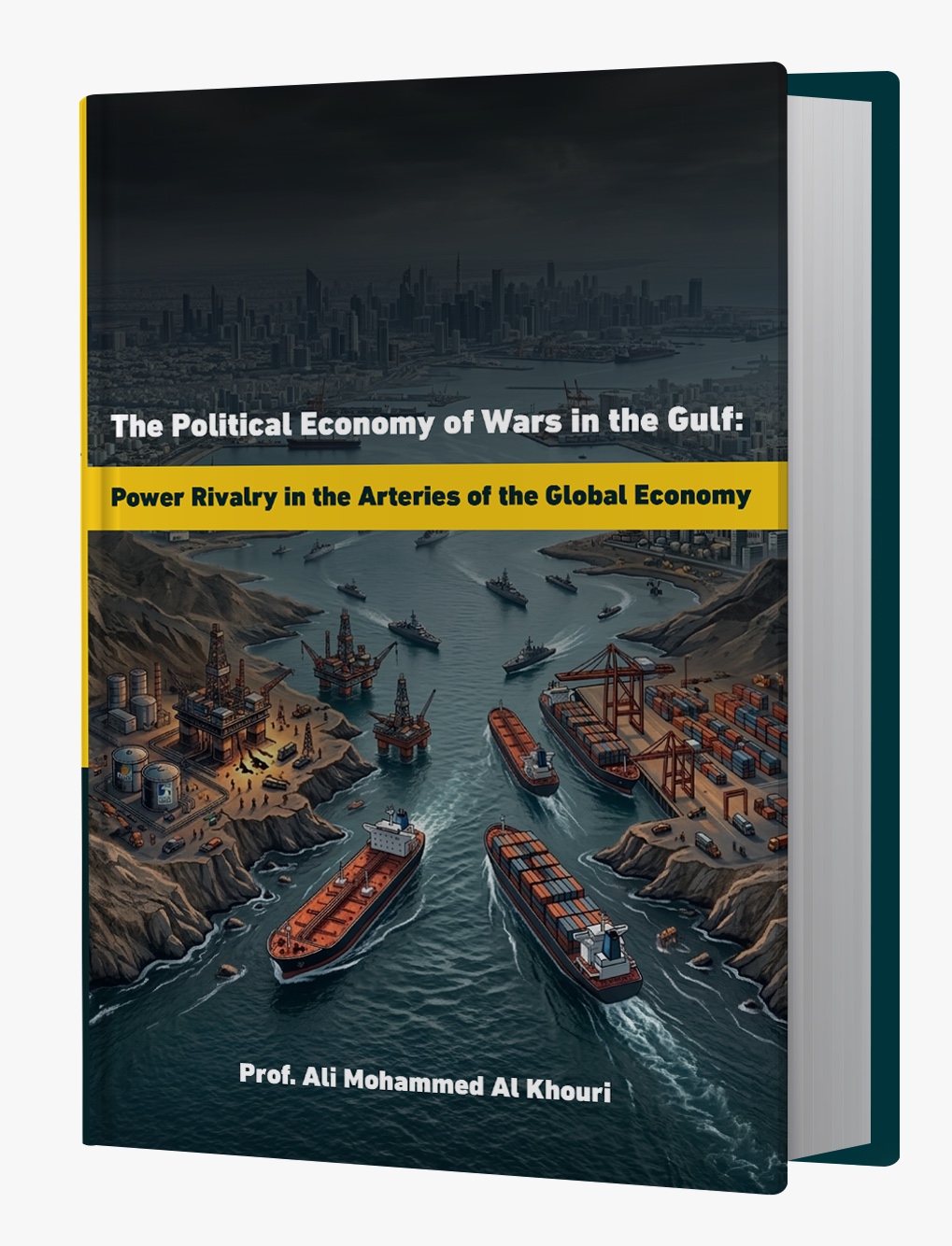
The Arab Federation for Digital Economy has published a new study titled “The Political Economy of Wars in the Gulf: A Struggle for Influence over the Arteries of the Global Economy.” The study examines the geopolitical and economic dimensions of the military escalation in the Gulf region and its implications for global energy markets, international trade, and the international economic system.
The study provides an in-depth analytical perspective on the transformations unfolding in the global economy amid rising tensions in the Gulf, a region that represents one of the most strategic hubs for energy supplies and global trade networks. These dynamics carry direct implications for global economic stability.
The study highlights that the escalation between the United States and Iran since February 2026 reflects a broader conflict that extends beyond its immediate military dimension to encompass competition over global energy resources, international trade routes, and the balance of power within the international system.
According to the study, issued by the Arab Center for Learning and Future Studies at the Arab Federation for Digital Economy, the Gulf occupies a central position in the global economy. Approximately 20 million barrels of oil pass daily through the Strait of Hormuz—equivalent to around 20% of global oil trade—alongside roughly 20% of global liquefied natural gas trade. More than 80% of these energy supplies are directed toward major Asian economies, underscoring the scale of global dependence on the region’s stability.
The study further notes that geopolitical tensions are rapidly reflected in global markets. During the recent escalation, oil prices recorded significant increases, with Brent crude rising from a range of USD 70–75 per barrel to levels reaching USD 115–119 in some trading sessions, driven by concerns over potential supply disruptions.
It also emphasizes that the interests associated with the ongoing conflict extend beyond the immediate confrontation to include control over global energy supplies, dominance of maritime trade routes, and influence over oil prices and the international economy. These dynamics are further reinforced by increased demand for defense industries and the continued pricing of oil in US dollars.
The report underlines that the impact of crises in the Gulf will not be confined to energy markets alone, but will also extend to maritime transport costs, commercial insurance, and global supply chains. This is expected to lead to higher costs of international trade and increased inflationary pressures on the global economy.
The study outlines four potential scenarios for the evolution of the crisis. These include the possible closure of the Strait of Hormuz and the resulting major disruption to energy supplies and sharp price increases; a scenario of limited or intermittent conflict leading to continued market volatility and elevated maritime risks; a scenario of prolonged disruption in shipping and energy flows, resulting in higher transport and insurance costs; and a diplomatic containment scenario that could reduce tensions and support a gradual return to relative stability in energy markets.
The study concludes with a set of policy recommendations for decision-makers. These focus on activating political and diplomatic pathways to de-escalate tensions and enhance Arab coordination, alongside economic policies aimed at strengthening infrastructure resilience and supply chains, managing food security and diversifying sources, maintaining financial stability, developing local economic capabilities, and safeguarding the investment environment.
It also calls for the development of specialized policies in trade and maritime security through managing shipping and marine insurance risks and establishing early warning systems. In addition, the study emphasizes the importance of building digital capabilities to ensure the continuity of critical services, enhancing cybersecurity readiness, and improving mechanisms for economic communication and information management during crises.
Study link: https://arab-digital-economy.org/?p=26060&lang=en