



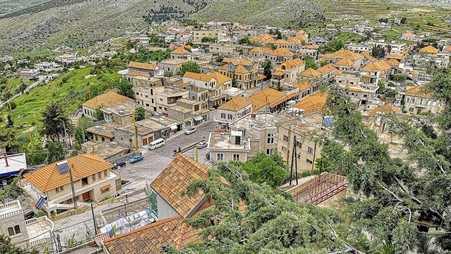
Source: Al-Wafd Newspaper
Prof. Dr. Ali Mohammed Al-Khouri
The Arab countryside is undergoing a profound restructuring, driven by a number of emerging factors; from changes in the economic structure and the decline in the viability of traditional agriculture, to social and demographic transformations, and environmental pressures resulting from climate change.
This phase is fueled by structural transformations that include changes in production and work patterns, the expansion of modern technologies, and the evolving relationship between rural areas, markets, and urban centers. These regions, which for decades relied on agriculture as their primary source of income, now face increasing demands to broaden their economic base while preserving the cultural heritage that forms the foundation of local communities’ identity.
International experience shows that directing investment towards architectural heritage and traditional crafts can create specialized economic activities based on cultural and environmental tourism and related services. When villages of historical value are developed and prepared to become tourist destinations, new opportunities open up in local sectors, thus broadening the income base and creating additional employment opportunities for residents.
Organized tourism programs also make it possible to link historical sites with the natural landscape and the lives of local communities, giving rural areas a clear position within the national economic structure, going beyond dependence on them for traditional agricultural production, but rather as a system of knowledge and cultural services.
This is not limited to tourism activities. The presence of agricultural products of special quality, and handicrafts with market value, allows for the creation of small and medium-sized enterprises capable of competing if supported by a modern organizational structure that includes training, quality development, and linking producers to effective marketing networks.
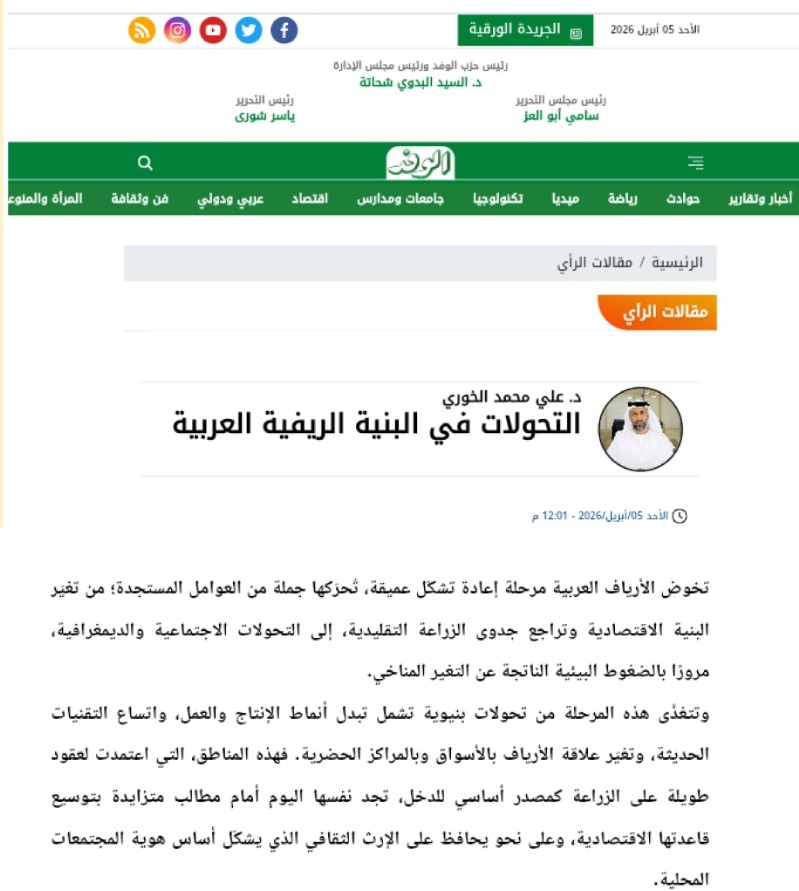
In many countries, this type of project has contributed to raising the income level of rural families and empowering communities to manage their economic resources more independently. Furthermore, the introduction of renewable energy as an investment sector opens up untapped potential for rural Arab areas, particularly in regions with high levels of solar radiation and vast areas that can be planned according to clear standards.
structural gaps
Despite these potentials, challenges remain, foremost among them the limited infrastructure in many Arab countries. Poor roads, the lack of reliable water and sanitation networks in villages, and inadequate health and education services create a clear gap between cities and rural areas.
This gap leads to continuous migration, causing villages to lose their young populations, communities to lose a wealth of skills accumulated over a long history, and their capacity to develop stable productive projects to diminish. Furthermore, the lack of investment in non-agricultural sectors within rural areas perpetuates their reliance on limited economic models that cannot keep pace with market changes or absorb modern technologies.
Regional development studies indicate that improving conditions in rural areas requires building an integrated service network that guarantees acceptable levels of education, healthcare, and transportation. Modern rural schools are essential for integrating villagers into the modern economy, and health centers that utilize telemedicine technologies can bridge the health gap with cities. Upgrading roads also facilitates the movement of goods and connects villages to markets, leading to improved productivity and encouraging investment in these areas.
local awareness
Furthermore, the participation of local communities in development project decisions is crucial for the success of any economic plan. The local community possesses in-depth knowledge of resources, the nature of the land, and the challenges it faces. When residents are given a genuine role in setting priorities, more realistic projects can be developed, tailored to the region’s capabilities and characteristics. Supporting rural households is also essential for expanding the production base, as experience shows that small-scale projects launched by these households form a solid foundation for local economies.
The need to protect intangible heritage extends to traditional arts, ancient agricultural practices, and local building methods. This heritage is increasingly important because it forms part of collective memory and can be integrated into creative industries and knowledge-based tourism markets. Several countries have achieved remarkable success by reintroducing elements of their social heritage as marketable cultural products within frameworks that preserve their value and authenticity.
Balance of development investments
This situation opens the way for a broader redefinition of the economic role of rural Arab areas, one based on a more equitable distribution of opportunities and investments between cities and rural regions. Sustainable development is not based on a strong center and weak peripheries, but rather on an integrated system where roles are balanced, making rural areas partners in absorbing and alleviating pressure on cities, and in providing natural and cultural resources that cannot be produced elsewhere. Rural areas have the potential to become a vital component of the new economy if managed with a vision that combines heritage preservation, technological advancement, natural resource investment, and the empowerment of local communities.
By building this vision, the Arab countryside becomes part of a development project capable of addressing regional challenges, from climate change to shifts in the global market, and ultimately to reshaping patterns of production and work. It is quite possible for rural areas to transform into regions with a defined role within the national economy, moving from a state of isolation to one where their economic role and function are redefined.
But in order for the countryside to become an active element in building an Arab future based on knowledge, production, and the utilization of its land, environmental and cultural capital resources, a clear development framework is necessary that improves the use of potential and gives the place new value within the economic map of the region.