



Introduction: The Features of a New Era
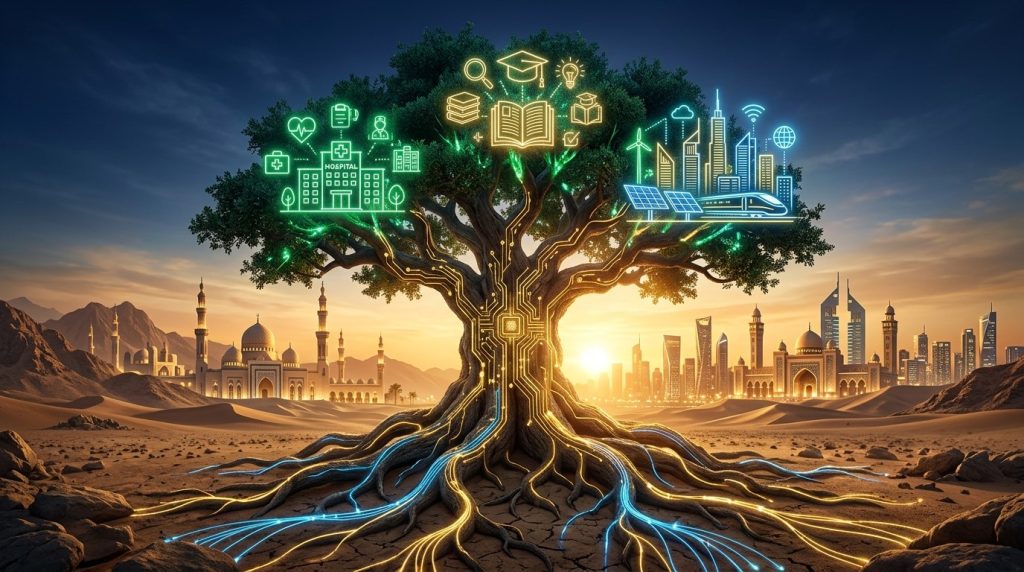
Today, the world is witnessing a profound transformation that is reshaping the concepts of wealth and value, where material resources alone are no longer the primary measure of economic power. In the era of the Fourth Industrial Revolution, data, technology, and hyper-connectivity have become the pillars of new value creation. The traditional economy, once reliant on oil, minerals, and agriculture, can no longer independently deliver the required growth. Instead, the knowledge-based and digital economy has become the fastest driver of development and global competitiveness.
For the Arab world—home to more than 400 million people, with youth representing over 60% of the population—the digital economy represents a historic opportunity to accelerate economic growth, diversify income sources, and empower future generations to compete in the global job market. However, this significant opportunity is accompanied by a range of structural, regulatory, and technological challenges that could hinder this transformation if not addressed with strategic awareness and decisive policymaking.
What is the Digital Economy?
The digital economy refers to the economic system that relies on advanced digital technologies as the foundation for producing, distributing, and consuming goods and services. It goes beyond simply using the internet, extending to more advanced technologies such as artificial intelligence, cloud computing, the Internet of Things (IoT), and blockchain.
Key Components of the Digital Economy
- E-commerce: Online platforms for buying and selling goods and services.
- Digital Financial Services (FinTech): Digital wallets, online transfers, and crowdfunding platforms.
- Artificial Intelligence and Big Data Analytics: Leveraging data to improve efficiency and decision-making.
- Digital Infrastructure: Telecommunications networks, data centers, and cloud computing systems.
- Remote Education and Work: Platforms redefining the concept of classrooms and workplaces.
Promising Opportunities in the Arab Digital Economy
Diversifying Sources of Income
With many Arab economies still heavily reliant on oil and gas revenues, the digital economy represents a strategic pillar for economic diversification. Countries such as the UAE and Saudi Arabia have already begun advancing this transition.
Creating Job Opportunities for Youth
Digital transformation opens unprecedented opportunities in programming, app development, e-commerce, and digital marketing. These jobs do not necessarily require a fixed geographic location, enabling Arab youth to work remotely for global markets.
Enhancing Financial Inclusion
Digital financial services enable large segments of society—especially those without access to traditional banking—to participate in the formal economy, manage savings, and access financing for small businesses.
Improving Government Efficiency
Digital governments (E-Government) reduce bureaucracy, limit corruption, and increase transparency while saving time and effort for citizens and investors. This significantly enhances the attractiveness of the business environment.
Strengthening Global Competitiveness
Arab countries that invest in innovation and digital infrastructure can transform into regional technology hubs capable of attracting foreign investment and global companies.
Fastest-Growing Sectors
- E-commerce: Saudi Arabia, the UAE, and Egypt rank among the fastest-growing markets globally, with continued growth expected.
- Digital Financial Services: Rapid expansion of mobile payments, digital wallets, and crowdfunding platforms across the region.
- Digital Education: Online learning platforms experienced significant growth after the COVID-19 pandemic and continue to gain popularity.
- Digital Healthcare: Telemedicine and remote healthcare applications are expanding rapidly, particularly in Gulf countries.
Challenges Facing the Arab Digital Economy
Uneven Digital Infrastructure
While Gulf countries possess advanced 5G telecommunications networks, other Arab countries face weaker infrastructure and higher internet costs, creating a digital divide across the region.
Incomplete Regulatory Frameworks
The absence of unified regulations regarding data protection, privacy, and intellectual property slows the growth of the digital economy and undermines trust among users and investors.
Social Digital Divide
Differences in access to technology between urban and rural areas—and among social groups—exclude many people from digital economy opportunities.
Lack of Digital Skills
Many Arab universities still emphasize traditional academic disciplines, while the job market increasingly demands skills in programming, data analytics, artificial intelligence, and cybersecurity.
Cybersecurity Challenges
The growing number of cyberattacks on public and private institutions raises concerns about trust in digital transactions, highlighting the need for greater investment in protecting digital systems and data.
Leading Arab Initiatives
United Arab Emirates
The UAE launched a Digital Economy Strategy aiming to increase the digital economy’s contribution to 20% of non-oil GDP by 2031, supported by major investments in artificial intelligence and smart cities.
Saudi Arabia
Through Vision 2030, the Kingdom is investing heavily in digital infrastructure, developing the FinTech sector, and establishing major technology companies such as Ma’aden and Aramco Digital.
Egypt
The Digital Egypt program aims to expand e-government services, strengthen digital capabilities, and develop the Knowledge City in the New Administrative Capital.
Qatar
Qatar is investing in smart cities and digital infrastructure to prepare for a post-oil economy, with strong focus on research and technological innovation.
Strategies to Strengthen the Digital Economy
Investing in Digital Infrastructure
Expanding 5G networks, building large data centers, and providing competitive cloud computing services.
Developing Advanced Regulations
Introducing modern laws to protect data privacy, intellectual property, e-commerce, and digital financial services.
Building Human Capital
Integrating programming and artificial intelligence into educational curricula and launching intensive training programs in partnership with major technology companies.
Supporting Digital Entrepreneurship
Establishing technology incubators and accelerators while providing accessible funding for startups in emerging innovation sectors.
Strengthening Regional Cooperation
Creating unified Arab platforms for e-commerce and digital financial services while encouraging knowledge exchange to build an integrated Arab digital market.
The Future of the Arab Digital Economy by 2035
- Greater Contribution to GDP: The digital economy’s share in leading Arab economies could exceed 15–20%, creating millions of new jobs.
- Regional Innovation Hubs: The UAE and Saudi Arabia are well positioned to lead in AI, FinTech, and cloud services.
- Greater Global Integration: Arab digital companies will increasingly integrate into global digital value chains and export technological services internationally.
- Sustainability Gains: Digital transformation will help reduce carbon emissions through paperless transactions, remote work, and reduced travel.
Conclusion
The digital economy in the Arab world is not merely one option among many development paths—it is a strategic necessity for shifting from reliance on natural resources to a knowledge-driven economy built on technology and innovation. Opportunities are vast, and human potential is abundant. However, the real challenge lies in responding swiftly to structural and regulatory barriers.
The equation is clear: bold investment in digital infrastructure, high-quality education, and advanced regulatory frameworks is the only path to transforming the digital economy from aspiration into a genuine engine of sustainable development across the region. The pioneering initiatives currently emerging in several Arab countries represent a promising beginning—but the journey toward comprehensive digital transformation is still long.
Source: This document does not rely on a single source; it represents a general compilation and analysis of the Arab digital economy landscape based on various reports and news coverage from Al Ittihad.