



Source: Al-Wafd Newspaper
Prof. Dr. Ali Mohammed Al-Khouri
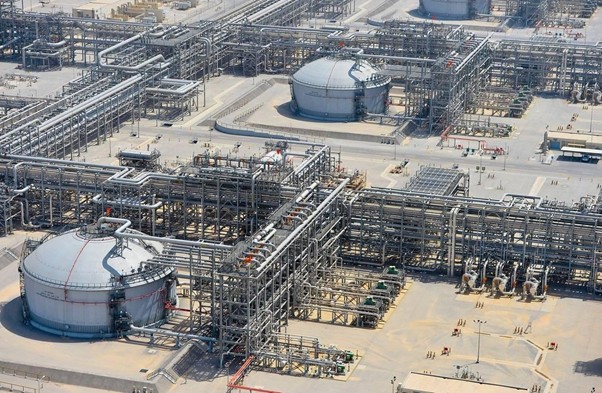
From a political economy perspective, the Arab region presents a telling example of the disparity between available wealth and effective power. It is one of the world’s richest regions in terms of natural resources, yet it has been unable to transform into a development hub capable of dictating terms within the international economic system. Arab states possess over 43% of the world’s proven oil reserves and supply nearly a third of global oil, making them indispensable players in traditional energy markets. However, this significant influence has not yet translated into a development model capable of withstanding the post-hydrocarbon transformation, nor into a strategic positioning that aligns with the global shift towards a low-carbon, highly digital economy.
Looking at the resource map more comprehensively reveals that oil and gas are just one layer of a much more diverse wealth. In addition to the hydrocarbon fields of the Gulf, Iraq, Libya, and Algeria, there are belts of strategic minerals in Saudi Arabia, Morocco, Mauritania, Egypt, and other countries, including gold, iron, phosphates, copper, bauxite, and uranium—elements that are central to modern industries, from fertilizers to batteries and new energy technologies.
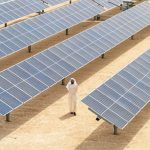
In parallel, the region boasts one of the highest levels of solar radiation in the world. Specialized reports indicate that vast areas in the Middle East and North Africa experience direct solar radiation exceeding 6.4 kilowatt-hours per square meter daily, making them among the most suitable globally for concentrated solar power technologies. The International Energy Agency (IEA) suggests that the region has the potential to increase its current renewable energy capacity by nearly four and a half times. Geopolitically, the Arab world lies at the heart of maritime and land trade networks, connecting three continents and vital energy and commodity routes, granting it immense logistical and competitive advantages.
However, this bright picture masks a deep structural vulnerability, manifested in water scarcity and climate change. The region is home to approximately five percent of the world’s population, yet possesses only about one percent of global renewable water resources. The average per capita share of renewable water falls below 500 cubic meters annually in most countries, far below the water poverty line. As the effects of global warming accelerate, international reports warn of a potential 30 percent decrease in water availability in the region by mid-century, and a decline in agricultural productivity of between 30 and 60 percent. This will exacerbate food insecurity in a region heavily reliant on food imports. Thus, energy abundance and water scarcity intersect in a way that makes resource management an existential, not merely an economic, issue.
Demographically, the region faces what can be described as a “historic demographic window of opportunity.” United Nations and regional statistics indicate that nearly 60 percent of the Arab world’s population is under 30 years old, and that the 15-29 age group represents approximately 30 percent of the total population—more than 110 million young men and women. In development theories, this young demographic could become a major driver of economic transformation if integrated into a knowledge-based and innovation-driven economy, but it could also become a source of instability if it remains outside modern production processes and global value chains.
These paradoxes place the region at the heart of both classical and contemporary debates in political economy, from the “resource dilemma” to the “rentier state” and “structural dependency.” The economic history of several Arab states points to a rentier model, based on using oil and gas revenues to finance distributive social contracts while postponing structural reforms in production, education, and administration. This model appeared attractive during periods of high energy prices, but it left economies vulnerable to price shocks, kept non-oil sectors less competitive, and delayed the transition from a “raw material supplier” to an “industrial player” involved in complex value chains.
At the same time, the weakness of Arab economic integration reveals another aspect of the inadequacy of utilizing resources as a tool of collective power. Despite decades of initiatives, intra-Arab trade accounts for only about fourteen percent of total Arab exports, while non-oil intra-Arab trade represents nearly a third of non-hydrocarbon trade. This means that Arab raw materials and industrial outputs flow primarily to external production and consumption centers, while the Arab market remains unable to transform into an integrated space capable of absorbing major industries and forming a powerful negotiating bloc vis-à-vis other economic powers.
Given this complex landscape, discussions about the effective exploitation of Arab resources become more of a strategic option for repositioning the region within the international system than mere internal development debates. The shift from a rentier economy to a power-engineering approach necessitates a multifaceted redesign of the economic model. This begins with developing smart industrial policies that link the traditional energy sector with the global transition to carbon neutrality by localizing a broader range of energy-related industries, from advanced petrochemicals to green hydrogen and carbon capture technologies. It also requires building a modern mining system that views critical minerals as a strategic lever for a new position on the green industries map, rather than simply serving as a primary resource.
This is complemented by a redefinition of the state’s role in the economy, shifting it from a rentier financier to a strategic planner and facilitator of a competitive economy based on a productive, rather than a consumer-driven, private sector. This transformation necessitates profound reforms in the education and training infrastructure and labor market institutions, directing the energies of young people toward advanced technology and industrial sectors and the digital economy, instead of leaving them trapped in low-productivity jobs or outside the labor market altogether. In this context, investment in digital infrastructure, scientific research, and innovation becomes essential for relocating value within Arab economies, rather than allowing it to continue leaking abroad through imports of technology and high-knowledge services.
Conversely, the issue of resource investment cannot be separated from the nature and requirements of governance. Regional conflicts, political tensions, and bureaucratic inefficiencies in several countries all undermine the effectiveness of any sound resource policy. Furthermore, water scarcity, land degradation, and the worsening effects of climate change make environmental sustainability an integral part of the national security equation. Therefore, reforming resource management institutions, enshrining transparency in energy and mining contracts, and ensuring a more equitable distribution of revenues are essential approaches to linking wealth to stability and to protecting the region from external or internal shocks.
In a broader context, these challenges and opportunities raise questions for policymakers in the region about whether Arab wealth will remain merely a gateway to a “dependent economy” that adapts to waves of change coming from abroad, or whether it can become the foundation for building a different development model that links natural resources, a young demographic, and a unique geographic location. What must be recognized is that the global economy is entering a new phase, one in which the parameters of power are being redefined around who possesses green technology, who controls supply chains, and who produces knowledge.
With this understanding, the Arab region can redirect its wealth towards building self-reliant power capable of influencing global decision-making processes, provided that this is accompanied by a political will that restructures the economy and directs investments towards building strong institutions, developing human capital, and linking the economy to new global opportunities.
The profound transformation the world is experiencing today makes rethinking Arab wealth an intellectual and political imperative. The issue is not merely about improving resource investment mechanisms, but about the ability to reposition resources as the foundation for building a different economic future. When Arab states succeed in harnessing this transformation and linking their natural resources with their human capital, Arab economies can evolve into a robust and sustainable civilization capable of continuity and renewal.