



Cairo
Source: Al-Wafd Newspaper
Prof. Dr. Ali Mohammed Al-Khouri
Today, the tourism sector appears to be one of the most effective indicators of the Arab world’s position in the global economy, as it integrates various sectors such as services, trade, culture, and investment. The World Travel & Tourism Council estimates that travel and tourism’s contribution to the Middle East’s GDP approached $460 billion in 2023, representing growth of over 25% compared to the previous year, with the sector supporting approximately 7.7 million jobs. These figures reflect the size and strength of the tourism sector in the region despite successive economic and geopolitical crises.
Data from the World Tourism Organization also shows that the Middle East was the only region in the world to exceed pre-pandemic visitor numbers during 2023, and then continued to progress in 2024 with an increase in tourist arrivals of more than 20% compared to 2019, confirming that the region has become one of the engines of global tourism.
However, these figures cannot be interpreted in isolation from the complex challenges facing the Arab tourism landscape. Inflationary crises, rising energy and food costs, and economic slowdowns in key markets such as Europe and some Asian countries are all factors that put pressure on tourists’ purchasing power while simultaneously increasing operating costs for airlines, hotels, and tourism supply chains.
The continued hotspots of tension and conflict in some areas of the Middle East and North Africa, along with tensions in the vital sea lanes of the Red Sea and the Gulf, are directly reflected in the mental image of the region in the global media and in the risk assessments adopted by travel and insurance companies.
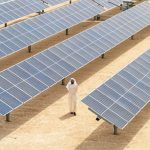
In addition, climate change is adding new dimensions to the equation of Arab tourism. Rising temperatures, increasing droughts, and rising sea levels all threaten the future of coastal and ecotourism in countries like Egypt, Tunisia, and Morocco, while sandstorms and flash floods are making a number of historical and natural sites more vulnerable. Some countries, such as Morocco, have begun to restructure their tourism maps by diversifying domestic destinations, such as mountain and cultural tourism, alongside beach tourism. In 2024, Morocco recorded a record number of over 15.9 million visitors in eleven months, with the sector contributing nearly 7% to its GDP, according to official estimates.
On the digital level, the gap is clearly evident between countries that have been ahead in building integrated systems for online booking, data analytics, and marketing across global platforms, and others whose digital presence remains limited. This weakens their ability to reach the modern tourist who relies on integrated digital applications and experiences in their decision-making. Conversely, artificial intelligence and big data analytics enable the design of more precise pricing policies, the targeting of promotional campaigns, and the more efficient management of energy and transportation within tourist destinations. This means that investment in digital infrastructure has become an integral component of a destination’s appeal and a complement to strategic infrastructure.
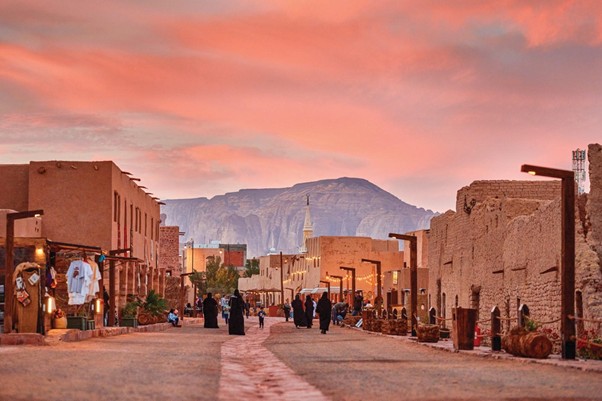
Despite these overlapping challenges, the prospects for developing Arab tourism appear promising when viewed in light of the region’s structural advantages. The Arab world boasts a rich network of tourist sites and destinations that attract hundreds of millions of visitors annually. Saudi Arabia’s tourism transformation has been a notable example in this regard, with the number of visitors to the Kingdom exceeding 100 million in 2023, according to UN estimates. This is further bolstered by investments exceeding one trillion dollars in massive tourism, cultural, and maritime projects under Vision 2030, positioning the Kingdom as a key player in shaping the regional tourism landscape.
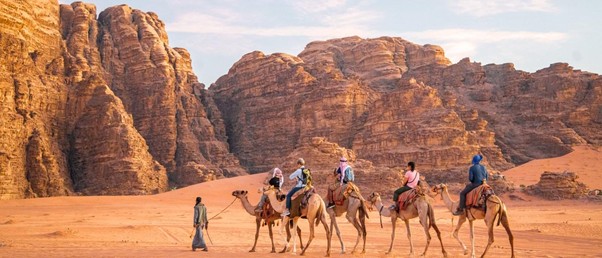
What the future of Arab tourism needs is a developmental vision based on diversification, not repetition. Expanding ecotourism, desert tourism, and rural tourism, while protecting natural resources, can create new tourism routes outside major cities and crowded beaches. Furthermore, developing the medical, educational, conference, and cultural tourism sectors, and linking them to robust medical and academic systems, will allow for year-round tourism rather than relying solely on traditional seasons. Simultaneously, investing in training and capacity building is crucial, as the tourist experience is ultimately determined as much by the quality of human interaction as by the quality of infrastructure.
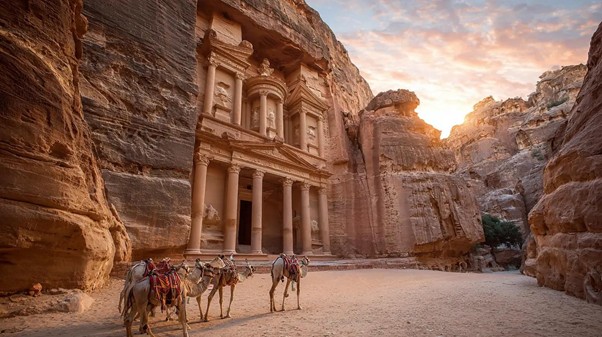
Arab integration in the tourism sector represents a key untapped resource. Developing more efficient regional transportation networks and implementing unified visa models or streamlined travel routes between Arab countries could transform the region into a single, multifaceted destination instead of remaining a collection of isolated destinations. Furthermore, designing cross-border tourism routes that connect ancient civilizations across the Levant and North Africa, or combine cultural, religious, and leisure tourism in multiple countries, could extend stays and increase average spending per tourist, as demonstrated by experiences in Europe and Latin America, which have shown their importance in creating greater added value.
All these transformations compel decision-makers in the region to view tourism as an integral part of the political economy of globalization, not merely a service sector. Tourism intersects with issues of security, investment, and global image; it is linked to the flow of capital, the movement of people and knowledge, and influences income levels and the position of cities within global networks. When tourism strategies are built on the foundations of environmental sustainability, the empowerment of local communities, and a balance between tourist appeal and the preservation of cultural identity, tourism transforms into a robust sector, paving the way for a new Arab role in the global service economy.
In general, the future of tourism in the Arab world seems to hinge on two key factors: first, the region’s success in overcoming its internal and external crises, and second, its ability to forge a more comprehensive vision for economic and social transformation at both the national and regional levels. If tourism becomes a tool for amplifying Arab cultural and intellectual presence on the international stage, a means of creating jobs and raising income levels for local communities, and a platform for developing infrastructure and digital technology, then the coming years could witness the Arab world transitioning from a state of fluctuating boom and bust to one of greater stability based on relatively high tourism rates. At that point, tourism will no longer be merely an economic activity, but rather an integral part of a development project that reconnects the Arab region with the world on a more balanced and equitable basis.