



Cairo
Source: Al-Wafd Newspaper
Prof. Dr. Ali Muhammad Al-Khouri
The global financial system is undergoing major transformations, reshaping centers of economic influence and capital flows. These transformations reflect the rise of new economic powers and the decline of the traditional structures that have governed financial movements since the end of the Cold War. Amid this changing landscape, Arab states, particularly those in the Gulf, appear well-positioned to move from the role of external financiers to that of central players in shaping the direction of the global financial system. This is based on their vast capital resources, their sovereign wealth funds—which have become among the largest globally—and their growing presence in international financial markets.
The strength of Arab capital is clearly demonstrated by the size of its sovereign wealth funds, which, according to international estimates, have exceeded $4 trillion. These funds, led by the Abu Dhabi Investment Authority, the Saudi Public Investment Fund, and the Kuwait Investment Authority, hold assets diversified across financial markets, technology, real estate, energy, and infrastructure sectors worldwide. Furthermore, the Gulf states benefit from financial surpluses generated by energy exports, making the region one of the world’s most significant sources of capital accumulation.
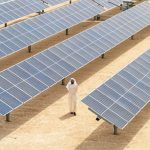
It is noteworthy that these countries are now reinvesting their investments and financial surpluses domestically and regionally in mega-projects that could reshape their economies and growth. They are investing at an accelerated pace in building smart cities, manufacturing industries, digital technologies, and future infrastructure, alongside supporting clean energy and innovation sectors. All of this is taking place within the framework of a declared strategic direction toward building productive and diversified economies with reduced dependence on oil.
This growing financial presence coincides with structural shifts in the global economy. The last two decades have witnessed the rise of new powers such as China, India, and Brazil, leading to a multipolar financial landscape that limits the West’s monopoly on setting the rules of the international financial game. Furthermore, the proliferation of modern financial technologies, the emergence of digital currencies, and the growing international trend toward reducing the dollar’s dominance in certain cross-border transactions have resulted in more flexible and diverse financial environments, albeit more complex and difficult to understand and regulate. These environments offer greater opportunities for countries and institutions to reposition themselves strategically and shift financial power from traditional to new hands.
However, these opportunities are countered by numerous challenges facing Arab economies as they seek to redefine their position within the global financial system. Political divisions among Arab states and weak regional economic integration limit their ability to negotiate as a unified financial bloc. Furthermore, reliance on oil as a primary source of wealth remains a factor that weakens their capacity to cope with fluctuating energy prices and changes in global demand. Added to this is the limited Arab influence within international financial institutions compared to major economic powers, which means that the formulation of global financial decisions remains largely beyond their direct reach. These challenges become even more complex when economic interests intersect with security considerations, particularly in a volatile international environment characterized by escalating geopolitical tensions and the reshaping of trade alliances.
However, Arab countries currently have a historic opportunity to forge a new path, one based on diversifying investments globally and redistributing capital within the Arab economy itself. This process can begin by shifting from traditional investments to technological and strategic investments, launching joint national digital currency programs similar to central bank digital currency experiments, and directing investments toward future-oriented sectors such as artificial intelligence, biotechnology, and renewable energy.
The Arab world can also invest its financial weight in building alternative regional financial institutions, parallel to existing models such as the Asian Development Bank or the New Development Bank of the BRICS countries, allowing financing to be directed towards infrastructure and development projects in the Global South, and giving Arab countries the opportunity to contribute to financing development projects with a dual strategic return; a rewarding financial return on the one hand, and a geopolitical and developmental return on the other.
Furthermore, Arab states can strengthen their global presence by building strategic partnerships with emerging powers in Asia, Africa, and Latin America, thereby reshaping the balance of economic power beyond the Western sphere. This approach will offer ample opportunities to reposition Arab capital within the global system, particularly if linked to national and regional plans for developing innovative industries and building local technology production capacity.
In general, the current moment presents Arab capital with an opportunity to play a pivotal role in reshaping the global financial system, provided this role is built upon a unified vision and policies that balance global openness with developing domestic capabilities and making smart, forward-looking investments. When Arab capital transforms into an institutional tool for knowledge and technology creation, rather than merely a repository of wealth, the Arab world will be able to move to a different position within the global economy—a position that will be taken into account in shaping the future map of financial influence.