




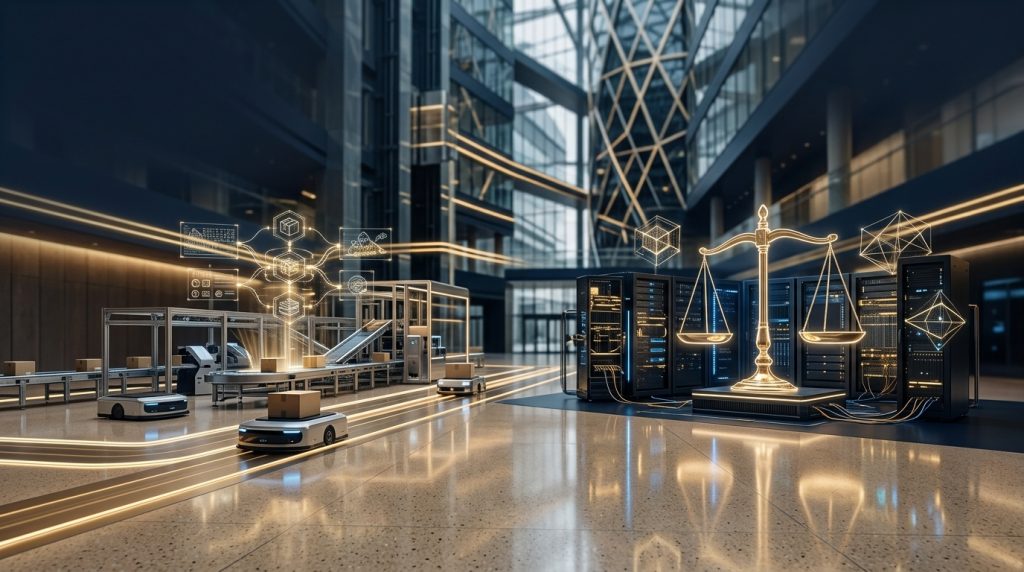
With the acceleration of the adoption of artificial intelligence in 2026, its effects are no longer limited to improving efficiency, but have gone beyond it to reshaping entire industry structures and tipping the balance of legal and regulatory risks. This radical shift is evident in the logistics and supply chain sector, where artificial intelligence has become a key driver of change and a source of unprecedented legal challenges.
Logistics: From operational cost to strategic shield
In 2026, logistics is no longer just a transport of goods, but a highly regulated technological sector. Companies today face the daunting task of offsetting the rising costs through the consistent use of technological innovations. Three major transformations have emerged that are reshaping this sector:
First, AI Agents bypasses the function of simple chatbots, independently managing complex supply chain cycles, making immediate decisions in emergencies, and improving route planning, taking into account carbon emission data. This development represents a critical turning point, as systems shift from recommendation tools to independent actors.
Cybersecurity has become a matter of economic survival, with ransomware attacks on logistics centers being the biggest operational risk in 2026. With the digitization of the entire supply chain, protecting systems has become a top priority.
Third: Cost pressures resulting from structural labor shortages and increasing the minimum wage and carbon-related shipping fees, companies are pushing to invest in artificial intelligence as a solution to compensate for these costs.
Legal issues: Compliance as a “strict truth”
By 2026, the legal landscape of logistics has become a major challenge for unprepared companies, while digital companies are benefiting from increased legal certainty. Three key organizational frameworks stand out:
European Artificial Intelligence Act (EU AI Act):
By the time of August 2026, the provisions of this law became applicable, which is not a theory but a practical one. Artificial intelligence systems in logistics are classified into different categories based on risk:
High-risk (High-Risk): such as worker management algorithms that distribute tasks to drivers based on individual characteristics. These systems require six core commitments that include a risk management system, data governance, technical documentation, automatic registration, transparency, and effective human control.
Limited risk (Limited-Risk): such as improving the purrical path and selecting the carrier. Subject to transparency obligations under Article 50, which requires informing users that they are interacting with an artificial intelligence system
Corporate Due Diligence Directive (CSDD):
This new European directive imposes civil legal liability on companies, extending accountability to the entire value chain, from suppliers to product disposal.
Cybersecurity Regulation (NIS-2):
With logistics centers classified as sensitive infrastructure, cybersecurity requirements have been tightened. Executives are facing increased personal responsibility for any shortcomings in this field as of 2026.
Legal disputes that redefine intellectual property
Legal battles are escalating to determine what is most valuable in the age of artificial intelligence: is it the code itself, or is it the data and workflow that underpins it? The issue between Flexport and Freatimte has become a test of this question, as the dispute has shifted from commercial secrecy to focus on shipping data sets, AI instructions, and cloud development records. The outcome of this case will determine whether the data sets and workflows are eligible for the same legal protection as the code.
The Responsibility of ‘Independent Agents’: New Risks
With major companies like Walmart and Flexport using proxy AI systems that independently manage re-storage and redirect shipments, new legal risks are emerging. These autonomous systems can make wrong decisions that lead to stockpiling, depletion of goods, unnecessary shipping costs, or product damage. However, traditional AI vendor contracts typically set the liability for fees paid, which does not cover the heavy losses caused by a single wrong decision. This requires the redesign of contracts to include the limits of realistic responsibility and clearly defining decision-making powers.
Source: International law firms (Taylor Wessing, Foley & Lardner), and specialized reports in the logistics sector of The Loadstar and Locus.sh