



Hangzhou – China
The first session of the first China-Arab Digital Dialogue in Hangzhou discussed the accelerating transformation in the relationship between artificial intelligence and robotics, with AI technologies moving from analyzing information and providing recommendations to the ability to perceive, learn, make decisions and interact directly with the physical world.
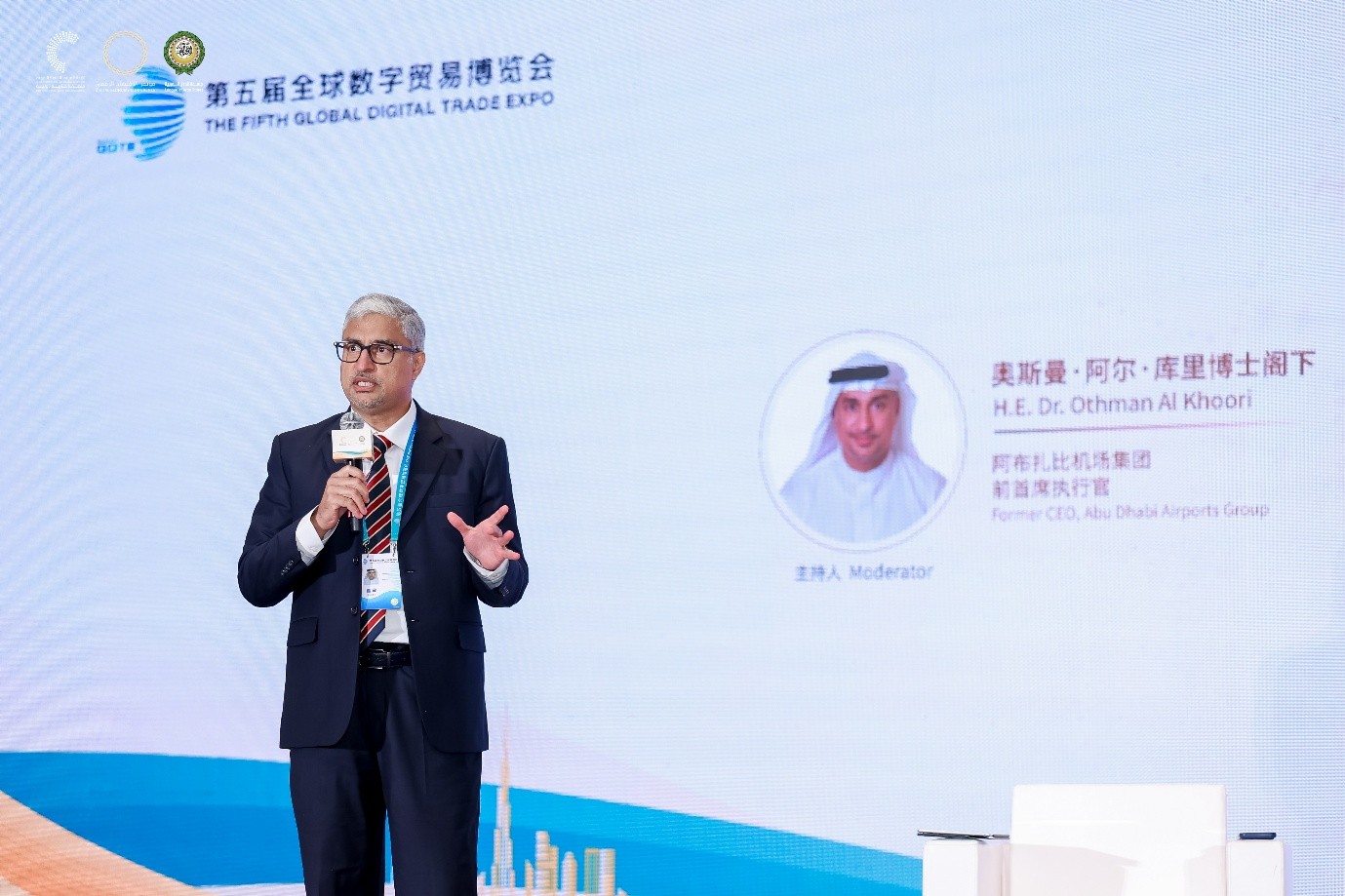
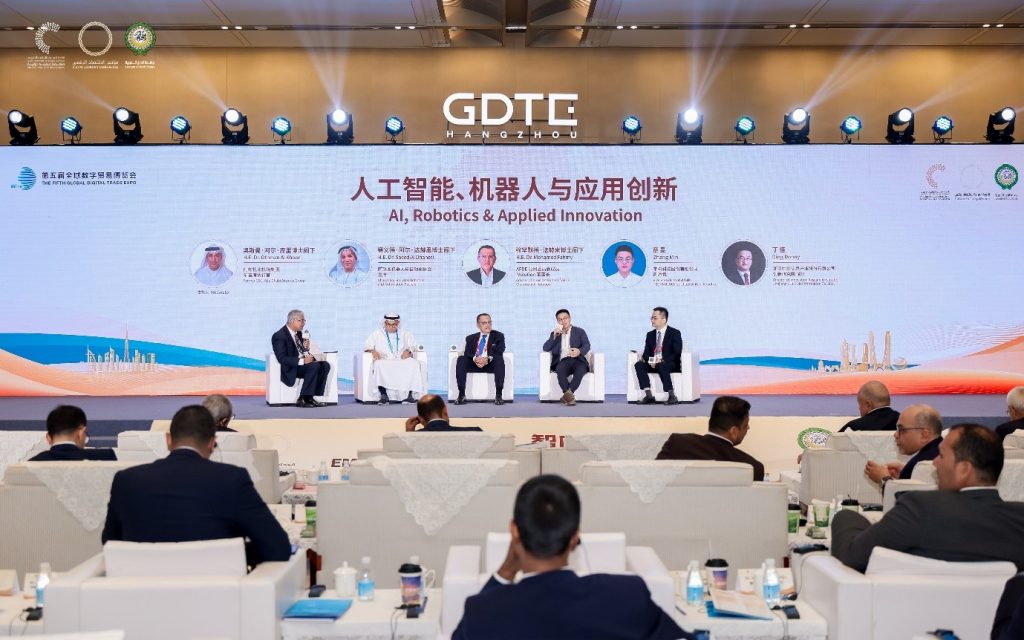
The session, titled “Artificial Intelligence, Robotics and Applied Innovation,” was held as part of the forum organized by the Arab Federation for Digital Economy on the sidelines of the fifth edition of the Global Digital Trade Show (GDTE), and was moderated by Dr. Othman Al-Khouri, former CEO of Abu Dhabi Airports Group.
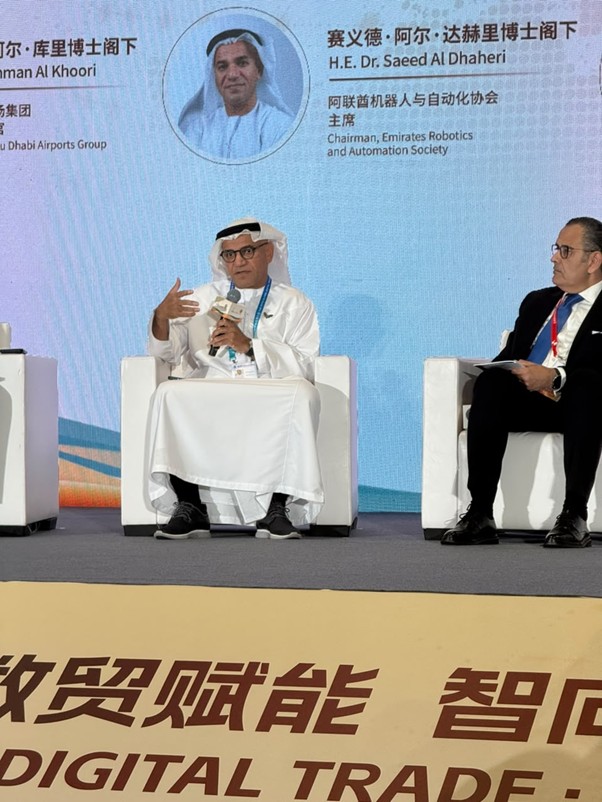
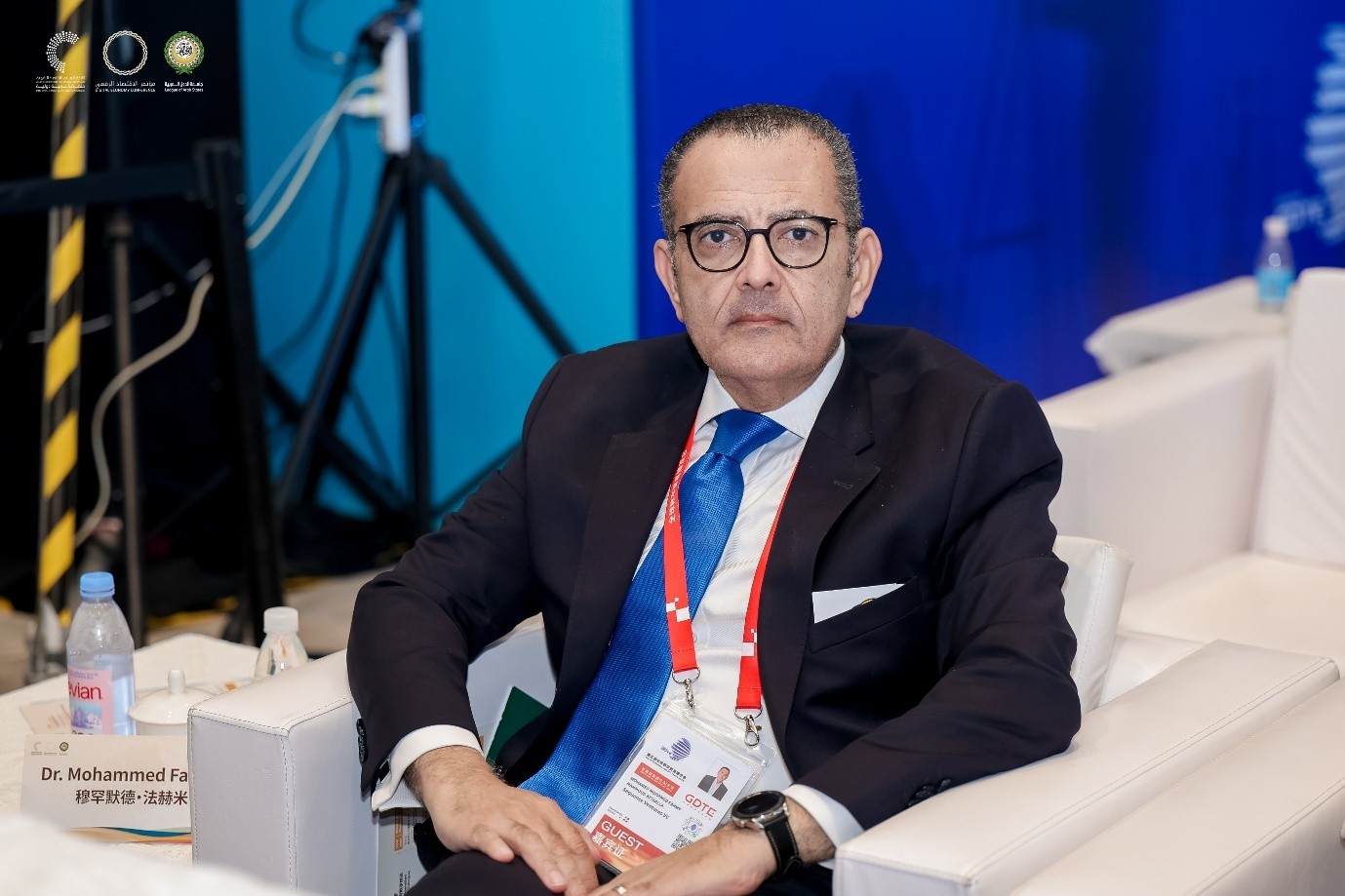
The dialogue included His Excellency Dr. Saeed Khalfan Al Dhaheri, President of the Emirates Robotics and Automation Association, Dr. Mohamed Fahmy, member of the Advisory Council of the Arab Federation for Digital Economy and President of Ivolution, along with Mr. Cheng Yun, Senior Global Partner at Roland Berger, Mr. Chang Min, Vice President of Unitree Robotics , and Mr. Ding Jia, Chief Engineer at Zhejiang Supcon Information Industry .
The discussion focused on the concept of Embodied AI , and what it means to give AI systems the ability to operate in the physical environment through robots, whether in factories, services, cities, logistics sectors, and others.
The discussions also addressed the evolution from individual robots to robotic fleets capable of learning and sharing experiences , and the resulting shifts in operating models, productivity, and business management. The debate extended to the broader economic question of the value of labor, skills, data, energy, and computing in an economy where automated intelligence is becoming increasingly available.
The practical aspect of Arab-Chinese cooperation was given major prominence in the session, especially with regard to the transition from purchasing ready-made equipment to developing applications, operational experiences, knowledge transfer, building local capabilities, and linking Chinese manufacturers to the actual needs of Arab markets .
These discussions come at a time when the Arab Federation for Digital Economy is working on developing cooperation pathways in the field of robotics and smart applications, including models that connect manufacturers and technology developers with markets, investors and users in the Arab region, with a focus on training, operation and integration of different solutions.
The session also discussed the dimension related to governance and responsibility, and the limits of competition in the development of artificial intelligence, especially with the expanding capabilities of systems that combine programming intelligence with the ability to perform actions in the real world.
The session showed that the dialogue about robots is no longer limited to the distant future, but has become directly involved in the investment, operation, training and legislation decisions that governments and companies are making today.