




Date: June 10, 2020
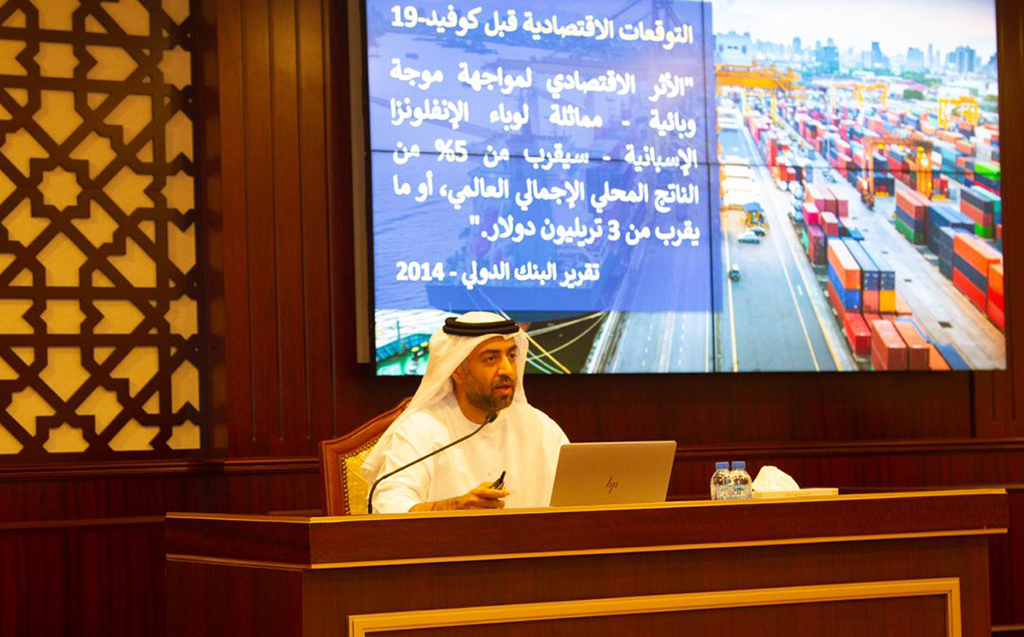
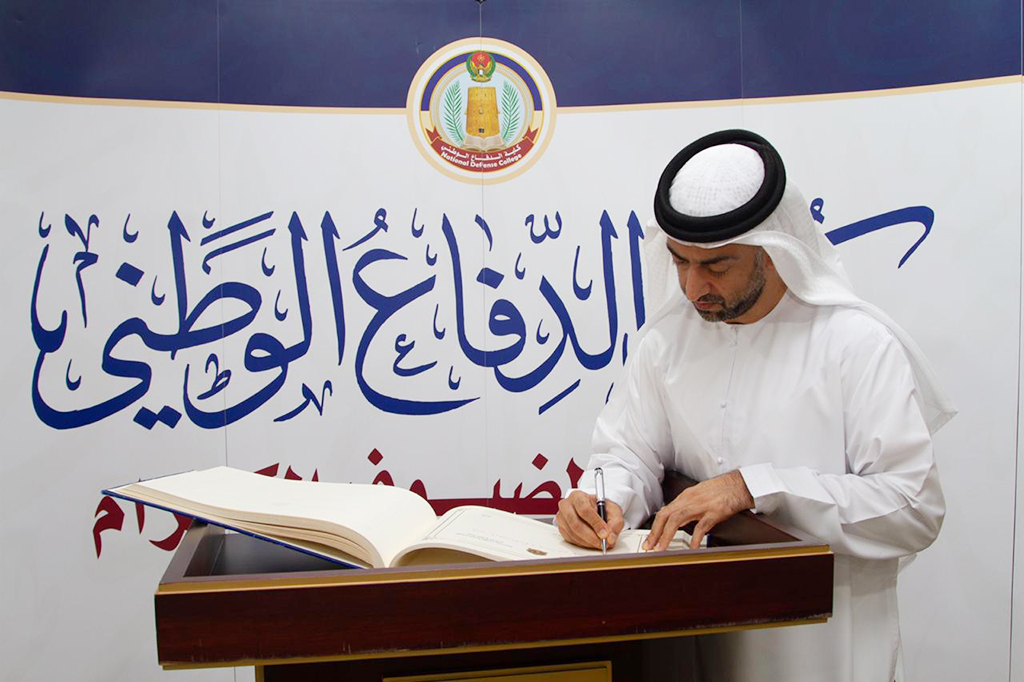
Abu Dhabi… His Excellency Dr. Ali Mohammed Al Khouri, Advisor to the Council of Arab Economic Unity at the League of Arab States and Chairman of the Board of Directors of the Arab Federation for Digital Economy, delivered a lecture organized by the National Defense College at its headquarters in Abu Dhabi. The lecture was attended by His Excellency Major General Pilot Rashad Mohammed Al Saadi, Commandant of the National Defense College, and members of the college’s Guidance Authority, with the remote participation of a large number of leaders and government officials enrolled in the college’s programs.
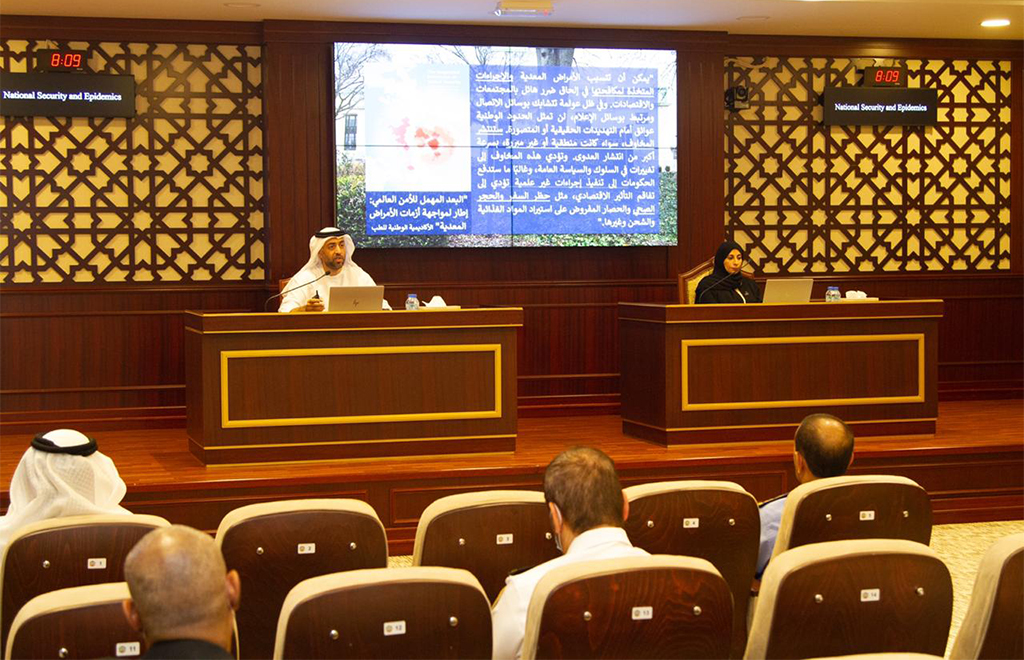
During his speech, Dr. Ali Al-Khouri reviewed topics related to the COVID-19 crisis and the economic dilemma facing the world today. He emphasized that governments will move quickly to bring about real change on the ground to restore economic activity in their countries, given the dangers of continued lockdowns and the large percentage of the population without work or a source of income. He also noted that the COVID-19 crisis has exposed the weakness and fragility of the global economic system in dealing with acute crises. He also noted that government systems in major countries have not addressed many strategic issues in a manner commensurate with the enormous budgets allocated to them, such as food security, supply chains, health security, and digital infrastructure.
The advisor to the Council of Arab Economic Unity noted that, according to reports from international organizations, the historic rates of contraction and economic recession the world is witnessing today may be worse than those witnessed in the 1930s.
He also expected that the spread of serious diseases in human societies would continue, with significant economic and political repercussions. He pointed out that the new global economy had begun to take shape and some of its features had begun to emerge, which required countries to enhance cooperation for greater economic integration to ensure the achievement of their national interests and to benefit from the technologies of the Fourth Industrial Revolution, which would inevitably work to redesign and empower the new global economy. He explained that success in crossing into a new phase in the global system depends on the extent to which governments are able to challenge traditional thinking and adopt a more innovative mentality, based on achieving results and measuring impact.