



Cairo
Source: Al-Wafd Newspaper
Prof. Dr. Ali Mohammed Al-Khouri
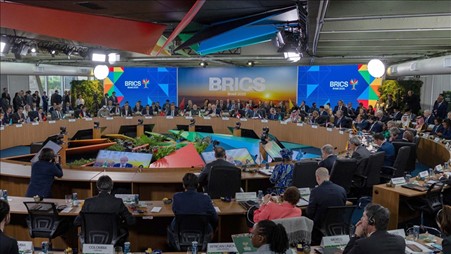
The BRICS group, comprising Brazil, Russia, India, China, and South Africa, is one of the most prominent economic and political blocs that has reshaped the international order over the past two decades. It emerged with an ambitious vision to create a new balance in global economic relations and challenge Western hegemony, particularly that of the United States and its allies. Over time, BRICS has transformed from an ambitious idea into an influential entity seeking to redefine the rules of the economic and political game worldwide.
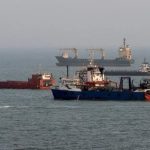
In recent years, the group has witnessed profound transformations, most notably the geographical and economic expansion that led to the accession of countries such as Saudi Arabia, the UAE, Egypt and Ethiopia in 2024. This expansion was not merely a numerical addition, but rather moved BRICS to a new stage in terms of economic and political weight, as the group now possesses broad influence in energy markets and global trade routes, from the Red Sea to the Arabian Gulf, making it a pivotal player in shaping the equations of the international economy.
Economically, the BRICS nations today represent more than 40% of the world’s population and approximately 31% of global GDP, making them a force to be reckoned with in any economic or political equation. The group has launched significant initiatives, such as the New Development Bank, to finance infrastructure projects in developing countries, seeking viable alternatives to Western financial institutions like the World Bank and the International Monetary Fund. BRICS countries are also striving to reduce their reliance on the dollar in intra-regional trade by using local currencies, a trend gaining increasing importance in light of Western sanctions on Russia and the disruptions plaguing the global payments system. The idea of a single currency for the group has been floated, though it remains largely theoretical, as its implementation would require a robust financial infrastructure and integrated monetary institutions.
On the political front, BRICS has become an influential platform for dialogue in the face of unilateral Western policies, particularly on issues such as the war in Ukraine, economic sanctions, and the global trading system. The group adopts a policy based on what is known as “South-South Cooperation”—a concept that symbolizes partnerships between emerging economies and developing countries in Asia, Africa, and Latin America—as a new model of international relations grounded in mutual interests and a balance of economic and political power, moving away from the traditional hegemony of major industrialized nations.
But the BRICS journey is not without its challenges. The bloc faces sharp differences in visions and interests among its members, particularly between China and India, which are vying for influence in Asia and the Indian Ocean. This competition hinders consensus on unified positions regarding strategic issues. Furthermore, divergent stances on the war in Ukraine have exposed the limits of cohesion within the group, as Brazil and India attempt to maintain a delicate balance between their interests with the West and their relations with Moscow and Beijing. Conversely, China’s growing influence within BRICS raises concerns among some members that it is becoming a tool serving Chinese interests rather than an equitable cooperative framework.
Furthermore, the development gap between members and the absence of coordinated monetary and fiscal policies make the idea of full economic integration difficult to achieve in the foreseeable future. The continued dominance of the dollar in the global financial system also poses enormous challenges for BRICS in its efforts to build a parallel financial system, especially given the continued strength of established Western institutions, the G7, and the European Federation in the fields of technology and innovation.
Looking ahead, the landscape presents two contrasting scenarios. The positive scenario envisions BRICS consolidating its position as an influential global bloc, particularly with the addition of major oil powers like Saudi Arabia and the UAE. This would grant it unprecedented weight in the energy market and bolster the Chinese yuan’s status as an international reserve currency, potentially accelerating the transition from a unipolar to a multipolar world. The opposing scenario, however, entails persistent internal disputes and escalating Western pressure, which could transform BRICS into a symbolic entity with no real influence, while the dollar continues to dominate the global financial system and American hegemony returns to the forefront of politics and economics.
From a more reflective perspective, the future of BRICS hinges on its ability to overcome internal divisions and forge a shared vision for a new global order. The world stands at a historical crossroads, where the concept of power transcends purely economic and military boundaries, now centered on a nation’s capacity to forge stable strategic alliances built on trust and shared interests. If BRICS succeeds in this transformation, it may become more than just an economic bloc; it could mark the beginning of a new era of global restructuring based on greater balance and equity. If it fails, however, the world will remain trapped in the orbit of the same traditional powers, waiting once again for someone to dare to redefine the future.