



Source: Al-Wafd Newspaper
Prof. Dr. Ali Mohammed Al-Khouri
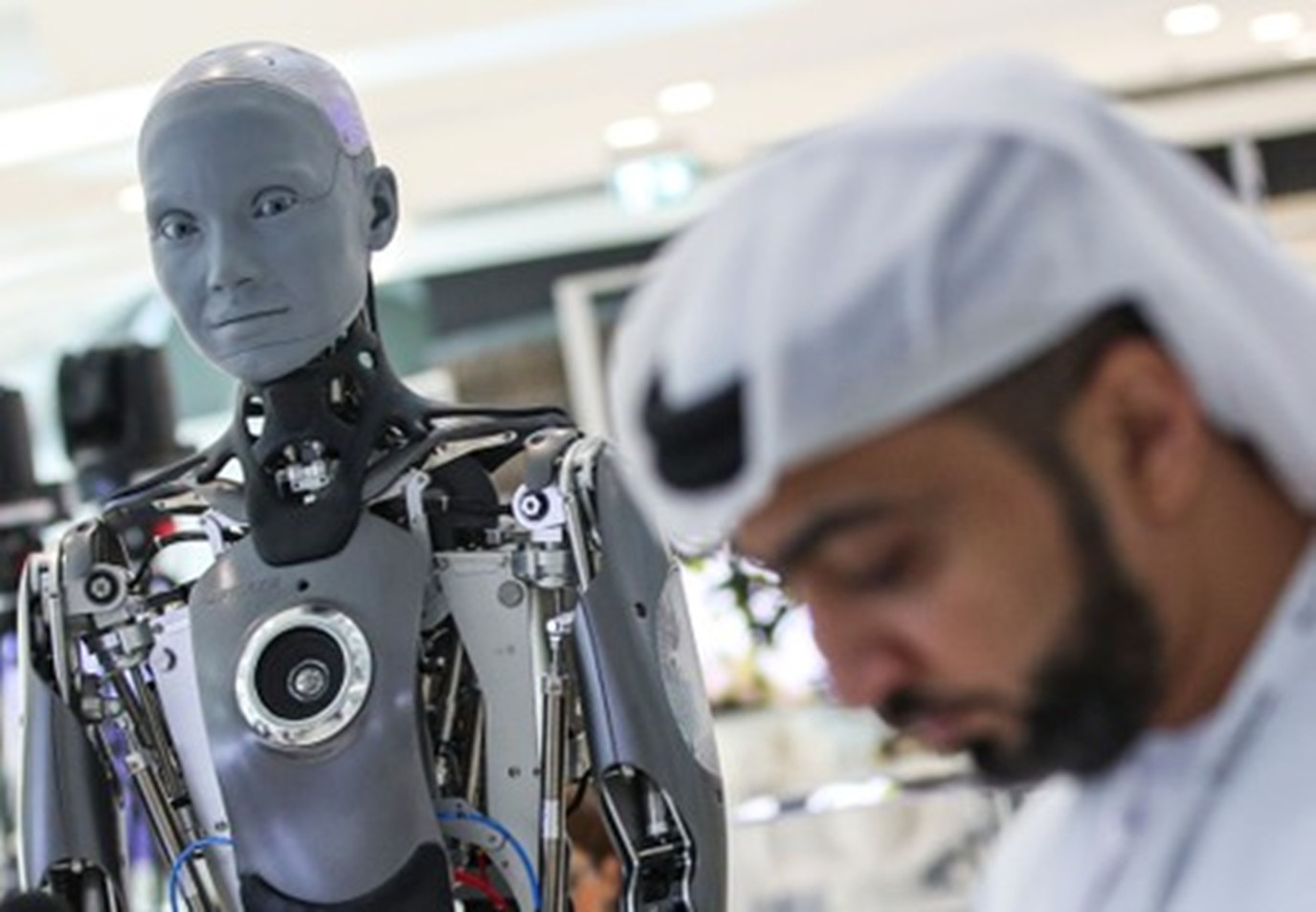
The rapid global transformations of recent years have elevated artificial intelligence to the forefront of international attention, positioning it as the driving force and controller of the mechanisms of the modern economy. While the United States and China are making significant strides in this race, several Arab countries have embarked on a path based on building a strategic vision that aspires to establish an influential position on the international stage. Although the road ahead is not without its challenges, these initial Arab initiatives reveal a growing awareness that the future of development will only be written for those who master the language of artificial intelligence.
The experiences of the United Arab Emirates and the Kingdom of Saudi Arabia represent a remarkable model for dealing with digital transformation, placing the region at the heart of the international technological shift. Since the UAE launched a dedicated Ministry of Artificial Intelligence and its National Strategy extending to 2031, this sector has gained a prominent position within the country’s plans, becoming part of a broad project aimed at rebuilding institutional structures on modern digital foundations, encompassing education, health, and transportation. Following a similar path to the UAE, Saudi Arabia views artificial intelligence as one of the drivers of its Vision 2030, as part of a long-term economic transformation that seeks to redefine the concepts of production and innovation.
Alongside these comprehensive policies, major projects in the region have begun integrating artificial intelligence into their planning frameworks, as exemplified by the NEOM project, which serves as an open laboratory for experimenting with digitally managed and smart systems-based lifestyles. Dubai is moving in a similar direction by establishing specialized centers that aim to reshape the capabilities of the government sector and develop an environment more responsive to rapid technological transformations. Simultaneously, Arab academic institutions have begun developing new research pathways in artificial intelligence and advanced sciences through university programs and specialized research centers that bridge theoretical knowledge with practical application and produce solutions that can enrich the economy with valuable projects.
However, the region still faces complex challenges. A significant shortage of specialized expertise is slowing the transformation process, and the research environment in many Arab countries remains limited compared to more advanced economies, where data availability and quality are crucial for developing intelligent systems. Furthermore, the absence of clear regulatory frameworks in some countries creates a legislative gap that hinders the integration of artificial intelligence into vital sectors and limits governments’ ability to regulate the field effectively and securely.
However, these challenges do not obscure a fundamental truth: the Arab region possesses immense youthful energy that, given the right environment, can become a driving force capable of forging new paths to knowledge. Furthermore, the wave of government digitalization, expanding year after year, opens up vast opportunities for the application of smart technologies within institutions. And with the increasing global openness to cross-border partnerships, the Arab world has a clear opportunity to engage in high-level research projects and industrial partnerships that can position it more effectively within the global digital economy.
All the data confirms that artificial intelligence has become a central pillar in shaping a sustainable economic future. If the Arab region wants to keep pace with the transformations taking place on the international stage, it must prioritize investment in advanced education, research development, and the creation of a supportive legislative environment. Failure to do so will leave many countries outside the power equation being reshaped before the world’s eyes.
With the increasing convergence of scientific advancements and geopolitical shifts, governments and decision-makers in the Arab world face a challenge that goes beyond simply keeping up with technology. What is needed today is a redefinition of the region’s strategic role and the establishment of a new relationship with knowledge—a relationship that makes artificial intelligence the foundation for a space where genuine potential for a civilizational renaissance based on innovation and creativity can emerge.