



Source: Al-Wafd Newspaper
Prof. Dr. Ali Mohammed Al-Khouri
The Arab region is experiencing a highly sensitive moment of transformation, standing at a crossroads where traditional structures of sovereignty are crumbling and prevailing notions of power and legitimacy are waning, within an international environment whose features are shifting according to changing interests and the erosion of old constants. What the region is witnessing is a transitional phase in which new rules for the global order are taking shape, bringing the Middle East back to the forefront of events as an arena of conflict and a field for redrawing spheres of influence and forming balances different from those of past decades.
The new logic in international relations
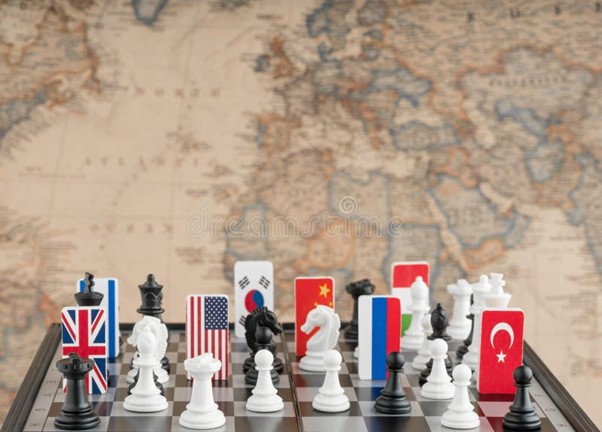
In traditional theories of international relations, geography was sufficient to explain state behavior, with location alone supposedly determining orientations and alliances. However, this explanation is no longer adequate for understanding the current landscape. Some Arab states have begun to operate according to a different logic, adopting a new pattern of foreign relations based on multiple partners rather than a limited number, and on expanding their sphere of interests and defining their options based on what they deem compatible with their priorities, not on what is imposed upon them from the outside. From strengthening relations with China and Russia to opening up to economic and technological alliances with Asian and European powers, there are clear indications of a political desire to redefine the terms of international partnership from a more independent position. This flexibility does not negate the existing strategic reality, but it grants states greater room to rebalance within a complex system that is being reshaped, and it reflects a growing awareness of the requirements of the coming phase.
Redefining the concepts of power and legitimacy
The concept of power is no longer limited to military spending or the size of combat capabilities, but is now measured by a state’s ability to organize internally, manage challenges, and achieve stability through flexible administrative structures and systems that reflect the interests of its citizens. Conversely, legitimacy is no longer based on imposing control, but rather on the state’s ability to balance the needs of society with the demands of change and ensure broader participation in shaping public policy.
Global transformations and opportunities in the Middle East
The ongoing transformations in the structure of the global system have weakened the logic of absolute hegemony and led to the emergence of flexible blocs and alliances based on direct interests rather than doctrinal or ideological affiliations. This reality has presented Middle Eastern states with a different opportunity than before; they are now able to pursue foreign policies independent of the polarization of major powers and can act with flexibility without compromising their national sovereignty. States that are not confined to the East-West dichotomy and that redefine their relationships according to their diverse interests are best positioned today to maintain their stability and secure an active role in regional and international affairs.
The economy as a pillar of national security
In this context, the economy has become the cornerstone of national security and the primary pillar for maintaining political stability and the state’s regional role. The Gulf region, for example, has transcended its traditional role as an energy exporter and is now directing its financial reserves toward sectors that establish a more independent and cohesive economy, while also acquiring strategic assets beyond its borders and leveraging its political and economic tools in its wider sphere.
Regional and international economic reports indicate that moderate geopolitical tensions in key maritime chokepoints, such as the Strait of Hormuz or the Suez Canal, could lead to global financial losses estimated at around $240 billion in less than 72 hours. This figure reflects the interconnectedness of regional security and the stability of global markets, and demonstrates that effective management of the economy and vital resources has become a key indicator of power, alongside the ability to protect infrastructure and secure trade and oil supply lines as part of a comprehensive economic and security framework.
The modern state and new standards of legitimacy
While the modern state in the Western context was founded on the monopoly of the use of organized force, as the philosopher Max Weber described, the state in the Middle East, after the colonial era, faces a different challenge in establishing its legitimacy. The standard is no longer limited to security control, but has expanded to include the ability to organize public life with institutional efficiency and to manage the state’s diverse and interconnected affairs, from food security to digital infrastructure, including the continuity of vital supply chains. Legitimacy today is built not on force alone, but on effective governance, rapid response, and the capacity to protect society from sudden disruptions.
Sovereignty in the age of cyberattacks
A 2025 study revealed that over 280 critical infrastructure facilities in the region were targeted by cyberattacks, targeting key sectors including energy, telecommunications, and financial institutions. Notably, many of these attacks relied on artificial intelligence to identify targets and penetrate systems. These threats have become a direct challenge to the concept of national sovereignty. Simply possessing territory is no longer sufficient to affirm state sovereignty; rather, the ability to protect information, control infrastructure, and ensure the stability of vital services has become a fundamental element in defining a modern state.
Fragility of economic dependence and resource security
The pandemic also revealed the vulnerability of Arab economies to unchecked reliance on global supply chains, particularly regarding the provision of essential resources. The ability to secure food, medicine, and digital infrastructure has become a cornerstone of national security. World Bank data for 2025 indicates that 63% of Arab countries depend on external sources for more than half of their food and medical needs. This reality raises serious questions about how these countries can maintain their sovereignty when they are unable to meet their basic needs domestically.
Strategic hedging as a new path for Arab policy
With the decline of ideological alliances and the fading of the ideological alignments that characterized previous eras, a different kind of Arab political thinking is emerging. This thinking is free from the logic of improvisation and reactive responses, seeking a more independent position and establishing a strategic vision that treats uncertainty as a tool for devising new means of survival. This mode of thinking, based on the activation of the theory of “strategic hedging,” calls for building a network of diverse relationships that allows the state to maneuver among major powers without becoming dependent on any one of them. Through this approach, balancing national interests with political and cultural distinctiveness becomes a prerequisite for protecting sovereignty and consolidating stability, shielding it from the fluctuations caused by pressures or unforeseen events.