



Cairo
Source: Al-Wafd Newspaper
Prof. Dr. Ali Mohammed Al-Khouri
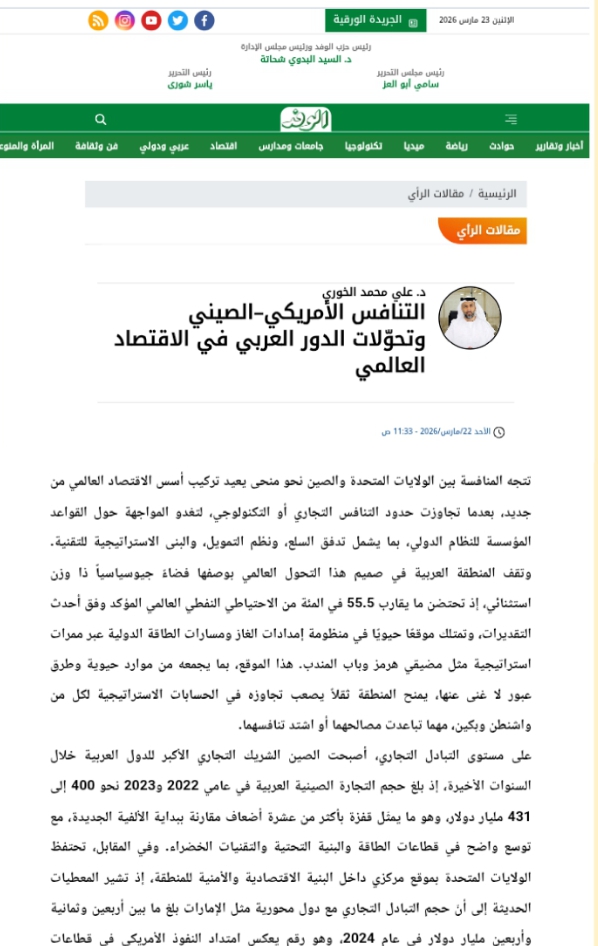
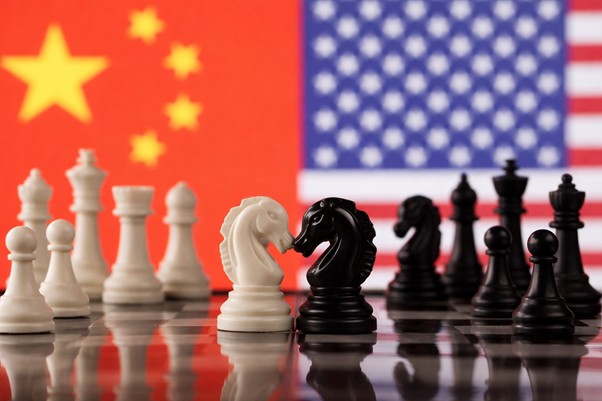
The competition between the United States and China is taking a turn that is reshaping the foundations of the global economy. It has transcended mere trade or technological rivalry, evolving into a confrontation over the very rules governing the international order, including the flow of goods, financial systems, and strategic technological infrastructure. The Arab region stands at the heart of this global transformation, possessing exceptional geopolitical weight. It holds approximately 55.5 percent of the world’s proven oil reserves, according to the latest estimates, and occupies a vital position in the gas supply system and international energy routes through strategic waterways such as the Strait of Hormuz and the Bab el-Mandeb Strait. This location, with its vital resources and indispensable transit routes, grants the region a weight that is difficult for both Washington and Beijing to ignore in their strategic calculations, regardless of how divergent their interests may be or how intense their competition.
In terms of trade, China has become the largest trading partner of Arab states in recent years. Sino-Arab trade reached approximately $400-431 billion in 2022 and 2023, representing a more than tenfold increase compared to the beginning of the new millennium, with significant expansion in the energy, infrastructure, and green technology sectors. Conversely, the United States maintains a central position within the region’s economic and security structure. Recent data indicates that trade with key countries like the UAE reached between $40 and $48 billion in 2024, a figure reflecting the expansion of American influence in strategic sectors including advanced technology, aviation, and financial services. This economic interconnectedness demonstrates that the American presence in the region is no longer based solely on traditional security partnerships, but has expanded to encompass a deeply entrenched economic and technological system that will be difficult to circumvent in the foreseeable future.
These indicators reveal a multidimensional reality that grants the Arab region ample room for strategic maneuvering within the interplay between major powers, according to approaches closer to strategic hedging than to unilateral alignment. With a well-considered and skillful utilization of this interconnectedness between economics and geopolitics, the Arab world can transform international power competition into an enabling factor for expanding its sphere of influence within the existing global order. From this perspective, the US-China rivalry can be viewed as a strategic opportunity for Arab states, provided it is interpreted through a geo-economic lens that transcends the logic of aligning with one camp over another.
Over the past decade, China has intensified its involvement in the Belt and Road Initiative, an initiative that has poured more than $1.3 trillion globally into investment and construction projects. The Middle East has had an increasing share of this, with deals related to the region estimated at around $39 billion in a single year, encompassing energy, infrastructure, and ports. Meanwhile, trade data shows that the Gulf Cooperation Council (GCC) ranks sixth globally in merchandise trade volume, with its oil exports alone exceeding $525 billion in 2023, despite lower prices compared to the previous year. This positioning gives the Arab region real leverage to shape the terms of economic cooperation with major powers and to build relationships contingent on its national interests.
On a practical level, this reality allows for the adoption of an Arab approach based on multiple partnerships rather than a single-party system. Instead of engaging in the polarization between Washington and Beijing, Arab states can deal with each from a position of overlapping interests. They can encourage Chinese and other foreign companies to establish manufacturing and technology industries within the region, rather than merely engaging in construction or assembly projects. Simultaneously, they can link access to Arab markets and energy resources to clear conditions related to knowledge transfer and building local capacity. On the other hand, long-standing relationships with the United States in the fields of security, defense, and high technology can be leveraged to enter into research and development partnerships, rather than simply being the end-user of ready-made systems.
However, leveraging this competition requires a high degree of strategic discipline. Sensitive technological issues such as 5G networks, cloud infrastructure, and artificial intelligence have become arenas of open conflict between Washington and Beijing, often leading to pressure on countries to choose a single provider or system. Arab capitals need a nuanced approach that balances cybersecurity and digital sovereignty considerations with the need to attract substantial investments in technological infrastructure. Adopting hybrid solutions, through robust data regulation, strict digital security rules, and transparent contracts, can mitigate the risks of becoming dependent on a single entity, whether in the East or the West.
Furthermore, weak manufacturing remains one of the most significant structural challenges facing the Arab world. Most Arab countries are not major players in global industrial value chains, with the exception of limited experiences in petrochemicals, aluminum, and some advanced industries in certain Gulf states. This reality means that unless the region actively engages in technology transfer and the establishment of genuine manufacturing facilities—not merely assembly plants—it will remain a consumer market for both Chinese and American goods. Hence the importance of linking any trade and investment agreements to clear criteria regarding local content requirements, training and knowledge transfer programs, and contributions to building research and development systems within Arab universities and research centers.
Conversely, the Arab states possess considerable strengths that cannot be underestimated when viewed collectively. Their hydrocarbon reserves, strategic maritime importance, and growing consumer markets of over 400 million people make the region an indispensable pillar in global energy and trade equations. If this trajectory is coupled with genuine regional economic integration, the Arab states can move from a position of being subject to external conditions to one of being able to establish frameworks for cooperation as a unified economic bloc.
Transforming the US-China rivalry into an opportunity for the Arab world should not be limited to improving contractual or investment terms, but must extend to redefining the region’s role and relationship with the global economy. The path forward for Arab states will not be determined by choosing between Washington and Beijing, but rather by deciding whether the region will remain an open arena for competition among external powers, or whether it will transform into a player capable of leveraging this competition to establish knowledge-based, industrial, and technologically advanced economies.
But in order for the region to move from being affected by international competition to being an active participant in it, Arab economic decision-making must be based on a vision that takes into account the geostrategic location, human resources, and technological infrastructure, in order to be able to transform the existing competition into a gateway for new development projects.
The broader perspective of the current scene shows that the Arab region is poised to transform into a new model within the international system; a model that does not revolve around a single power, but rather regulates its relations according to the principle of plurality of interests, benefiting from China’s openness to the countries of the South, and from American financial and technological expertise in a thoughtful manner, while foreign policy is formulated in a way that prevents any party from exploiting the Arab geostrategic position as a tool of pressure or a means to impose external dictates.
If such a path is achieved, the competition between Washington and Beijing will be merely an external framework and general environment, while the real transformation takes place within the Arab economies and societies themselves, where a development model is rebuilt that takes the region from being the weak link in production chains to having an influential institutional and intellectual presence within global decision-making systems.