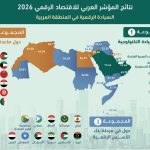





With the profound transformations taking place in the global economy toward a knowledge-based economy, it has become essential to assess the position of the Arab world within this new economic landscape. Countries that succeed in building a knowledge-based economy are able to achieve higher rates of economic growth and strengthen their competitiveness in global markets.
However, many international indicators suggest that the Arab world still faces significant challenges in this field.
Knowledge Economy Indicators
International institutions use a range of indicators to measure countries’ progress in the knowledge economy. These indicators include the quality of education, scientific research, innovation, and digital infrastructure.
According to these indicators, many Arab countries still rank behind developed nations.
Educational Challenges
One of the most significant challenges facing the Arab world is the weakness in the quality of education in some countries. In many cases, educational systems still rely on traditional methods that emphasize memorization rather than critical thinking and creativity.
This situation directly affects the ability of countries to produce knowledge and foster innovation.
Scientific Research and Innovation
Spending on scientific research in most Arab countries remains low compared to developed nations. In addition, cooperation between universities and the industrial sector is still limited.
These factors reduce the ability of Arab countries to transform knowledge into practical economic applications.
Digital Infrastructure
Despite the progress achieved by some Arab countries in telecommunications and internet services, the digital divide still exists in many regions.
Improving digital infrastructure represents a fundamental step toward building a strong knowledge economy.
Opportunities for Transformation
Despite these challenges, the Arab world possesses several important opportunities for transitioning toward a knowledge economy. Young people constitute a large proportion of the population, providing a human resource base capable of contributing to the development of a strong knowledge-based economy.
Furthermore, some Arab countries have already begun implementing digital transformation strategies and promoting innovation.
Conclusion
Building a knowledge economy in the Arab world requires comprehensive reforms in education, scientific research, and economic policies. It also requires stronger cooperation among governments, the private sector, and educational institutions.
Source: This article is an analytical/evaluative article based on the World Bank’s Knowledge Economy indicators, reports by ESCWA (United Nations Economic and Social Commission for Western Asia), and the Arab Federation for Digital Economy.