



Shanghai
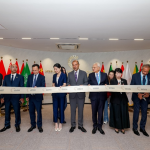
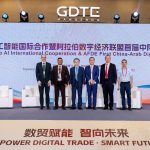
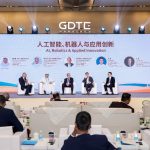
The delegation of the Arab Federation for Digital Economy concluded an extensive working visit to the People’s Republic of China, headed by Dr. Abdullah Al-Darmaki, Deputy Secretary-General of the Federation, and including Dr. Ayman Ghoneim, Assistant Secretary-General, and with the participation of Mr. Tang Tang, Head of the Federation’s office in China, and Mr. Jiet Dai, Executive Director of the Federation’s office in China, within the framework of an approach aimed at opening practical paths for cooperation between investors, manufacturers, technology developers and entrepreneurs.
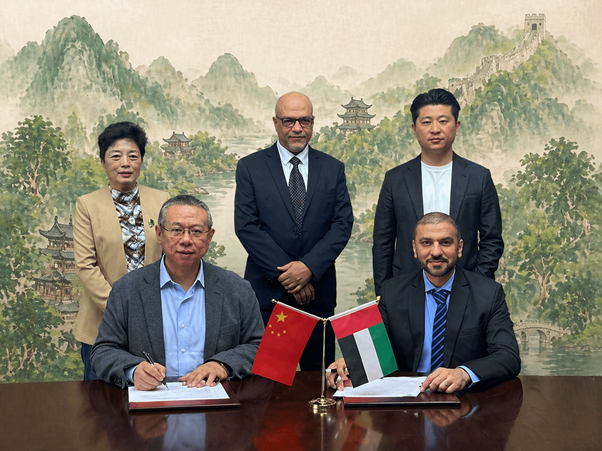
The advanced robotics file was a key focus of the visit, as the Federation signed two strategic agreements in Shanghai with the Chinese DDI-DaoDe Investment Group , an institution specializing in technology investment and industrial fund management, which focuses on new energy, new materials, and AI-based robotics.
The first agreement aims to support the establishment of an Arab-Chinese platform that supports companies specializing in operating, developing, and leasing robots as a service (Robot-as-a-Service – RaaS) , going beyond the idea of traditional selling or importing, and moving towards building an integrated operating system that includes programming, preparing, operating, maintaining, and training users on robots, and providing support, replacement, and after-sales services, ultimately leading to the creation of added technological value as the project matures and expands its scope.
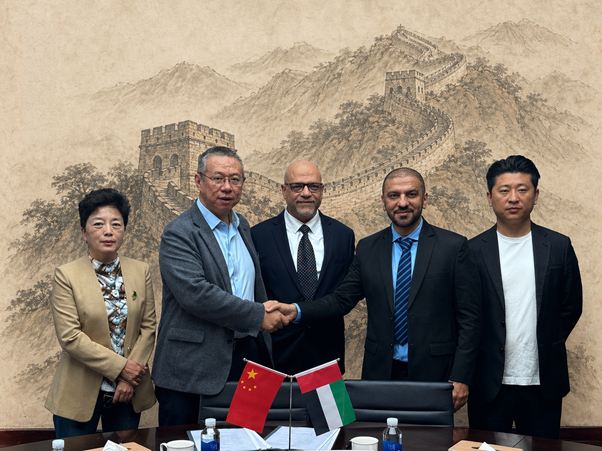
Dr. Abdullah Al Darmaki confirmed that the agreement with the partners in China was directed towards making the United Arab Emirates the first starting point for these projects, due to its legislative readiness, advanced digital infrastructure, and pioneering leadership in the fields of artificial intelligence, the digital economy, and robotics, which makes it the most capable environment for testing and developing new models, and then launching them later to the Arab markets.
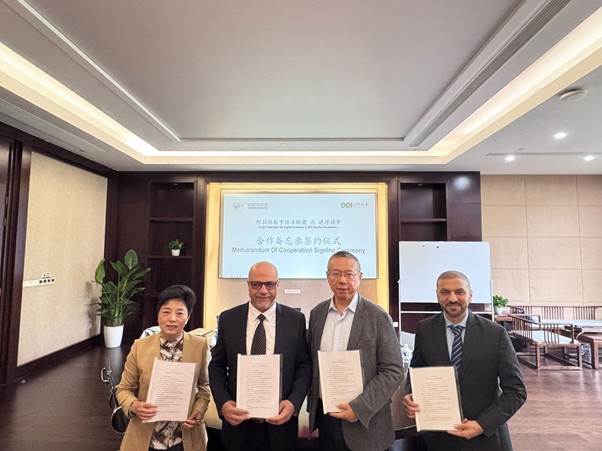
The second agreement complements the first by establishing a specialized fund or financing mechanism to support research and development, manufacturing activities, applied experiments, and investment expansion for companies within the Arab-Chinese robotics alliance. This approach aims to enter the robotics market from an industrial and knowledge-based perspective, not merely a commercial one, thereby helping to build local capabilities in operation and development, followed by gradual manufacturing, and cultivating Arab expertise capable of participating in this future industry.
The visit included technical meetings with a number of advanced Chinese robotics companies that are candidates to participate in this alliance, including ZelosTech , which specializes in autonomous vehicles and RoboVan solutions for smart logistics; 99iBots Healthcare in robotics applications and smart services in the health sector; AI² Robotics , which works in the field of general robotics and humanoid robots based on embodied artificial intelligence; in addition to Linkerbot , which specializes in high-precision flexible robotic hands, which are pivotal components in the development of humanoid robots and precision industrial applications.
Mr. Tang confirmed that the proposed company aims to operate robots in the service and industrial sectors on the one hand, and seeks on the other hand to build Arab institutional capabilities in this field, through training students, and involving universities and research centers in developing applications and testing new uses, thus paving the way for a gradual transition from operation to development and then manufacturing.
In another statement, Professor Wu Fei, Chairman of DDI , explained that the Chinese side will draw on its long and successful experience in managing specialized industrial funds to initiate a long-term strategic partnership in the financial and industrial sectors. He emphasized that the group has a proven track record in financing strategic industries and building global supply chains. Ms. Wang Lumin, President of DDI’s Overseas Fund, also affirmed that the partnership with the Union represents a gateway for knowledge exchange and capacity building in the Arab world during one of the most significant industrial revolutions of the 21st century.
In conjunction with the robotics track, the delegation held a series of meetings with leading Chinese companies in the fields of smart industry, artificial intelligence, digital education, e-commerce, semiconductors, and smart finance. In the smart industry sector, the delegation visited SEMI-TECH to learn about manufacturing management solutions, equipment automation, productivity analytics, quality control, and digital twins, which pave the way for factories to transition from administrative to production-based digitalization. In the field of artificial intelligence, the delegation discussed collaboration with Algorain on multi-agent systems and decision support, and the analytical tools these solutions can provide for government operations and strategic reporting.
The delegation also explored opportunities for cooperation with DCG in smart publishing and education, with Jinpin in cross-border e-commerce platforms, with Milliway Microelectronics in integrated circuits and radio frequencies, and with GoFintech in smart finance, asset management, digital asset infrastructure and quantum technologies, while emphasizing full commitment to the legal and regulatory frameworks in force in the UAE.
This visit comes within the framework of the Arab Union for Digital Economy’s role in stimulating quality partnerships, opening institutional communication channels, and bringing together visions between technology owners, capital, and beneficiaries, in order to contribute to transforming Arab-Chinese cooperation into practical, applicable, and growing projects, starting from the UAE, and then gradually extending to Arab markets according to the needs and readiness of each market.