



Source: Al-Wafd Newspaper
Prof. Dr. Ali Mohammed Al-Khouri
The world is witnessing rapid economic transformations, driven by the knowledge and digital technology revolution. In this context, the Arab economy faces crucial challenges and opportunities that will determine its future course. Understanding the direction in which the Arab economy is heading, and assessing the pivotal role that the Arab Federation for Digital Economy can play in achieving genuine and sustainable development, is of paramount importance to ensuring a prosperous future for the region.
Historically, many Arab economies have relied heavily on natural resources, particularly oil and gas. While these resources have provided substantial wealth, they have also created over-reliance and vulnerability to global market fluctuations. Arab economies have also faced deep structural challenges, including weak economic diversification, high unemployment rates, especially among youth, and development gaps between countries and regions, in addition to challenges related to institutional and administrative reforms. In recent years, signs of change have begun to emerge, with a growing awareness of the need to transition to more diversified and sustainable economies. This is reflected in investment initiatives in new sectors such as technology, tourism, renewable energy, and advanced manufacturing. However, the pace of this transformation remains slow compared to the requirements and challenges.
The move towards a digital economy is no longer an option but an imperative. Digital transformation opens new horizons for boosting productivity, creating innovative job opportunities, improving the delivery of public and private services, supporting financial inclusion, and empowering entrepreneurs. However, this transformation requires a robust digital infrastructure, a skilled workforce, supportive regulatory frameworks, and an enabling legislative environment. Many Arab countries are still at varying stages of developing these requirements, necessitating concerted and coordinated efforts.
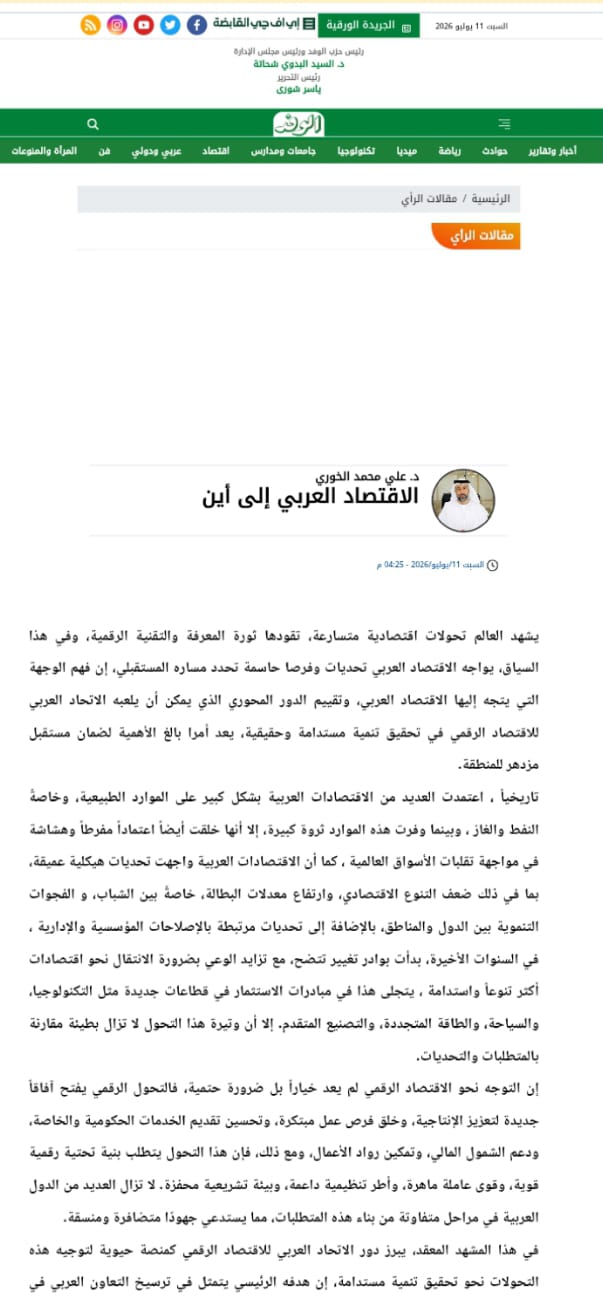
In this complex landscape, the Arab Federation for Digital Economy stands out as a vital platform for guiding these transformations toward achieving sustainable development. Its primary objective is to solidify Arab cooperation in the field of digital economy, facilitate the exchange of expertise and knowledge, and unify efforts to develop shared strategies and policies. The Federation can play a key role in several aspects.
First, in the area of digital infrastructure, the Federation can encourage joint investments in advanced communications networks, data centers, 5G technologies, and artificial intelligence. This can reduce the digital divide within the region and improve access to digital services at an affordable cost. For example, member states can cooperate in building new submarine cables or expanding internet coverage in rural areas, opening new doors for distance education, e-commerce, and digital health services.
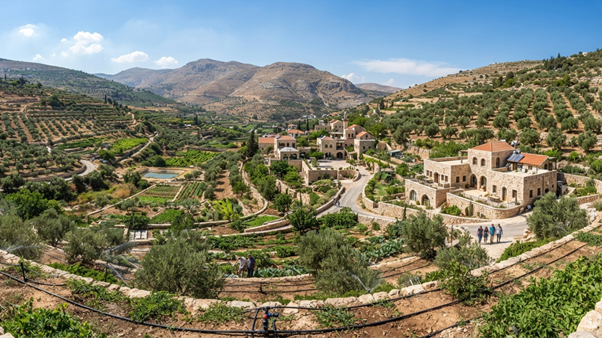
Secondly, with regard to the development of digital skills and competencies, the Arab economy faces a severe shortage of specialized personnel in digital fields. The Federation can work on coordinating education and vocational training programs, and encouraging partnerships between universities, research centers and industrial institutions, to support the development of educational curricula that keep pace with the requirements of the digital labor market. It can also launch initiatives to develop digital entrepreneurship, and support startups and innovative companies by providing funding, guidance and access to markets. This may be represented in the establishment of joint digital business incubators and accelerators, the organization of innovation competitions and facilitating access for startups to investors.
Third, the Federation can play an active role in developing regulatory and legislative frameworks that support the digital economy. This includes developing laws for data protection, cybersecurity, electronic transactions, and digital intellectual property. Unifying legislation among Arab countries will contribute to creating a safe and reliable investment environment, encouraging cross-border digital trade, and attracting foreign direct investment in the digital sector. For example, unified standards can be set for establishing digital companies and facilitating their registration, or unified laws can be adopted to combat cybercrimes.
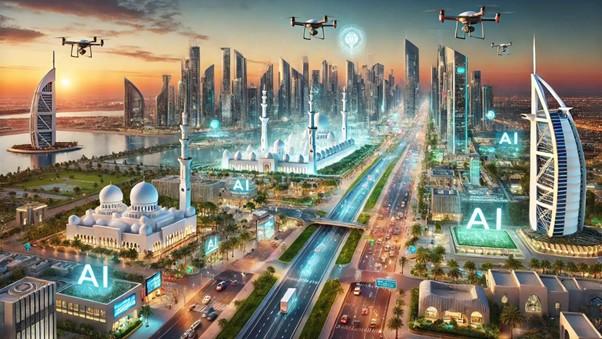
Fourth, the Federation plays a vital role in fostering innovation and adopting new technologies. It can encourage research and development in areas such as artificial intelligence, the Internet of Things, and blockchain, and support the application of these technologies in various economic sectors, such as smart agriculture, industry, and smart cities.
Adopting these technologies can increase production efficiency, improve the quality of products and services, and create innovative solutions to development challenges. For example, it can support the development of data-driven agricultural applications to improve water and fertilizer use, or use blockchain to increase the transparency of supply chains.
Fifth, the Federation can contribute to building an inclusive and sustainable digital economy. This means ensuring that all segments of society benefit from digital transformation, including women, the elderly, people with disabilities, and marginalized communities. Efforts should focus on providing digital access, digital training, and digital services that meet everyone’s needs, to ensure that no one is left behind. Emphasis should also be placed on the environmental aspects of the digital economy, such as reducing energy consumption in data centers and promoting the circular economy of electronic devices.
Sustainable development, at its core, means meeting the needs of the present without compromising the ability of future generations to meet their own needs. In the context of the digital economy, this requires building economies that are resilient to change, creating sustainable jobs, promoting social justice, and protecting the environment. The Arab Federation for Digital Economy, by focusing on these areas, can be a key driver of this real change.

However, the success of the Federation depends on several factors, the first of which is the strong political will and commitment of the member states, the second is the provision of sufficient financial and human resources to support its initiatives, the third is transparency and good governance in its work, and the fourth is the ability to attract partners from the private sector, civil society and international institutions.
In conclusion, the Arab economy stands at an important crossroads. Its future path depends largely on its ability to embrace digital transformation and turn it into an engine for sustainable development. Here, the vital role of the Arab Federation for Digital Economy emerges as a platform for cooperation, coordination, and leading this transformation. By focusing on infrastructure, skills development, regulatory frameworks, innovation, and inclusivity, the Federation can contribute significantly to shaping a more prosperous, sustainable, and 21st-century Arab economic future.
Achieving this goal requires a collective effort and a clear vision that transcends narrow interests, to ensure a better future for future generations in the Arab world.