




Source: Emirates News Agency (WAM)
Dubai
Payment technology specialists have confirmed that the UAE is witnessing an acceleration in the adoption of financial technology and artificial intelligence solutions, driven by the growth of e-commerce and the development of the local and cross-border payment system, while “agent commerce” and payments implemented by artificial intelligence agents stand out as one of the trends expected to reshape the trade and payment experience in the next phase.
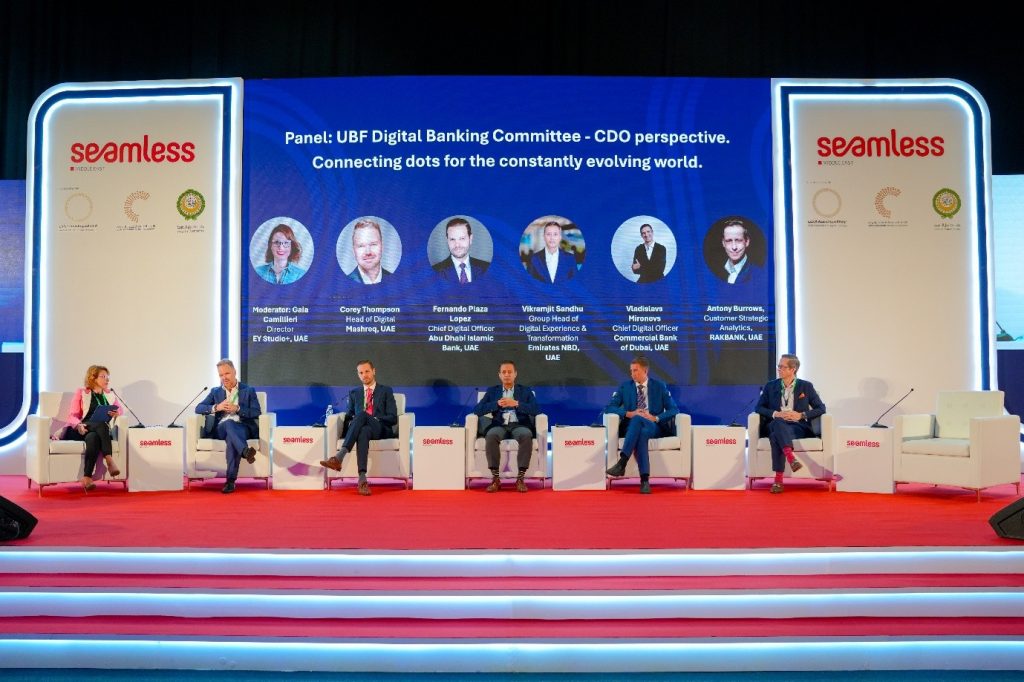
Speaking on the sidelines of their participation in the current edition of “Seamless Middle East” at the Dubai World Trade Centre between September 22 and 24, they said that the UAE market is characterized by the rapid adoption of new technologies and the development of payment infrastructure, in conjunction with the shift in consumer preferences towards smoother and more integrated payment experiences in the shopping journey.
Nakul Kothari, Head of Middle East, Asia Pacific at JSPAY, said that the Middle East is one of the most economically active regions in the world today, noting that Seamless Middle East brings together various parties in the payments ecosystem, including merchants, payment service providers, acquiring entities, payment gateways, and buy-now-pay-later companies.
He added that bringing these parties together under one umbrella provides an opportunity to discuss innovations and develop cooperation with customers and partners, noting that the company has already held a number of discussions since the start of the event and looks forward to building on them during its three days.
He revealed a partnership that was established on the first day with the Al Futtaim Group, which owns businesses and brands in multiple sectors including retail, e-commerce, automobiles, and others, explaining that the “Jespay” platform will process payments across these businesses through a unified platform.
Regarding the financial technology landscape in the UAE, Kothari confirmed that the market is witnessing continuous development, with the presence of many payment acquisition entities and “buy now, pay later” companies, in addition to the emergence of more local payment methods and the launch of instant payment systems and a local payment system.
He added that the importance of the UAE goes beyond the local market, given the entry of global companies and traders into the country, in parallel with the expansion of companies from the region into other markets around the world, which leads to the growth of cross-border payments.

Kothari believes that “agent trade” will be one of the most prominent areas worth following in the coming years, explaining that it includes an aspect related to transactions between companies and another related to the consumer.
He added that the use of proxy technologies in corporate transactions has reached a more advanced stage than consumer-oriented applications, which will allow in the future to deal with more complex workflows in the business sector.
For his part, Remo Giovanni Abondandolo, General Manager for the Middle East and North Africa at Checkout.com, said, “Seamless Middle East represents an opportunity to meet the company’s customers and listen to their needs, as well as to showcase the new products that it is launching in the market, which helps to keep pace with the rapid changes in consumer behavior and the payments sector.”
He said that e-commerce continues to grow in the region, noting in this context also an increasing shift towards what is known as “invisible payments,” explaining that 97% of consumers surveyed by the company are looking forward to this type of payment experience.
He explained that the concept of “invisible payment” is based on making the payment process smoother and more integrated into the purchasing experience, and reducing the friction and steps that the consumer faces when completing the transaction.
He stressed the importance of this for merchants, noting that company data shows that 35% of consumers will switch to a competitor’s site if they are unable to complete the payment process, making the efficiency of the payment experience a significant factor in customer retention.
He said that artificial intelligence has begun to bring about a new transformation through “agent commerce,” noting that more than half of the people in the UAE already use AI proxy applications in their searches and daily tasks, with a trend towards increasing the use of these technologies in purchasing and payment processes.
Abondanolo described the fintech environment in the UAE as positive and growing.
He added that consumers in the UAE are showing an increasing willingness to use new technologies, stressing that technology adoption in the UAE market is happening at a faster pace than in many other markets.