



Source: Al-Wafd Newspaper
Prof. Dr. Ali Mohammed Al-Khouri
For several years, it was widely believed that the global economy had entered a new phase, distinct from that of the 20th century. The technology, services, and digital economy sectors had expanded, and companies whose businesses relied on data and software had become more valuable than those linked to natural resources. Amid this transformation, energy seemed to have lost some of its former centrality in economic thinking.
However, recent global developments have reshaped priorities. With rising oil and gas prices, energy has returned to the heart of economic and political debate, not only because it is a strategic resource, but also because it has exposed the limitations of many assumptions that prevailed in past decades.
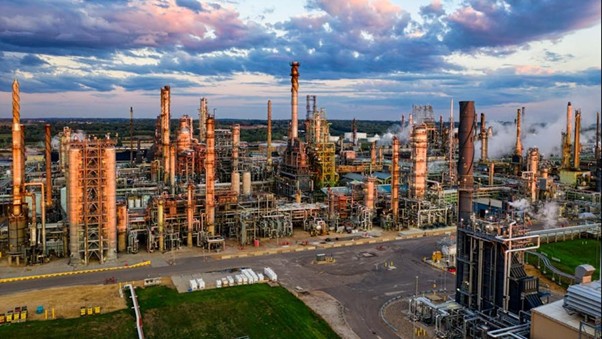
The global economy, which seemed capable of weathering successive financial and trade crises, found itself facing a simple reality: economic growth, no matter how technologically advanced, still depends on a continuous flow of energy at stable prices. When this balance was disrupted, the effects extended to sectors whose direct connection to energy markets few had anticipated.
The price hikes weren’t limited to oil and gas. Their impact extended to transportation, shipping, industry, food, and services. Major economies began facing inflationary pressures unseen for many years, forcing central banks to review their monetary policies and governments to reconsider their spending, subsidy, and investment priorities.
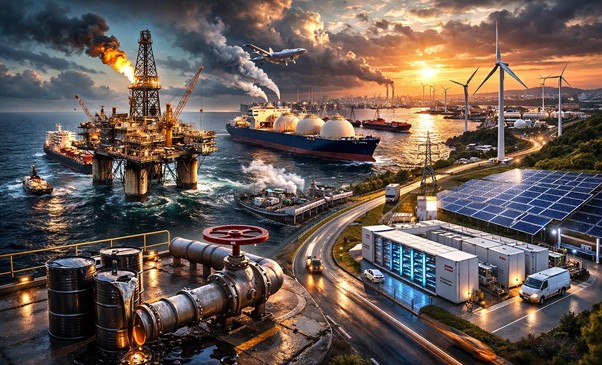
These developments did not occur in a vacuum. In the years leading up to the crisis, investments in some traditional energy sectors declined, driven by expectations of a shift towards more sustainable sources. At the same time, these new alternatives had not yet reached the point where they could fully meet the needs of the global economy. When demand rebounded after the COVID-19 pandemic, the gap between the world’s energy needs and the actual supply on the market became apparent.
Then came political tensions, wars, and economic sanctions, further complicating the situation. Energy has always been more than just an economic commodity; it is linked to national security, international relations, and global trade. Therefore, any disruption in production or transportation areas quickly reverberates throughout the rest of the world.
Therefore, the current crisis is not simply another cycle of price increases that markets have experienced in the past. It raises broader questions about the future of energy itself, and the speed at which the world can transition from an economic model heavily reliant on fossil fuels to one based on diverse energy sources.
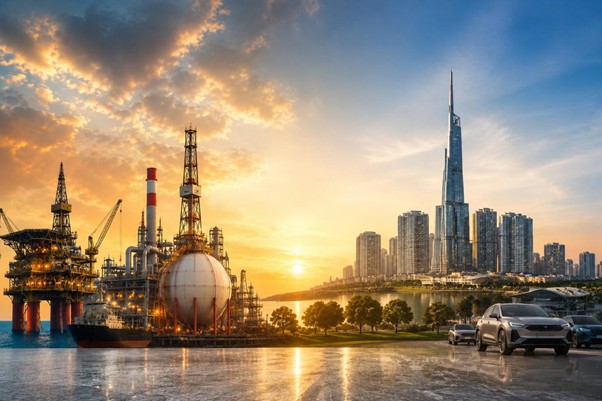
In the Arab region, these questions take on additional dimensions. Many Arab economies have been linked for decades to the energy sector, whether through production and export or through import and consumption. Therefore, the effects of rising prices are not uniform across all countries.
Exporting countries benefited from increased revenues and improved financial positions, which provided them with additional resources for investment and development. However, past experience has also shown that boom periods do not necessarily last, and that relying solely on commodity price cycles does not provide a stable foundation for long-term growth.
Energy-importing countries, however, faced different pressures. The rising import bill impacted public budgets, increased production costs, and affected price levels. In some cases, this forced governments to make difficult choices between containing the financial burden and maintaining subsidies and services.
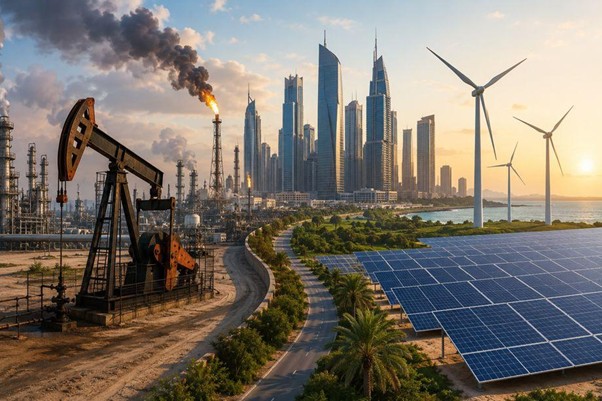
Perhaps the most important lesson at this stage is that energy is no longer solely the concern of oil ministries or production companies. It has become intertwined with industrial policy, food security, transportation, investment, and economic competitiveness. Therefore, economies that view energy as part of an integrated development strategy will be better equipped to cope with future changes than those that treat it as a separate sector.
Therefore, economic diversification is more important than ever. Countries with large energy resources need to redirect a portion of their current revenues into long-term investments in new sectors capable of generating value and future employment opportunities. Conversely, energy-importing countries need to invest more in energy efficiency, reduce waste, and develop domestic resources to mitigate the impact of external fluctuations.
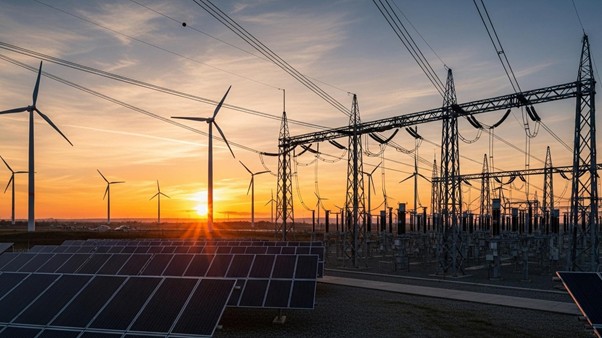
Moreover, the shift towards renewable energy is no longer solely driven by environmental considerations. In recent years, this transition has also become a matter of economic security. Any country that succeeds in diversifying its energy sources reduces its vulnerability to shocks that may result from political crises or global market volatility.
Perhaps what current developments reveal is that the issue is not so much about rising or falling prices as it is about the nature of the phase the global economy is going through. The world, which for years has been preoccupied with discussing the digital economy, artificial intelligence, and the rapid pace of innovation, has found itself returning to an old question concerning energy, its availability, and its stability. The significance of all this may not lie in the energy sector itself, but rather in what it says about the global economy as a whole. Every historical phase imposes its own priorities, and it seems that energy has returned to remind everyone that it remains one of the pillars upon which the modern economic system rests, regardless of how the tools and labels change.