



Digital Trust as a Foundational Pillar for Countries’ Digital Goals
The Global System for Mobile Communications Association (GSMA) released two new reports during the M360 ASEAN Digital Trust conference, affirming that digital trust has become a foundational pillar for achieving countries’ digital goals, amid escalating online fraud and deepfake operations threatening the pace of digital transformation in the region.
Online Fraud: Alarming Figures
The GSMA ASEAN Consumer Fraud Report 2026 revealed the scale of the problem and its direct impact on user trust. Eight percent of surveyed consumers reported falling victim to fraud over the past twelve months. Among them, 68% incurred financial losses, while 82% were unable to recover any part of their losses, and only 10% recovered their money in full.
The report showed that fraud victims are more than twice as likely to change their accounts or service providers compared to those who have never been targeted, reflecting the deep impact of fraud on consumer behavior and trust in digital services.
The report also noted that 96% of consumers are concerned about falling victim to fraud or cyberattacks, and nearly 9 in 10 consumers recognize at least one form of AI used in fraud schemes. Sixty-nine percent of victims reported the incident, but nearly 45% of reported cases remain unresolved.
Messaging apps are the most common channel through which consumers encounter fraud, accounting for 41% of all cases. Fraud has also become common in forms such as investments, cryptocurrencies, online shopping, and employment, with the tactic of deceiving victims into transferring money to the fraudsters themselves.
AI Complicates the Trust Landscape
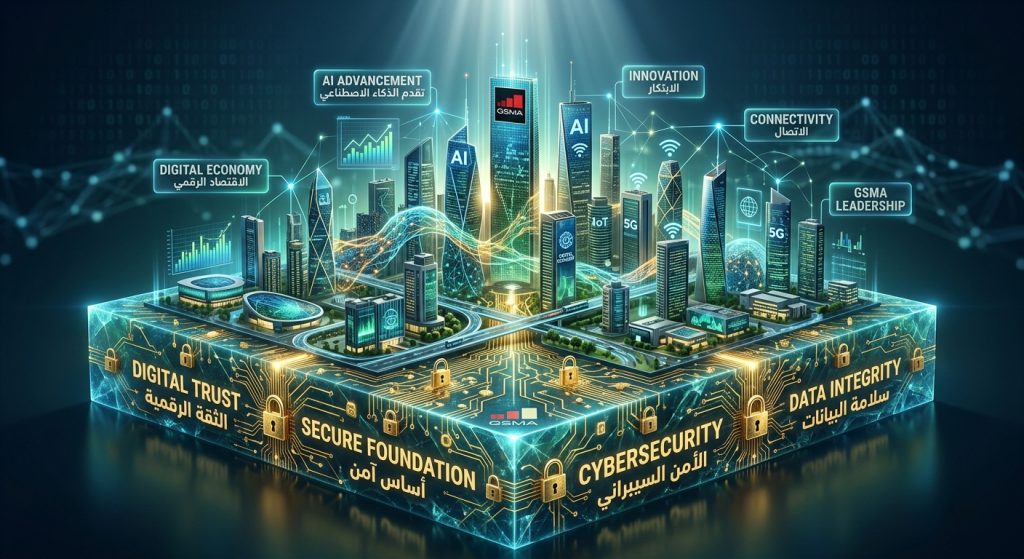
The report “Digital Nations 2026: Building Trusted Digital Ecosystems in ASEAN” affirmed that trust has become a strategic foundation for the digital future. The report explained that emerging technologies are changing the nature of digital trust, as AI facilitates sophisticated forms of cyberattacks, alongside deepfake technology, voice cloning, and impersonation in the digital environment, making it harder for individuals and institutions to distinguish legitimate interactions from fraudulent behavior.
Therefore, digital trust increasingly depends on the ecosystem’s ability to verify identity, authenticate communications, enhance resilience, and exchange trusted information to prevent risks before they cause harm.
The Four Pillars of Digital Trust
The Digital Nations 2026 report identified four pillars closely linked to digital trust:
-
Digital Identity: The ability to verify the identity of individuals and organizations in the digital environment.
-
Communication: The level of trust in the origin and accuracy of digital interactions.
-
Robust Infrastructure and Resilience: Infrastructure and cybersecurity solutions that help digital services maintain continuous and secure operation against incidents and attacks.
-
Information Sharing: The ability to build, share, and benefit from trusted information sources to enhance the security, responsiveness, and protection of digital systems.
A Call for Multistakeholder Coordination
The report stresses that strengthening these foundations requires coordination among governments, regulators, mobile network operators, financial institutions, digital platforms, and ecosystem stakeholders.
Julian Gorman, GSMA’s Head of Asia Pacific, said: “Providing access alone is not enough. As digital economies in ASEAN countries develop, people need to trust that digital services are safe, reliable, and accountable.”
The reports’ findings indicate that digital trust has become a prerequisite for individuals’ participation in the digital environment, which fosters innovation and growth. Countries that build trust in digital infrastructure, services, and institutions will have a greater advantage in achieving their digital goals.
The Role of Network Operators
Building on their traditional role of providing connectivity services, mobile network operators are increasingly contributing to all four pillars of digital trust through identity verification, cybersecurity, fraud prevention, and the provision of trusted authentication services and information sharing.
Source
Source: VTV.vn – September 12, 2026: https://vtv.vn/hiep-hoi-di-dong-toan-cau-gsma-niem-tin-so-la-nen-tang-cho-cac-muc-tieu-kinh-te-so-va-ai-100260912081051816.htm