




Cairo
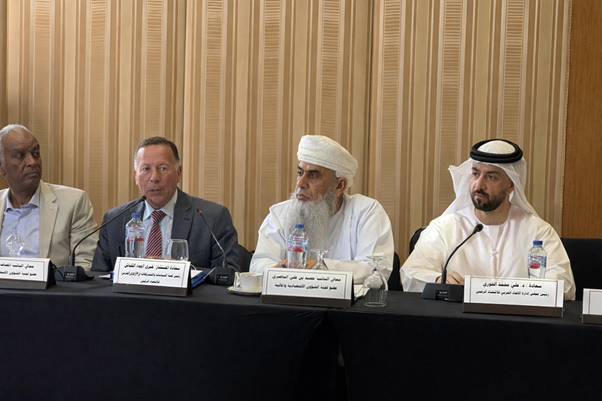
His Excellency Counselor Dr. Khairy Ahmed Al-Kabbash, President of the Court of Appeal, former Secretary-General of the Supreme Committee for Legislative Reform at the Ministry of Justice in the Arab Republic of Egypt, and Chairman of the Policies and Legislation Committee of the Arab Federation for Digital Economy, called for the launch of a unified Arab Charter for the Digital Economy , as a legislative and strategic pillar for establishing a joint Arab digital market capable of competing globally, and ensuring the protection of the Arab consumer, producer and worker in the digital space.
This came in a speech he delivered during a meeting of the Economic and Financial Committee of the Arab Parliament, in which he stressed that the Arab digital economy will not reach the stage of global competitiveness, nor will it achieve sufficient legal protection for its human and productive components, unless Arab countries move from separate digital initiatives to a unified, enforceable Arab legal framework that regulates the movement of data, payments and basic digital services within a common Arab legal jurisdiction.
Al-Kabash explained that the Arab space still suffers from legislative and regulatory fragmentation in the areas of e-commerce, data governance, cybersecurity, and artificial intelligence, which limits the ability of Arab countries to achieve joint digital integration and weakens their negotiating and economic position in the face of major international blocs.
He explained that the proposed charter should not merely announce general principles, but should establish binding legal rules for a single Arab digital market, based on three pivotal pillars; including:
(1) Freedom of movement of Arab digital value across borders, enabling digital services, content, freelance work and creative services to access an expanded Arab market, (2) and the adoption of the principle of “national digital product” treatment, whereby an Arab digital service established in a State Party is treated as a national product in the rest of the Member States, with specific and declared exceptions for reasons related to national security, (3) and the removal of unjustified obstacles to Arab digital services, including fees and regulations used as disguised barriers to market integration.
His Excellency stressed that these pillars would transform the Arab digital economy from mere “adjacent markets” into a single Arab digital market capable of expansion and deep integration , making Arab integration a real competitive advantage.
In the area of artificial intelligence governance, Al-Kabbash stressed that artificial intelligence represents the most influential pillar in the development of the digital economy, and that the absence of a unified Arab framework makes its applications in the region vulnerable to regulatory disparities, weak legal protection, and the absence of common ethical standards.
He explained that the Arab Charter project will provide a legislative reference for setting unified rules for the governance of artificial intelligence, including the protection of personal data, ensuring transparency and non-discrimination of algorithms, and determining legal responsibility for the decisions of smart systems, in order to achieve a delicate balance between encouraging technological innovation and protecting fundamental rights and freedoms.
In the context of consolidating Arab digital sovereignty, Al-Kabbash pointed out that the proposed charter will contribute to reducing excessive reliance on foreign technological systems and platforms, and enable Arab countries to exert greater legal and technical control over national data and strategic digital resources.
He added that the charter will also allow for the localization of artificial intelligence applications in a way that takes into account the Arabic language, cultural privacy and societal values, which will support societal confidence in these technologies, and transform artificial intelligence from an imported tool into a developmental lever with an Arab identity .
Al-Kabbash concluded his speech by emphasizing that the relationship between the digital economy and artificial intelligence is organic and complementary, as artificial intelligence represents the beating heart of the digital economy, while the digital economy forms the environment that fosters its applications and spread.
He stressed that any national or legislative strategy for the digital economy remains incomplete unless it makes artificial intelligence a fundamental pillar of it, calling for the adoption of the unified Arab Charter project as a foundational step towards a more integrated, independent and competitive Arab digital future .