



Abu Dhabi
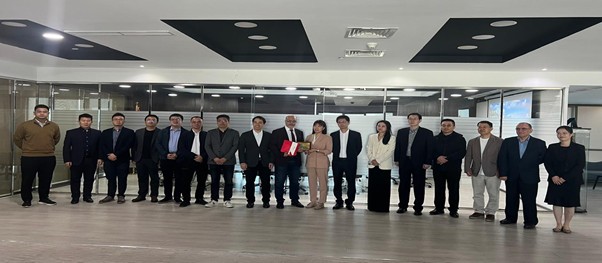
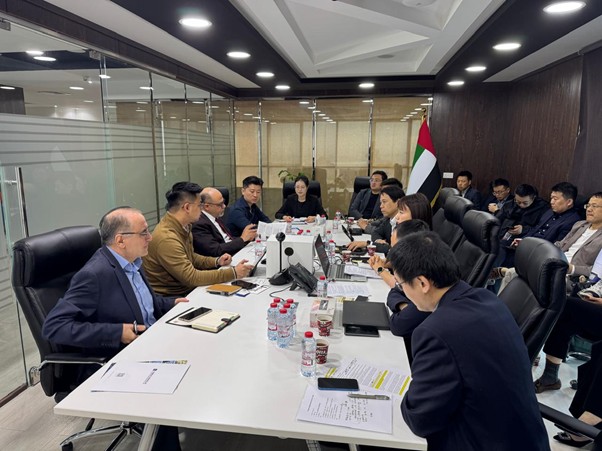
The Arab Federation for Digital Economy held a coordination meeting with a delegation from the “International Contractors Association” of the Chinese city of Hangzhou, as a representative of the “Digital Cities Development Committee” emanating from the World Digital Trade Fair, within the arrangements for implementing the memorandum of understanding signed between the two sides in September 2025, with the aim of identifying priority areas of work, operational mechanisms, and follow-up paths.
The meeting was chaired on the Chinese side by Ms. Tiffany, Secretary General of the Association. Representing the Arab Federation for Digital Economy were Dr. Ayman Ghoneim, Assistant Secretary General; Mr. Amer Al-Zoubi, Legal Advisor; Mr. Tang Tang, Head of the Federation’s Representative Office in China; and Mr. Jiet Dai, Office Director.
Cooperation framework and areas of focus
During the meeting, a systematic presentation was given outlining the pillars of the Arab Federation for Digital Economy’s work, its programs, initiatives, and services. A summary of the studies and research the Federation is undertaking to support digital transformation and develop related policies was also presented. Furthermore, opportunities for technical and operational partnerships were explored, aligning with the priorities of Arab states and the requirements for sustainability, service efficiency, and data governance.
In contrast, the Chinese delegation presented a vision for the approach to developing digital cities within the Hangzhou experience, focusing on operating models, technical standards, mechanisms for transferring expertise, and the requirements for localizing solutions according to the organizational and institutional specificities in the beneficiary countries.
The discussions focused on five practical areas, as entry points for digital city projects:
- The new industry: Employing smart manufacturing and artificial intelligence to modernize production chains and increase productivity in traditional sectors.
- New energy: Smart grid and green building solutions to support sustainable, low-emission energy systems.
- New engineering: Smart building and city governance across the entire project lifecycle, from planning to operation and maintenance.
- New mobility: Intelligent traffic systems and digital parking management within an integrated urban mobility system.
- New security: Emergency response systems and urban diagnostics aimed at improving city preparedness and the continuity of essential services.
The meeting also included a discussion of a proposal to establish “Arab-Chinese Digital Cities Cooperation Centers” through two integrated tracks:
- A center in Hangzhou: to serve as a hub for resources, standards and technical reference frameworks.
- A center in the Middle East (Abu Dhabi or Dubai): to serve as an operational platform for institutional coordination, project implementation, localization of solutions, and capacity building.
The meeting concluded with an agreement to continue technical coordination to identify an initial package of actionable areas of cooperation, including digital infrastructure projects, data governance, and smart city applications, with discussions to be completed through specific follow-up channels, in order to support the achievement of measurable results within the priorities of sustainable development in the Arab region.