




Mufakiru Alemarat
The contemporary technological revolution is advancing to open a new phase in the movement of the global economy, in which artificial intelligence leads future economic trends and establishes new methods and patterns of production that transcend the traditional structures and models that have ruled the industrial economy for a long time. In the past, economic equations were based on the abundance of raw materials and the possession of military power by countries. However, these equations are now witnessing a gradual decline in the face of the rise of a new structure based on data, algorithms, and the ability to build knowledge systems that give their owners a central position in the international economy and give them new capabilities to employ data and transform it into a competitive advantage and added value that supports the path of economic progress.
Global research institutions estimate that artificial intelligence could contribute about $20 trillion to global output by the end of this decade, in a structural shift that reveals the global economy is moving within a new architecture in which technology is becoming a factor that is reshaping the very foundations of superiority and influence.
Behind these data and transformations looms a fierce competition between the United States and China, which goes beyond superiority in the field of innovation to readjusting the balance of global influence. The United States seeks to secure its technological dominance by injecting large investments into artificial intelligence infrastructure and establishing broad partnerships with its major companies, which gives it a relative advantage and a greater ability to direct the development paths of algorithms and their global usage standards.
As for China, it relies on a multi-dimensional strategy to expand its international technological presence. It is pushing towards establishing an extended international system in Asia and Africa, through investment in infrastructure, energy, transportation, and digital systems projects, and linking emerging markets to the Chinese computer infrastructure, which enhances the use of technology as a tool for geoeconomic influence.
In this context, Europe is acting as a player seeking to solidify its strategic position in an increasingly polarized technological environment. It is relying on its legislative and regulatory powers to impose standards on global companies, control its markets, and ensure competition protects its interests, all in an attempt to compensate for the decline in some of its industrial capabilities. These international alignments reflect a shift in the arenas of competition from traditional spheres of influence to the realm of technological innovation.
These trends have direct implications for the global economy. Massive investments in advanced computing, data centers, and high-precision raw materials reveal that artificial intelligence has become an integral component of national economic security. The exponential growth in demand for AI systems and algorithms, and the resulting need for advanced energy and minerals, indicates that the international economy has entered a phase requiring a delicate balance between technological expansion and its strategic costs. This is especially true given the escalating warnings about potential disruptions to supply chains, energy market volatility, and the high financial valuations of technology companies, which are creating the potential for new financial bubbles.
The effects of these transformations extend to the Arab region, as responses are taking shape along two parallel paths. In recent years, the UAE has sought to build a development system based on attracting global companies, developing digital infrastructure, and establishing research centers that provide economic activities with advanced technological tools capable of supporting the transport, services, and knowledge economy sectors.
As for the level of Arab countries in general, there is a growing awareness of the importance of integrating artificial intelligence into their national strategies, with the declining feasibility of relying on energy sources and traditional rentier models, and the emergence of the need to build an economy based on the production and development of knowledge.
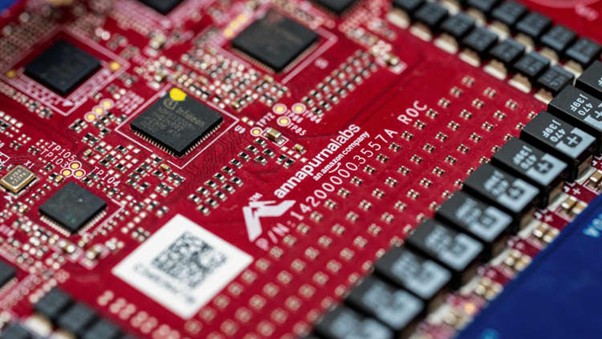
International economic estimates indicate that the contribution of artificial intelligence to Arab economies will exceed hundreds of billions; however, the real value lies in the structural transformation in the nature of these economies themselves; by moving from management patterns governed by the fluctuations of energy markets and the requirements of population expansion, to other patterns based on building knowledge assets; which enhances their ability to withstand shocks.
In this context, the need to develop flexible and renewed legislative and legal frameworks that keep pace with the requirements of technological development is highlighted, in addition to establishing infrastructures capable of accommodating advanced computing, and dealing with artificial intelligence as an engine that reshapes the economic and national sectors, not merely an independent sector.
However, Arab countries face complex challenges related to the ability to keep pace with rapid transformation. The absence of advanced digital infrastructure, weak scientific research systems, and a lack of skills related to data management and analysis systems make many Arab economies dependent on technology imports, without the ability to produce; a path that entails long-term economic risks.
Reports from international institutions confirm that the widening gap in investment in artificial intelligence between economies may lead to a change in production and growth patterns in the region, with high-value industries moving to technologically advanced countries, while the share of other economies in production chains declines, making them more vulnerable to job losses and investment opportunities in the long term.
This disparity will extend to the Arab labor market. The Gulf states, which rely on a large workforce in the services and construction sectors, will witness a significant shift towards new work models. Routine office and operational jobs will decline, while jobs related to data and advanced technology will emerge. As for middle- and low-income economies, the main challenge is that their productive structures will remain at low levels of economic value if they do not initiate modern vocational training programs to develop the skills of their workforce.
These transformations are intertwined with regulatory frameworks and legal contexts that are still taking shape; most countries do not yet have the appropriate legal framework for managing artificial intelligence, and the relationship between data, privacy, and legal responsibility requires continuous legislative updates that balance protecting the security of society with encouraging innovation.
In the Arab world, there is a need for integrated legislative frameworks, as the slowness in developing them may lead to the adoption of external regulatory models, and this carries strategic consequences that go beyond the economic framework to touch the foundations of sovereignty and national decision-making.
This challenge is becoming increasingly critical given the growing monopolistic nature of the AI economy, where technological capabilities are concentrated in the hands of a limited number of large companies, thus entrenching a monopoly on knowledge and decision-making. Without an Arab project to produce independent local language models that establish sovereign digital infrastructures, many countries will find themselves drawn into an economic orbit where dominant powers control the algorithmic structures that will shape the future of the global economy.
Reports from the World Economic Forum indicate that the world is moving towards more sophisticated financial systems, where advanced artificial intelligence models are redefining risk assessment mechanisms, capital allocation, and the very rules governing the flow of finance. This dimension grants artificial intelligence a pivotal role in the new global economic model, which is based on integrating technological infrastructure into strategic planning and decision-making processes. For Arab countries, their ability to compete and attract investment will no longer depend solely on traditional resources or financial stability, but also on their readiness to possess digital, knowledge-based, and sovereign infrastructure capable of engaging with these advanced systems. This will ensure their ability to attract financing, safeguard their economic decisions, and maintain their development priorities.
The map of global transformations reveals that artificial intelligence represents a significant shift in the global economic system, imposing strategic choices on the Arab region that require clarity of vision and bold decision-making. Countries that deal with it as a strategic pillar in building their economic systems will gain a clear advantage, while lagging countries will face pressures that threaten their role and position in the international system.
Given the time gaps between major technological shifts, the opportunity seems ripe for Arab states to reposition themselves within the global economy, provided they adopt a vision based on investing in intellectual capital before any other resource. It is insufficient to direct Arab discussions toward assessing potential gains without understanding the logic of the structure that will determine the rhythm of the global economy in the coming decades. Dealing with emerging technologies in isolation from broader structural transformations—whether in labor, production, or social relations—will place countries in a situation where they cannot adequately adapt and will bear a higher cost as a result of this disconnect between technology and its broader context.
What decision-makers in Arab countries need to do is treat artificial intelligence as part of a strategic project aimed at building capacity for growth and international standing. It is essential to recognize that the emerging economic system is moving towards a new model based on a precise and complex architecture of data and algorithms. Simply possessing the technology is not enough; a country must master the ability to interpret the system’s design and trends, and to effectively position itself within the knowledge-based value chains and production systems of the new economy.