



Shanghai
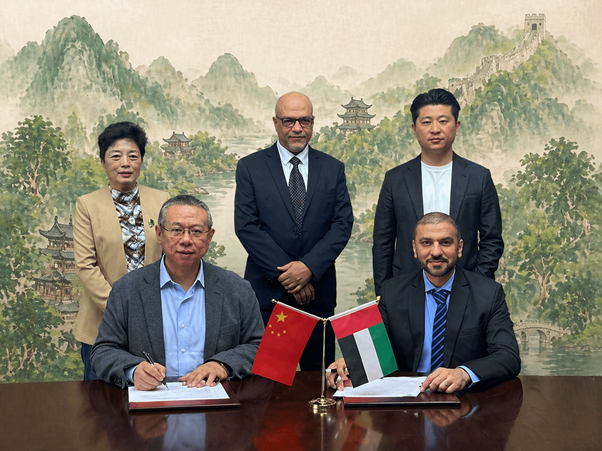
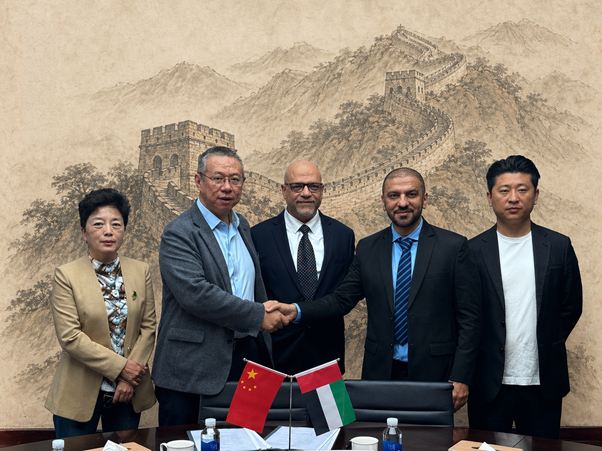
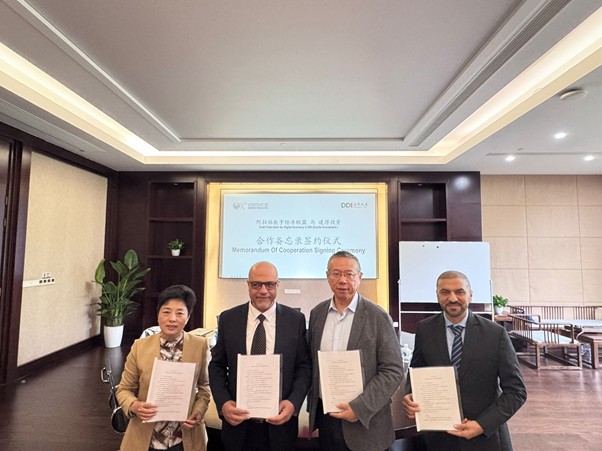
The Arab Federation for Digital Economy signed a series of agreements today in Shanghai with DDI (Dao Di Investment Group), a leading Chinese investment firm specializing in technology financing and investment. DDI focuses on new energy, new materials, and AI-powered robotics as its core investment sectors. The agreements aim to establish joint Arab-Chinese companies in both the Middle East and China to promote the use of advanced robotics in logistics, industry, and other sectors.
The memorandum focuses on establishing an Arab-Chinese company for advanced robotics, which will work to build and develop an integrated ecosystem for developing, designing, and adapting intelligent robots to meet the diverse business needs of the Arab market. The company’s role will extend to creating a comprehensive industrial and research system that includes design and engineering centers, artificial intelligence laboratories, local service units, and human capital development programs – thus ensuring the localization of the robotics industry in the Arab world according to global standards.
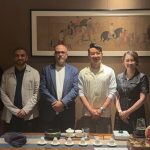
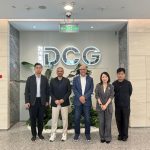
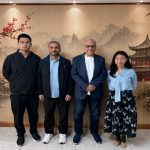
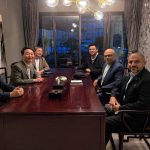
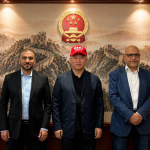
The agreements were signed on behalf of the Arab side by Dr. Abdullah Al-Darmaki, Deputy Secretary-General of the Federation , and on behalf of the Chinese side by Professor Wu Fei, Chairman of the Board of Directors of DDI. Also present at the signing were Dr. Ayman Ghoneim, Assistant Secretary-General of the Federation , Ms. Wang Lumin, Chairperson of the DDI Overseas Fund, and Mr. Tang Tang, Head of the Federation’s Office in China.
A global revolution: figures and predictions that cannot be ignored
This collaboration comes at a time when the world is witnessing an unprecedented boom in the field of robotics and artificial intelligence, with the value of the global robotics market exceeding $113 billion in 2025, and expected to reach $236.8 billion by 2030 at a compound annual growth rate of 15.7%.
The humanoid robot market, in particular, is projected to jump from $2.9 billion in 2025 to $15.3 billion by 2030, representing a staggering compound annual growth rate (CAGR) of 39.2%. According to IDC, global sales of humanoid robots are expected to exceed 510,000 units by 2030, with a CAGR approaching 95%. Morgan Stanley forecasts that global sales will reach 1.4 billion units by 2050, with a total installed base of 6.5 billion active robots.
Artificial intelligence + machine = intelligent machine capable of automatic action
The integration of artificial intelligence with machines is no longer a futuristic concept; it has become a tangible reality redefining industry and logistics worldwide. The world is witnessing a radical shift from traditional machines that simply execute commands to “intelligent machines” capable of understanding and intelligently executing tasks, with the ability to act autonomously and make decisions based on data analysis and surrounding circumstances. This is the fundamental difference between a traditional machine and an intelligent machine—the latter being the true embodiment of the term “robot.”
In the industrial sector, robots have moved beyond traditional assembly lines into the era of physical intelligence (AI). Humanoid robots are now used to perform complex tasks in automotive factories, from inspecting parts with pinpoint accuracy to welding and painting operations that once required specialized human skills. In the logistics sector, warehouses are transforming into fully intelligent, 24/7 systems, where smart robots navigate aisles to pick up, sort, and ship orders with speed and accuracy tens of times greater than human capabilities, reducing manual effort by up to 90%. The logistics robotics market alone is projected to grow from $13 billion in 2025 to $114.8 billion by 2032.
Similar revolutions are taking place in the energy, healthcare, agriculture and construction sectors, where robots are being used to maintain power plants, perform delicate surgical procedures, harvest crops and even manage traffic via self-driving taxis.
Investment fund in the UAE
In addition to establishing the joint venture, the agreements stipulate the creation of an investment fund to be launched in the United Arab Emirates, aimed at financing research and manufacturing activities in the field of robotics, both within the Arab region and through Chinese suppliers who are a major contributor to this industry.
In a statement, Professor Wu Fei explained that the Chinese side will rely on its long and successful experience in managing specialized industrial funds to initiate long-term strategic cooperation in the financial and industrial fields.
Professor Wu Fei added: “DDI has a proven track record of financing strategic industries and building global supply chains. I am leading the group’s global industry chain strategy in the Middle East, Indonesia and other emerging markets, with the aim of driving the localization of the technology sector. This move represents a new pillar in our strategy.”
For her part, Ms. Wang Lumin, President of the DDI Overseas Fund, stated: “We are proud of this partnership with the Arab Federation for Digital Economy, which we see as a true gateway for knowledge exchange and capacity building in the Arab world during one of the most important industrial revolutions of the 21st century. We are confident that close cooperation between Chinese expertise in fund management and Arab ambition in technological development will soon bear fruit.”
Mr. Tang Tang, head of the Federation’s office in China, pointed out that this cooperation reflects the depth of Arab-Chinese economic relations, stressing that China is a reliable partner in the fields of innovation and advanced technology, and that the office will work to remove any obstacles that may hinder the implementation of these agreements.
A Chinese success story spanning a decade… and more
DDI Group is no newcomer to the world of technology investment. Managing assets exceeding 16 billion Chinese yuan (over US$2 billion), it is a global leader in new energy investment and holds asset management licenses in both Shanghai and Hong Kong. The group is distinguished by its unique strategy of specialized industrial investments, built upon decades of experience in mergers and acquisitions.
The group is headed by Professor Wu Fei, who has nearly 30 years of practical experience in the investment field. He was one of the first to receive a guarantor representative license from the China Securities Commission in 2004, and he also holds qualifications in law and accounting, in addition to being a member of several top financial advisory boards.
Broad prospects for cooperation
This strategic partnership is expected to accelerate innovation and support the robotics and artificial intelligence ecosystem in the Arab world, and open up broad prospects for joint cooperation between the Arab and Chinese sides in one of the fastest growing sectors in the world.