



Shenzhen – China
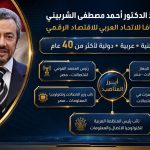
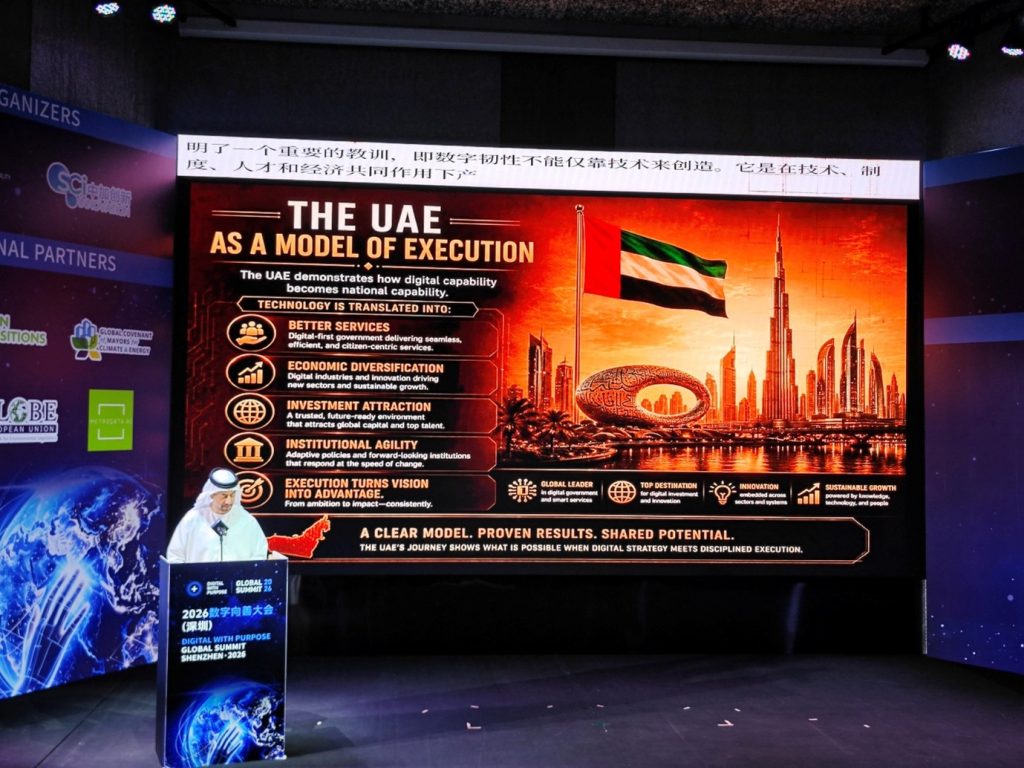
His Excellency Dr. Ali Mohammed Al-Khouri, President of the Arab Federation for Digital Economy, affirmed that the UAE has established, over the past two decades, a global economic model based on digital integration, speed of implementation, and future governance, noting that the UAE experience stands out in its ability to transform digital capabilities into advanced government services, economic diversification, attracting investments, institutional flexibility, and long-term competitiveness.
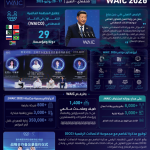
This came during His Excellency’s participation in an international conference held in Shenzhen, China, where he delivered a speech entitled “Digital Transformation in an Age of Uncertainty,” in which he addressed the profound transformations taking place in global economies in light of geopolitical turmoil, changing supply chains, the acceleration of artificial intelligence technologies, increasing cyber risks, and the rise of the digital economy as one of the main drivers of international competitiveness.
Al-Khoury said that global attention today is focused on the ability of digital systems to ensure the continuity of economies and services, protect the reliability of data, and maintain the confidence of societies in times of crisis, noting that digital transformation has become a key element in the resilience of economies and institutions.
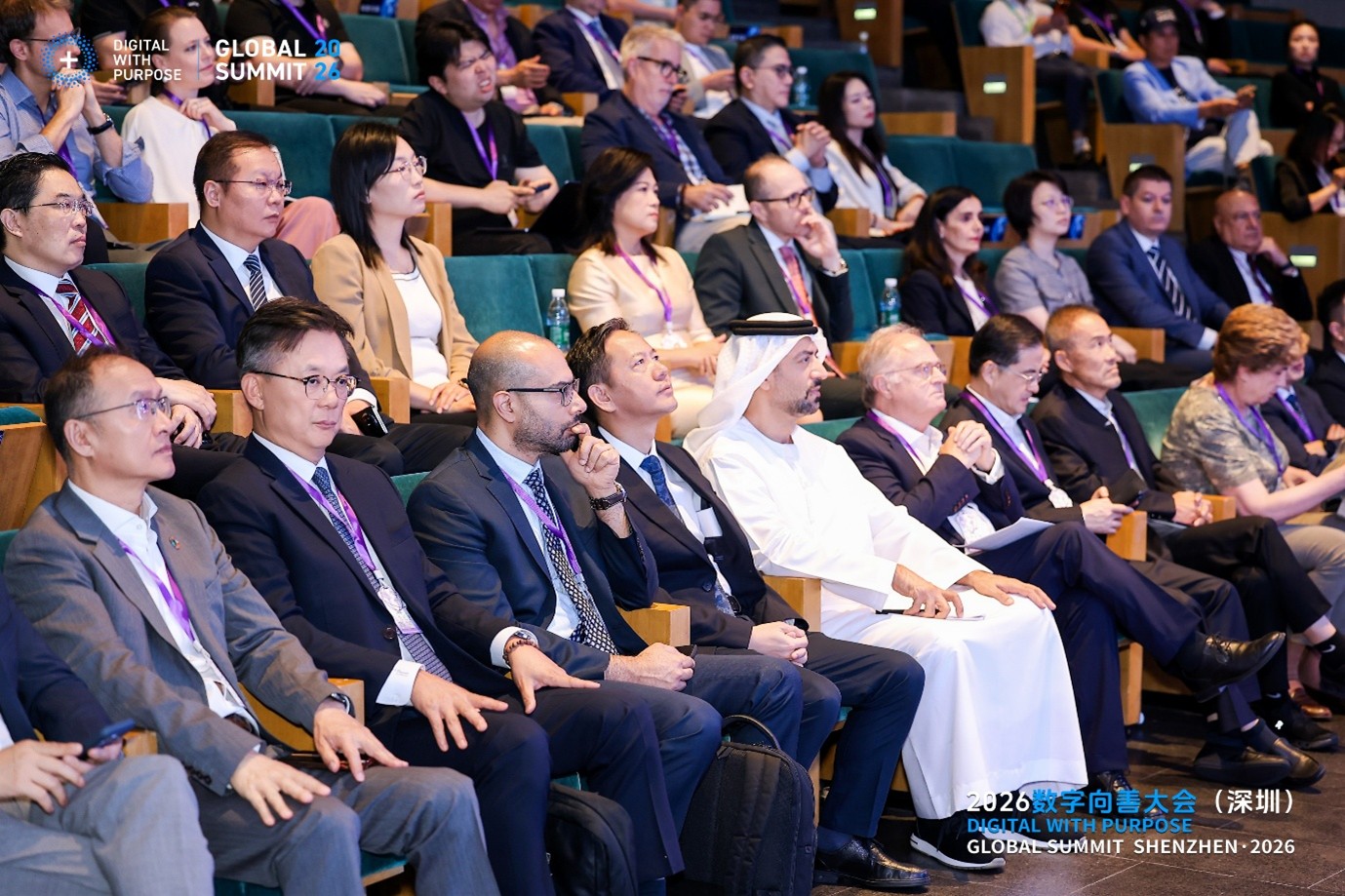
He added that the world is living through a phase in which economic stability is no longer a traditional concept, as trade routes can change, supply chains can be disrupted, technology can become a tool in geopolitical competition, and cyberattacks can halt essential services, noting that digital infrastructure has become one of the pillars of the strategic structure of modern economic security.
He pointed to a World Economic Forum report indicating that 64% of organizations in 2026 will include geopolitically motivated cyberattacks in their risk management strategies, which illustrates the expansion of the concept of economic security to include the security of data, systems, digital platforms and vital services.
He said that these risks are gaining more weight as the digital economy becomes a major driver of global growth, and as the finance, trade, government services, health and transportation sectors rely on digital systems, noting the growing size of the global digital economy, whose value is approaching $28 trillion today, and digital payment systems recording transactions exceeding $24 trillion annually, while artificial intelligence is expected to add about $20 trillion to the global economy by 2030.
He pointed out that these figures reveal the shift in the foundations and standards of economic competitiveness, and the rise of digital infrastructure as an influential force in the ability of countries and institutions to continue, adapt, and maintain the movement of markets, services, and vital activities in times of turmoil.
He said that the interconnectedness of modern economies means that the disruption of any major digital system, such as cloud computing, cybersecurity, or digital payments, can affect vital sectors such as health, finance, transportation, logistics, and government, making continuity a key criterion for digital success.
He added that economic resilience is now measured by the ability of institutions and markets to continue operating under pressure, the continued availability of public services, the continued access of businesses to markets, the secure movement of data, the confidence of citizens in the systems, and the readiness of the workforce for the new economy.
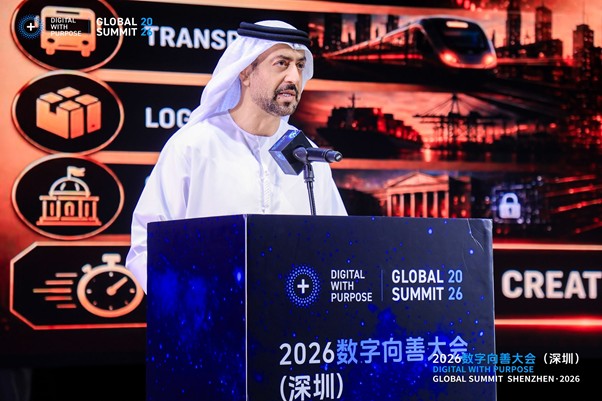
Al-Khouri explained that this reality requires a different way of looking at digital progress, going beyond network readiness or providing services, to building scalable systems, responsive institutions, resilient infrastructure, and public policies capable of keeping pace with rapid transformations.
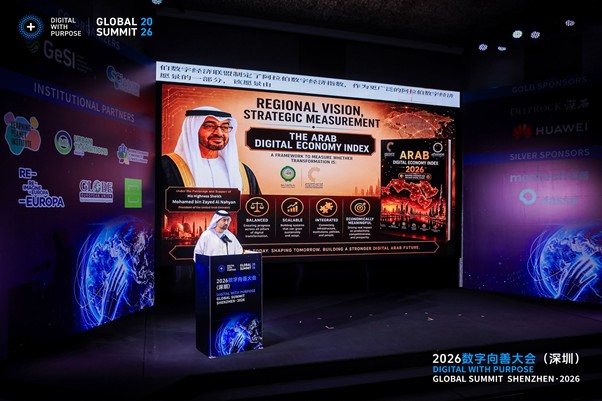
In his speech, he addressed the Arab Digital Economy Index, which was developed by the Arab Federation for Digital Economy, within the framework of the Arab vision for the digital economy that was approved by the Arab countries and received high support from His Highness Sheikh Mohammed bin Zayed Al Nahyan, President of the State, may God protect him.
He said the index was designed to help governments understand whether their digital transformation plans and programs are progressing in a balanced, scalable, and economically integrated manner, by assessing infrastructure, institutional readiness, investment, human capital, and long-term economic capabilities.
He added that the results of the 2026 index reveal significant untapped potential in the Arab region, where some Arab economies are making rapid progress in digital readiness, most notably the UAE and the GCC countries, while other economies are still in the stage of building basic capabilities.
He pointed out that the disparity in digital readiness among Arab countries provides a practical roadmap for areas where investments, reforms, policy coordination, regional cooperation and international partnerships can have a rapid and tangible impact.
He stressed that the Arab digital transformation is entering a new phase, in which the focus is no longer on adopting technologies as much as it is on building integrated and scalable economic systems, capable of linking infrastructure, capital, policies and industrial capabilities in sustainable development models.
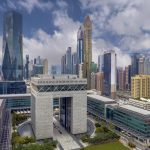
He said that in this context, the UAE represents an advanced model in integrating technology and digitalization into the national economy’s operating model, as its experience is based on transforming technology from a supportive structure into an effective operational capability in policy implementation, economic efficiency, growth diversification, institutional readiness, and long-term competitiveness.
He added that what distinguishes the UAE experience is the speed with which digital capabilities have been transformed into practical results in public services, investment attractiveness, economic diversification, and institutional responsiveness, which makes it an international model in how to employ technology to serve the economy and society.
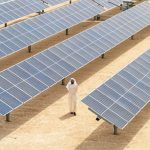
Al-Khouri also touched on the new dimension related to energy and sustainability in the digital economy, explaining that the expansion of artificial intelligence applications, cloud computing and large-scale digital systems makes the digital infrastructure more dependent on energy, as the electricity demand associated with these systems is expected to double in the coming years.
He said that sustainability and energy efficiency have become central elements in the future of the digital economy, noting that the Arab region has an important geographical location, expanding infrastructure, and sovereign investment capabilities, which qualify it to be one of the platforms for global digital growth in its next phase.
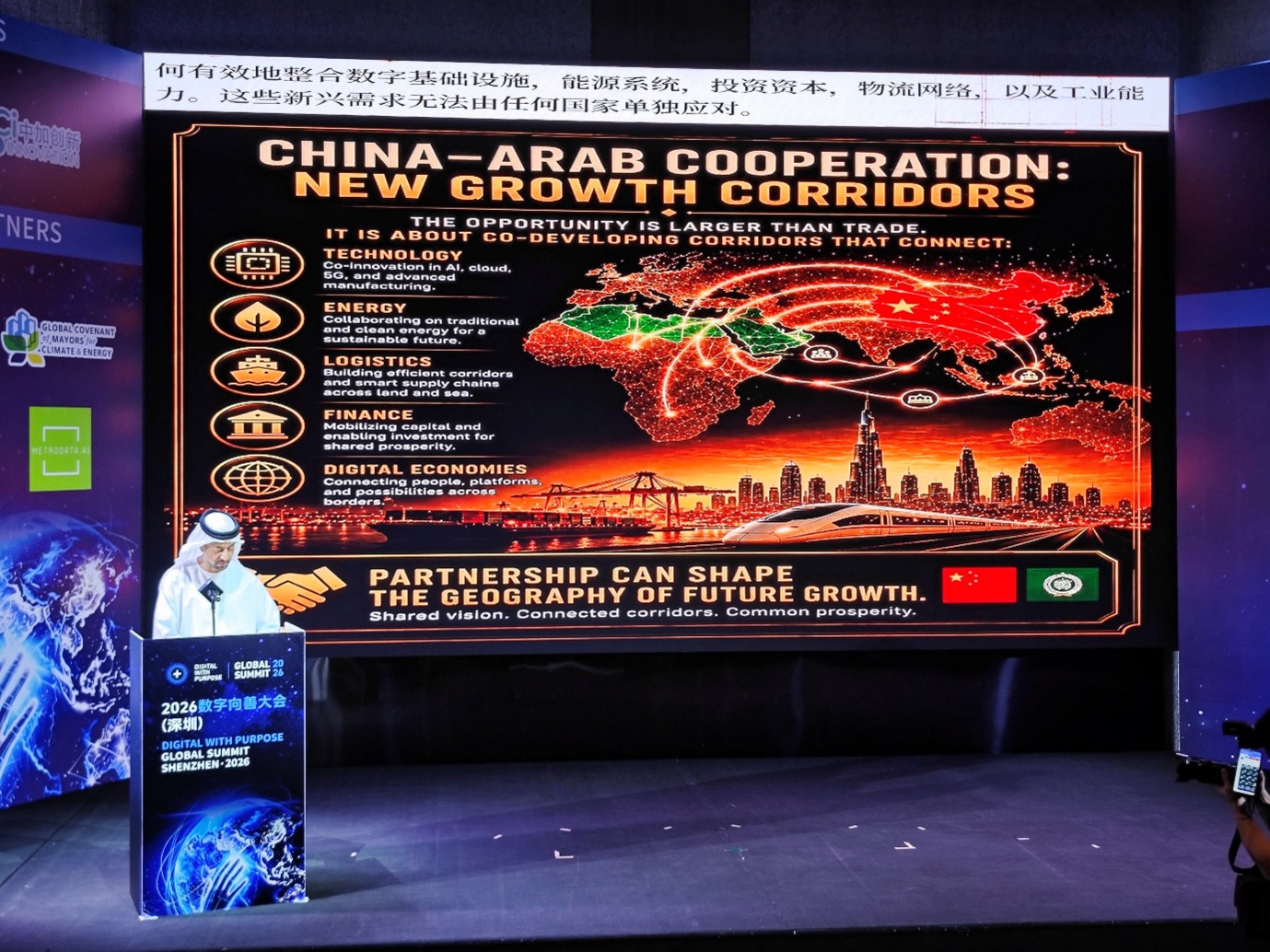
He explained that cooperation between China and Arab countries could move into practical projects linking Chinese technology with Arab capabilities in energy, ports, logistics and digital markets, helping to build new corridors for trade, data and investment between Asia, the Arab region and Africa.
Al-Khouri concluded his speech by emphasizing that the opportunities for investors, technology companies, and international partners extend beyond individual projects to include participation in developing new growth corridors capable of influencing the future of trade, infrastructure investment trends, and the new geography of global digital growth.
Al-Khouri concluded his speech by emphasizing that the real opportunity in the Arab region lies in building international partnerships that help develop shared digital value chains, contribute to accelerating e-commerce, developing logistics services, attracting investments, opening new markets, and giving Arab economies greater ability to produce added value in the global digital economy.