




Tunisia
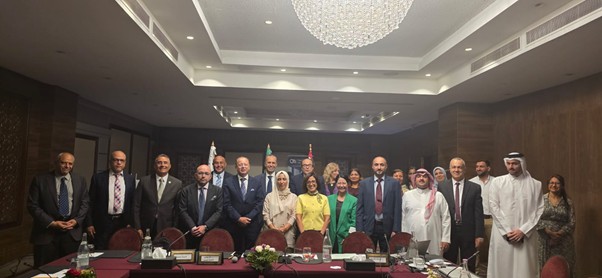
The Arab Federation for Digital Economy participated in the meetings of the Artificial Intelligence Committee and the Arab Permanent Committee for Communications and Information Systems, which were held in the Republic of Tunisia on July 27 and 28, 2026, with the participation of representatives of Arab countries and a number of Arab, regional and international organizations concerned with the communications, information technology and digital transformation sector.
The work of the Artificial Intelligence Committee, which was held on July 27, witnessed a presentation by Dr. Mohamed Fahmy, a member of the Advisory Council of the Arab Federation for Digital Economy, during which he addressed the rapid developments in Agentic AI technologies, and the shift towards more independent systems capable of carrying out tasks and making decisions in an integrated manner, in addition to reviewing the opportunities that these technologies provide to support institutional performance and raise the efficiency of services.
Dr. Fahmy pointed out that this sector is witnessing rapid growth, with estimates predicting that the market size in the Middle East and Africa region will reach about $1.07 billion by 2030. He also reviewed a number of technical frameworks and protocols on which Agent AI is based, including Agent Retrieval Technology (Agent RAG), in addition to protocols for linking models to institutional systems and coordinating interaction between them, such as MCP and A2A.
Dr. Fahmy addressed the most prominent operational and organizational challenges associated with proxy AI applications, primarily the potential for systems to deviate from their intended objectives and the possible repercussions on the nature of jobs and the distribution of roles within institutions. He also emphasized the importance of effective human oversight, establishing regulatory frameworks and experimental environments that allow the public sector to test these applications in secure and controlled settings, and preparing human resources to effectively manage advanced AI systems and their integration with human personnel.
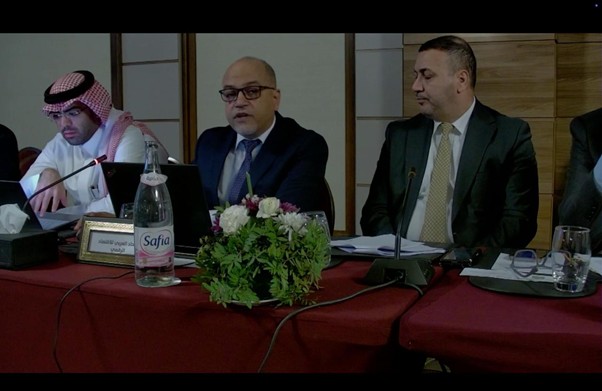
The following day, July 28, Dr. Ayman Ghoneim, Assistant Secretary-General of the Arab Federation for Digital Economy, gave a presentation to the Arab Permanent Committee for Communications and Information Systems on the Arab Mechanism for Digital Projects and the Arab Mechanism for Building International Partnerships initiative, which aim to transform Arab digital strategies into practical and implementable projects by building international partnerships, attracting investments, and transferring technology and knowledge.
Dr. Ghoneim explained that the initiative comes in implementation of the decision of the Council of Arab Ministers of Communications and Information Technology No. (813) issued on January 22, 2026, and aims to enable Arab countries to develop strategic digital projects that are consistent with the Arab Digital Agenda 2023–2033 and the Arab vision for the digital economy, in a way that contributes to accelerating digital transformation and achieving sustainable development.
Dr. Ghoneim reviewed the completion of the development of the Arab Digital Projects Portal as the executive mechanism for the initiative, explaining that it receives strategic projects of an investment, technical or knowledge nature, and projects that aim to establish partnerships and joint business entities, without being a platform for managing tenders, supply requests or short-term operational projects.
It also addressed the governance mechanism of the initiative through a joint committee comprising the League of Arab States, the Arab Federation for Digital Economy, the United Nations Economic and Social Commission for Western Asia (ESCWA), and the Arab Organization for Information and Communication Technologies. The League of Arab States chairs the committee, while the Federation undertakes the technical and operational management of the platform, and the other parties participate in the technical review and communication with international institutions and partners.
The presentation addressed the mechanism for countries to register and participate in the platform, starting with the signing of the framework agreement, the designation of project data entry personnel and authorized officials, through the entry, review and internal approval of projects, and finally their referral to the joint committee for study and communication with potential international partners.
The decision-making process for projects was also reviewed, ensuring the protection of confidentiality of information, verifying the seriousness of the parties, and regulating the relationship with partners, starting from the project submission, preparing and reviewing its summary, then presenting it to potential partners, obtaining initial approvals, and finally signing memoranda of understanding and confidentiality agreements and completing the negotiation and contracting procedures.
Dr. Ghoneim stressed that the next stage requires the countries and institutions concerned to name their representatives and approve the users, in preparation for starting to operate the platform and receive projects from the signatory countries, and submitting recommendations to the Executive Office and then to the Council of Arab Ministers of Communications and Information Technology.
In a related context, the committee’s consultations and deliberations emphasized the importance of the Arab Digital Economy Index as a key Arab tool for measuring levels of digital progress, supporting planning and policymaking, and monitoring the performance of Arab countries according to measurable and comparable indicators and standards.
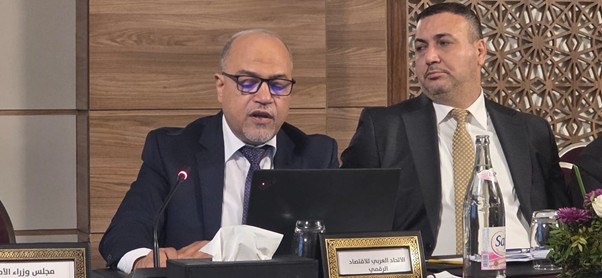
The discussions emphasized the importance of supporting Arab and international integration and cooperation in developing the system of indicators and data, including the Arab Indicators Team, ESCWA, and the International Telecommunication Federation on, in order to unify the concepts and methodologies used in measurement and avoid duplication of efforts.
The committee also stressed the importance of linking data collection and updating processes to specific dates and clear timelines that Arab countries adhere to, in order to ensure the regular flow of data, raise its quality and modernity, and issue Arab indicators and reports on time according to scientific principles and unified methodologies.
The Arab Federation for Digital Economy’s participation in these meetings comes within the framework of its role in supporting joint Arab action, transforming digital strategies and recommendations into implementable programs and projects, and building Arab and international partnerships that contribute to the development of the digital economy and attracting investments and advanced technologies to the Arab region.