



Hangzhou – China
Contents
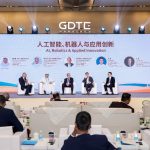
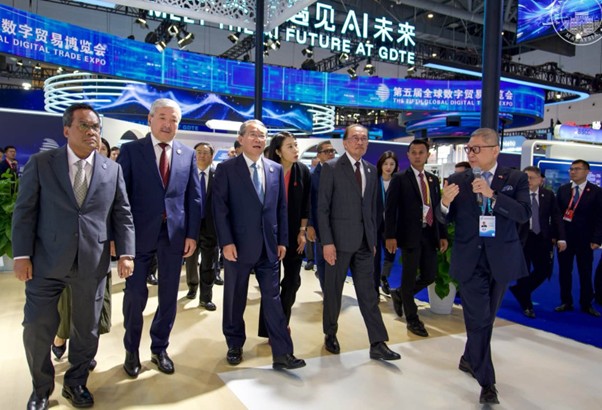
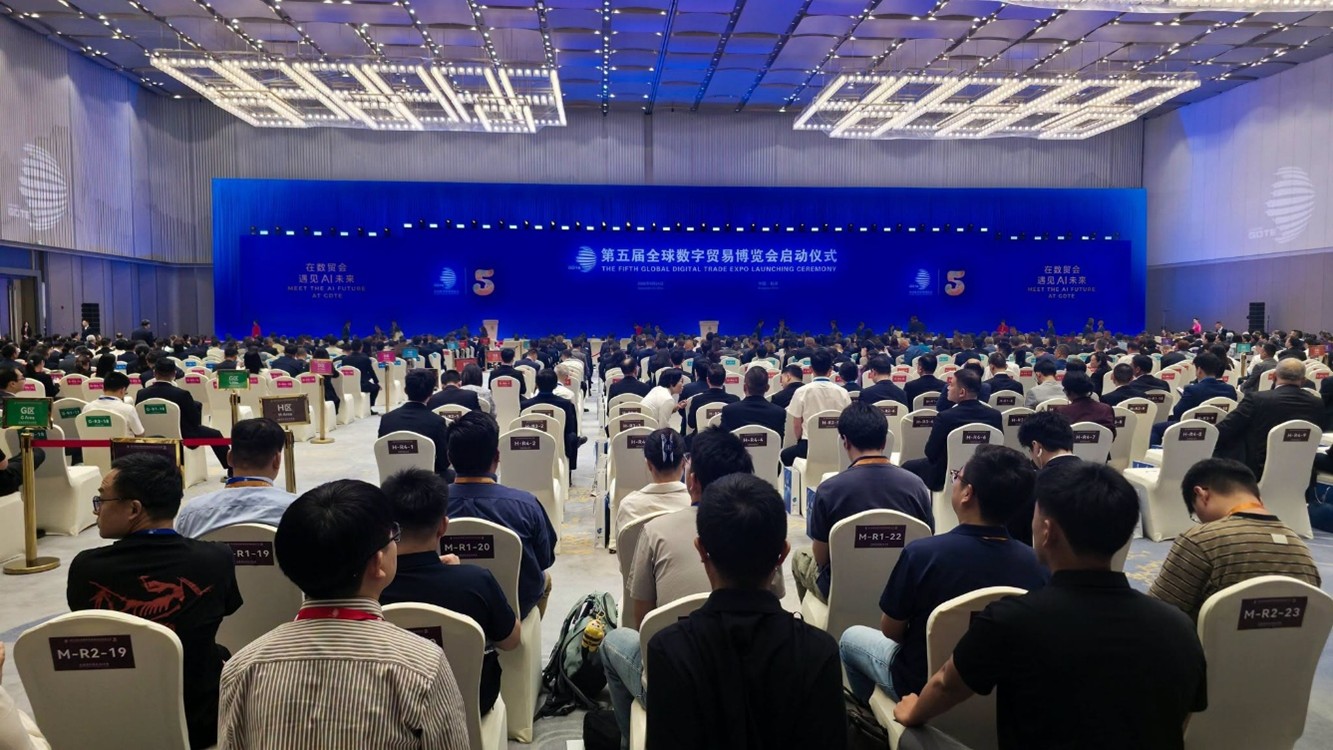
The fifth edition of the World Digital Trade Fair kicked off today, Thursday, in the Chinese city of Hangzhou, with the Chinese Prime Minister in attendance and broad international participation including the Prime Ministers of Malaysia and Kyrgyzstan and a host of ministers from multiple countries, with more than 1,200 representatives from about 50 countries, regions and international organizations, in addition to a number of high-level international leaders, representatives of the public and private sectors, and experts and investors in the fields of digital economy, e-commerce and artificial intelligence.
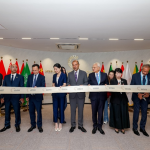
The opening ceremony was attended by a high-level official delegation from the Arab Federation for Digital Economy, along with a number of leaders and representatives of the League of Arab States.
Speech by the Chinese Premier: Facilitating market access and supporting international cooperation
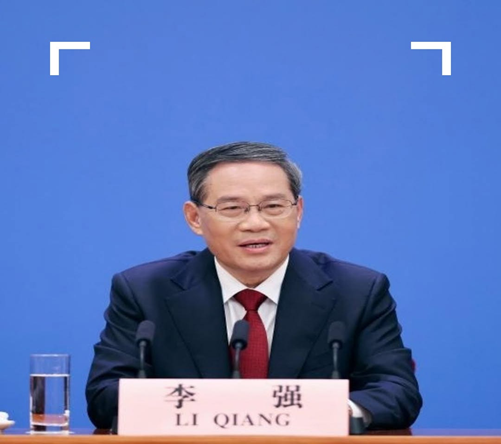
In a speech delivered at the opening ceremony, Chinese Premier Li Qiang affirmed that China will continue to facilitate market access and improve retail import policies through cross-border e-commerce, emphasizing his country’s keenness to share Chinese market opportunities with countries around the world.
He noted that the rapid growth of digital trade has created new opportunities, but at the same time it has revealed growing development gaps, new trade barriers, and gaps in international rules, calling for enhanced international cooperation to develop digital connectivity and promote harmonization and mutual recognition of standards.
The Chinese Premier stressed the importance of strengthening North-South cooperation in digital trade and providing more support to developing countries in the areas of technology, infrastructure, and personnel training. He also affirmed that economic globalization is an unstoppable trend and that mutual trust and shared benefit form the foundation for the future.
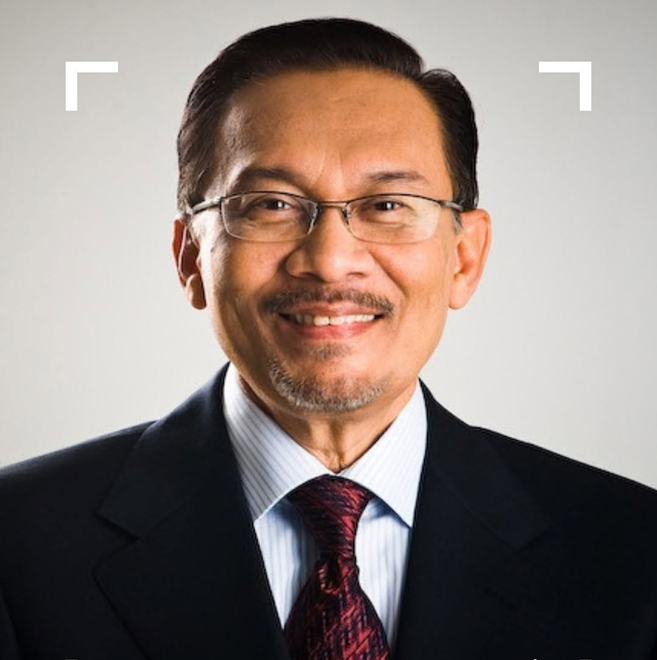
Speech by the Malaysian Prime Minister: Artificial Intelligence and Development Challenges
For his part, Malaysian Prime Minister Anwar Ibrahim warned that the rapid development of artificial intelligence could widen the gap between rich and developing countries, questioning the value of technological progress if it contributes to increasing inequality between countries.
He called for the global digital trade system to remain open and rules-based, warning against building barriers that would increase inequality, and stressing that the rules governing digital trade should not become impenetrable walls for countries.
He stressed that Malaysia does not take sides in the conflict between the major powers, but rather seeks to provide space for small and developing countries to express their vision on justice and fairness, especially with regard to defending the interests of the countries of the Global South.
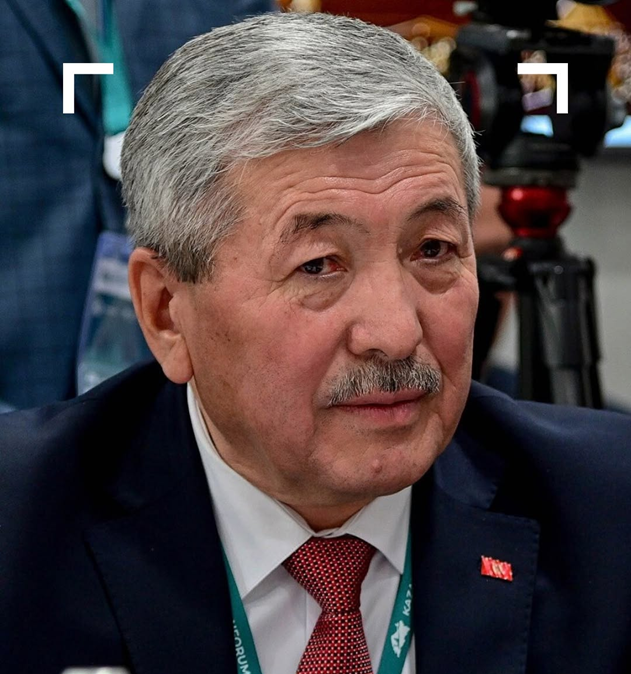
Statement by the Prime Minister of Kyrgyzstan: Deepening cooperation with China
In the same context, Kyrgyz Prime Minister Adilbek, in his speech during the opening, affirmed his country’s adherence to the One China principle, expressing Kyrgyzstan’s readiness to deepen exchanges and cooperation with China in various fields.
He also expressed his country’s support for the four major global initiatives, the Global Cooperation on Artificial Intelligence, and the International Mediation Organization, stressing Kyrgyzstan’s readiness to work closely with China through multilateral platforms.
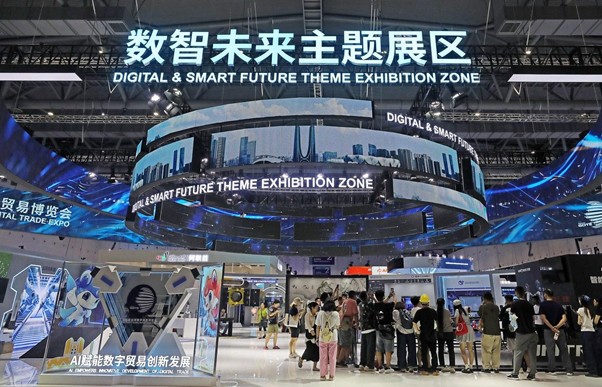
Exhibition: The International Digital Trade Event
The World Digital Trade Fair, hosted annually by China, is the national-level international event dedicated exclusively to digital trade, and its fifth edition is of particular importance in light of the rapid transformations taking place in the global economy.
Internationally, the exhibition is taking place at a time of accelerating global digital transformation, with artificial intelligence emerging as a key driver of the economy. This edition provides an important platform for discussing the governance of digital trade and the development of international rules governing it, coinciding with the launch of key international reports, including the World Digital Trade Development Report 2026, an official United Nations publication.
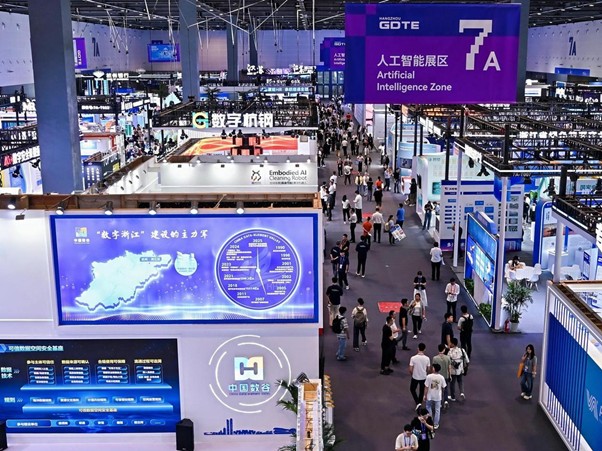
The current session is witnessing broad participation, attracting more than 50,000 professional buyers from 163 countries and regions, including more than 12,000 international buyers, in addition to more than 2,000 exhibiting companies, more than half of which specialize in artificial intelligence fields.
Artificial intelligence and commercial applications
In terms of trade and industry, this year’s exhibition stands out as a platform for transforming advanced technologies into practical commercial applications. Unlike previous editions, many of the AI products on display are ready for actual use and even export.
The “Token Zone,” which is being introduced for the first time, is one of the most prominent additions in this cycle, as it provides the complete value chain for manufacturing, distributing, recalling and applying digital processing units, opening up new horizons for the trade of computing power, and making it measurable and tradable as a new digital commodity.
This trend reflects a shift in the structure of global digital commerce, which is no longer limited to software and services, but also extends to include the sale of supercomputing capabilities as a service.
Growth of digital commerce in China
On the Chinese side, the exhibition reflects the scale of growth in digital trade in China, where the volume of trade in digitally deliverable services grew at an average annual rate of 11.2% during the period from 2016 to 2025, exceeding the global average by about 1.8 percentage points.
The fact that the exhibition has been held for five consecutive sessions, and that more than 150 countries and regions and about 5,000 companies have participated throughout its history, reflects the growing importance of China in the global digital trade landscape, and its role in building bridges of technological cooperation with various countries, especially countries of the Global South.
This year’s edition saw the participation of representatives from 121 countries and regions and 29 international organizations, while the number of participating Chinese and international companies exceeded five thousand. More than a third of the participants in the exhibition were dedicated to work related to artificial intelligence, in addition to displaying hundreds of models and applications in the fields of artificial intelligence, computing, data, smart devices and embodied technologies.
Participation of the Arab Federation for Digital Economy
The participation of the Arab Federation for Digital Economy came within a broader trend to develop practical cooperation between the Arab world and China in the fields of digital economy, and to link government institutions, companies, investors and technology centers from both sides within paths that extend from digital trade, artificial intelligence and robotics to digital infrastructure, financial technology and new energy.
The delegation from the League of Arab States and the Arab Federation for Digital Economy was a high-level group that included:
- His Excellency Dr. Khaled Wali (representing His Excellency the Secretary-General of the League of Arab States) and Director of the Department of Communications and Information Systems at the League of Arab States
- His Excellency Atef Ahmed Helmy, Chairman of the General Assembly of the Arab Federation for Digital Economy and former Minister of Communications and Information Technology in Egypt, and the following members:
- His Excellency Ambassador Mohamdy Ahmed Neya, Secretary General of the Council of Arab Economic Unity
- His Excellency Dr. Hani Mohamed Mahmoud, Chairman of Vodafone Egypt and former Minister of Communications and Information Technology
- His Excellency Dr. Khaled Hanafi, Secretary General of the Federation of Arab Chambers and former Minister of Supply and Internal Trade in Egypt
- Her Excellency Rkia Derham, former Minister of Digital Economy and Foreign Trade – Morocco
- His Excellency Prof. Dr. Ahmed Mustafa El-Sherbiny, Secretary General of the Arab Federation for Digital Economy and former Deputy Minister of Communications and Information Technology – Egypt
- His Excellency Abdul Hakim Hassan Ashkar, Deputy Minister of Interior, Federal Affairs and Reconciliation of the Republic of Somalia
- His Excellency Ambassador Ahmed Mustafa Fahmy Hafez, Head of the League of Arab States Mission in Beijing
- His Excellency Ambassador Ahmed Taher, Ambassador of the Republic of Somalia to the Sultanate of Oman
- His Excellency Dr. Saeed Khalfan Al Dhaheri, President of the Emirates Robotics and Automation Society
- His Excellency Dr. Othman Mohammed Al Khouri, former CEO of Abu Dhabi Airports Group
TheFederation’s participation this year takes on a special dimension as the exhibition focuses on the practical applications of artificial intelligence and cross-border trade, at a time when China is witnessing a major expansion in robotics, artificial intelligence, e-commerce and digital infrastructure, while Arab countries are working to accelerate their investments in digital transformation, data centers, smart cities, digital financial services, energy and future technologies.
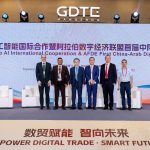
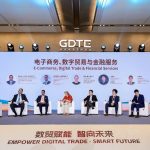
The Federation’s participation in Hangzhou includes organizing the first China-Arab Digital Dialogue, along with a series of sessions, meetings, and institutional and business cooperation events, within a multi-day program aimed at transforming the Arab presence at the exhibition into a more sustainable platform for cooperation with Chinese institutions.