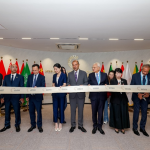




Al Ain – United Arab Emirates
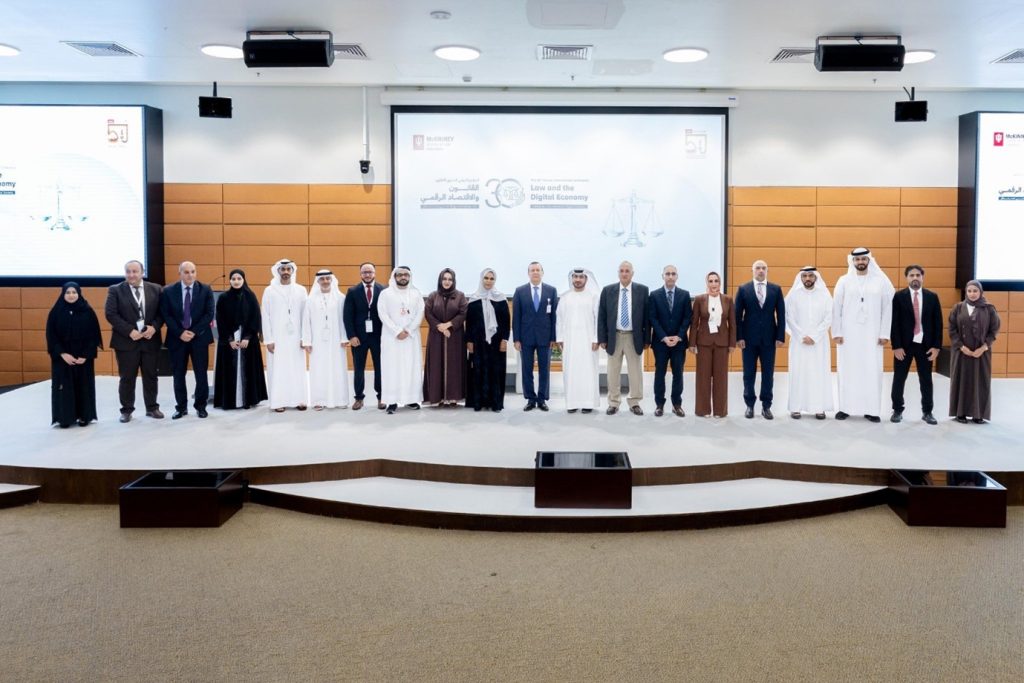
The Arab Federation for Digital Economy participated in the 30th Annual International Conference of the College of Law at the United Arab Emirates University, which was held under the title “Law and Digital Economy: Towards a Sustainable Digital Society”, in cooperation with the Robert H. McKinney School of Law at Indiana University in the United States of America.
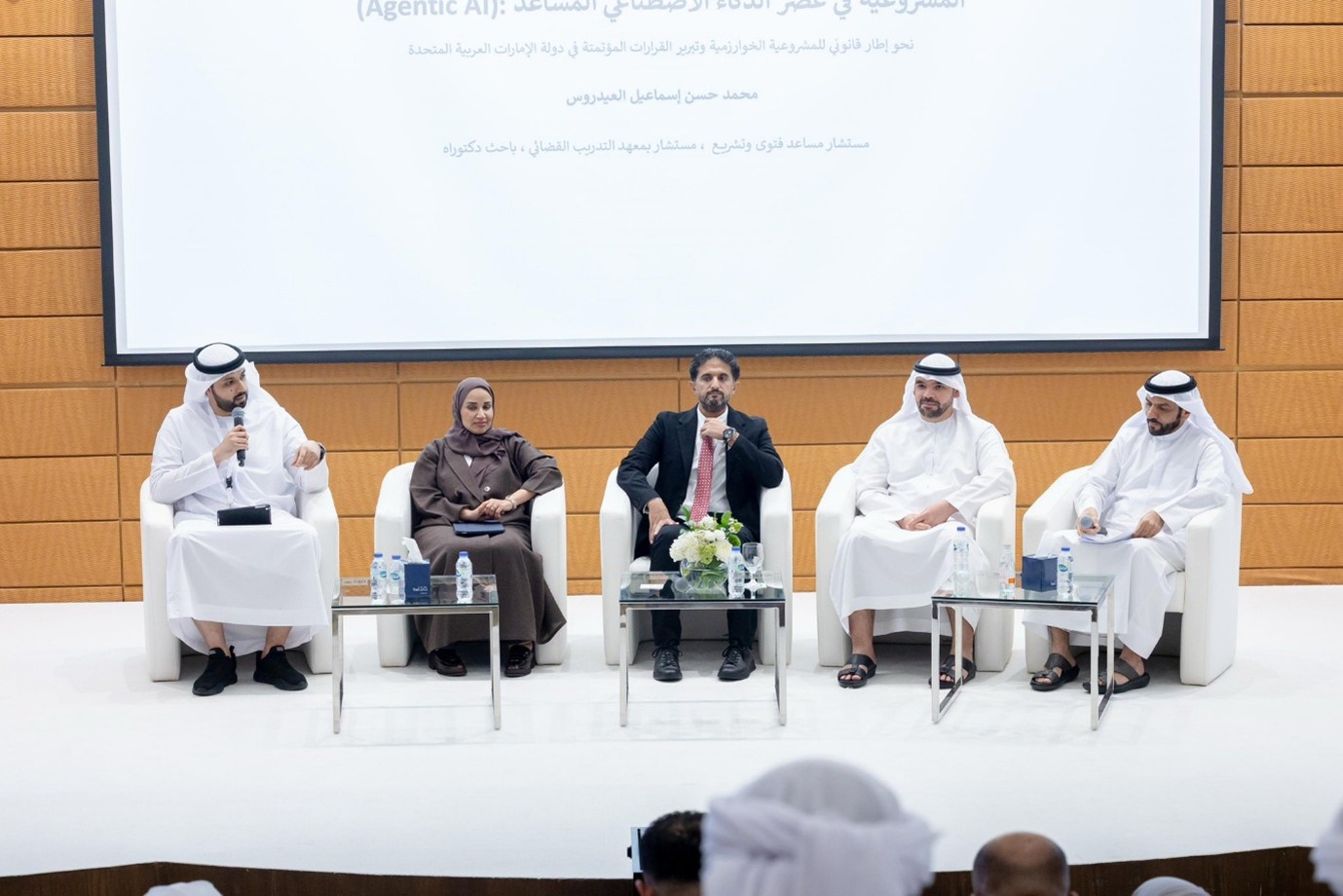
The Federation was represented at the conference by His Excellency Dr. Abdullah Ibrahim Al-Darmaki, Deputy Secretary-General of the Arab Federation for Digital Economy, with the participation of a select group of experts, consultants, researchers, academics and specialists in law, technology and digital economy.
The conference discussed the legal and regulatory transformations accompanying the rapid expansion of the digital economy, and the new requirements imposed on legislation and public policies by artificial intelligence technologies, digital finance, big data and digital platforms.
The conference proceedings included a number of issues directly related to the future of the digital economy, including digital currencies and the future of money, regulatory frameworks for artificial intelligence, digital transformation in government procurement, financial technology and digital banking services, in addition to the legal status of cryptocurrencies, and the legitimacy of automated decisions in light of the development of proxy artificial intelligence systems.
The sessions also addressed digital trade and sustainability, the geopolitical factors affecting global digital trade, big data governance, the responsibility of digital platforms, the protection of personal data, and a comparison of UAE regulatory frameworks with international trends in data management and the digital economy.
The discussions confirmed that the expansion of the digital economy is no longer linked to technological progress alone, but requires a legislative and regulatory system capable of dealing with new economic models, markets, financial instruments, and decision-making patterns, while striking a balance between encouraging innovation, protecting rights, and enhancing trust in the digital environment.
These topics are of particular importance to Arab countries with the increasing use of artificial intelligence, digital services, financial technology and e-commerce, and the accompanying need to develop legislation, harmonize regulatory frameworks and enhance cross-border digital interoperability.
The Federation’s participation in the conference comes as an extension of its work in supporting the development of policies and regulatory frameworks for the digital economy in the Arab region, which is one of the main pillars of the Federation’s 2025–2030 strategy, which includes developing a common framework for digital policies, supporting the unification of technical and regulatory standards, and promoting innovation and digital integration among Arab countries.
The Federation also works, within its specialized programs, to support the development of legal and regulatory frameworks related to emerging technologies, data governance and digital markets, in a way that contributes to transforming technological developments into scalable economic opportunities within a legal environment that enhances trust, protects rights and supports investment.
His Excellency Dr. Abdullah Al Darmaki stressed the importance of strengthening communication between academic institutions, entities concerned with the digital economy, and policymakers, which helps to transfer the results of legal research and studies from the academic framework to applicable policies and legislation, and to develop regulatory models that keep pace with the rapid technological transformations.
He pointed out that the future of the Arab digital economy is linked to the ability of countries to build a legislative environment that accommodates innovation rather than chasing it, while at the same time providing clear levels of governance, trust, data protection and digital rights.
The conference also highlighted the growing role of universities and scientific research centers in anticipating the legal and economic implications of new technologies, and in preparing legal professionals capable of dealing with issues that now lie at the intersection of law, technology, and economics.
The Federation’s participation in the conference reflects its interest in expanding the Arab dialogue on the future of digital legislation and linking academic work with public policies, in order to support the building of an Arab system that is more capable of absorbing the rapid transformations in artificial intelligence, data, digital trade and financial technology.