



Abu Dhabi
Mufakiru Alemarat
Prof. Dr. Ali Mohammed Al-Khouri
The Arabic language is a fundamental component of the cultural and civilizational identity of the Arab world, and it forms a cornerstone for any project aimed at building genuine intellectual and technological independence. With the profound digital transformations the world is witnessing, the relationship between the Arabic language and the concept of “software independence” has taken on a strategic character that transcends the purely linguistic aspect, touching upon issues of digital sovereignty, cultural security, and the economic position of Arab countries in the near future. The ability of societies to produce their own software and smart systems in their own language has become the benchmark for determining their degree of independence in a rapidly expanding technological landscape.
The concept of software autonomy is based on having the full ability to produce software, manage data, and control artificial intelligence systems without the need for external infrastructures or imposed foreign languages. This falls within a broader framework known as digital sovereignty, where language becomes a tool for leadership, not merely a means of expression, especially when it becomes part of the fundamental infrastructure upon which modern technologies depend—from natural language processing to generative models that now influence the economy, media, education, and even the formation of public consciousness.
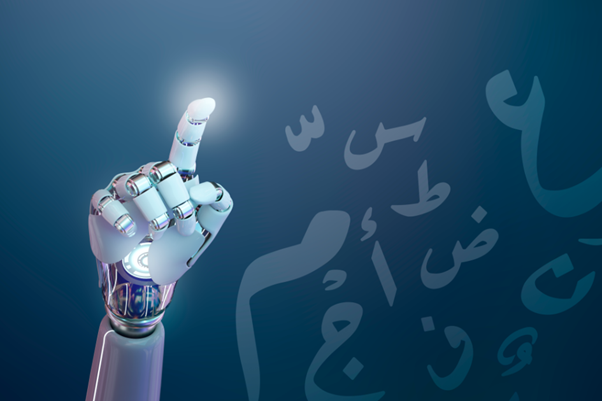
In this context, the Arabic language acquires a new function, not only as a cultural vessel but also as a channel through which thought is transformed into algorithms, innovative ideas into software, and cultural memory into data capable of generating intelligent systems that speak the region’s references. The greater the Arabic language’s ability to integrate into modern technological structures, from precise linguistic databases to advanced grammatical and semantic analysis models, the greater the potential to produce software with an Arab identity, transforming the digital world into a system where technological solutions are built with the spirit and culture of the region.
However, this ambition faces a number of challenges in the Arab world, most notably the weakness of Arabic digital content, which still constitutes a small percentage of global content. This hinders the development of linguistic models capable of capturing the richness and diversity of Arabic. Furthermore, the dominance of foreign software means that most digital infrastructures used in Arab institutions are part of non-Arab cultural systems, deepening dependency and limiting their ability to develop local models.
Added to this is the limited availability of open Arabic linguistic resources, from digital dictionaries to research-readable audio and textual data, as well as the absence of unified Arab policies to reorganize the technological efforts aimed at a comprehensive digital renaissance. In this context, the risk of linguistic erosion becomes apparent with the increasing reliance on foreign artificial intelligence systems that may impose linguistic and cultural patterns incompatible with the Arab environment, especially if Arabization remains superficial and fails to address the structural depth of these models.
Despite these challenges, Arab countries have ample opportunities to advance toward genuine software independence if they invest in building new knowledge and linguistic infrastructures. This includes supporting open-source projects, developing specialized research centers for the computational processing of Arabic, integrating the language into modern digital curricula, and building public-private partnerships in artificial intelligence. The current moment presents an opportunity for the Arab world to create an independent digital model capable of leveraging Arabic’s status as a global language of thought, history, and creativity.
If the digital future is heading towards an era in which power is determined by data and the languages that control the movement of algorithms, then the ability of Arab countries to empower their language within this space constitutes a condition for their active presence in the coming world order; for language is the new structure of governance, the tool of influence, the space of competition, and the key to economic and political equations that will reshape the maps of influence, because it is the mediator in shaping the consciousness of societies and their markets.
On a broader semantic level, this transformation raises the question of the Arabic language’s place in a world based on programmed knowledge. The presence of language in digital structures is not merely a linguistic issue, but rather a prerequisite for possessing an independent programming space. This space would enable Arab states to protect their cultural heritage and develop their digital systems in a manner consistent with their linguistic and intellectual environment. Without such a space, Arab societies become part of technological systems produced in other languages and cultures, which means being dependent on models that do not reflect their specificities and, in fact, impose a new reality upon them within the emerging digital systems. With the global competition to monopolize artificial intelligence tools, the importance of Arabic having a place within the algorithms that shape and govern humanity’s future becomes ever more critical.