




Cairo – Arab League
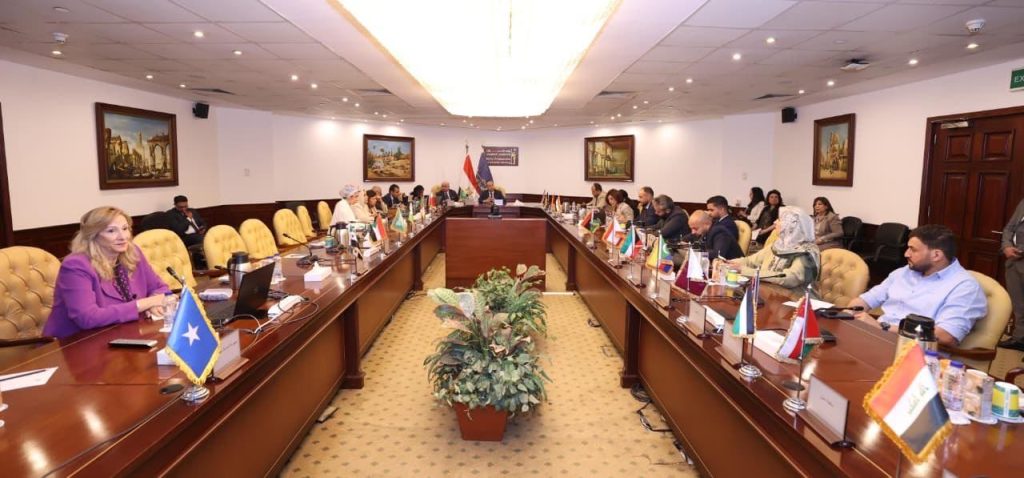
The Arab Federation for Digital Economy participated in the founding meetings of the Arab Committee for Artificial Intelligence and Emerging Technologies, which were held in Cairo on May 18 and 19, 2026. It also participated in the side consultative meetings organized by the United Nations Economic and Social Commission for Western Asia (ESCWA) to discuss the future of economic development in light of rapid technological transformations.
These meetings are being held in implementation of the decision of the 29th session of the Council of Arab Ministers of Communications and Information regarding the establishment of a permanent Arab committee for artificial intelligence and emerging technologies under the umbrella of the Council, with the aim of joint Arab cooperation and the development of policies and initiatives related to modern technologies.
The meetings witnessed discussions on forming specialized technical teams and setting work priorities for the next phase, as the participants agreed to establish a group of specialized subcommittees that would form a permanent framework for Arab coordination in the fields of artificial intelligence and emerging technologies, focusing on supporting capacity building, exchanging experiences and achieving sustainable development goals.
During the Federation’s interventions, the importance of doubling Arab investments directed towards maximizing economic value and digital sovereignty related to artificial intelligence applications was emphasized, noting that current estimates of the expected economic return for the Arab region by 2030 are still less than half of its fair share compared to its population size, when compared to global estimates that exceed $16 trillion.
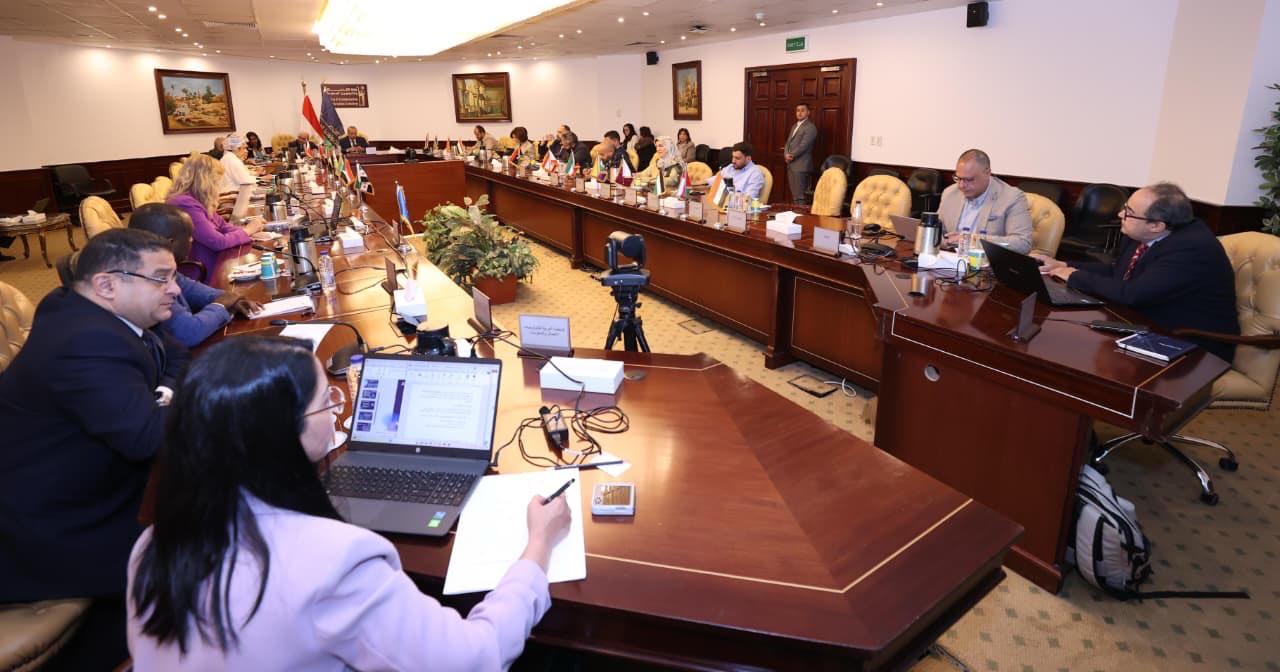
On the second day, during the consultative meetings organized by ESCWA, Dr. Ayman Ghoneim, Assistant Secretary-General of the Arab Federation for Digital Economy, delivered a keynote address in which he warned against the exacerbation of what he termed the “automation syndrome.” He explained that it represents a recurring economic and social cycle that begins with institutions and companies striving to increase efficiency and reduce costs through increased reliance on artificial intelligence and smart systems. This then gradually leads to the displacement of segments of the human workforce from the labor market. He added that this will subsequently result in lower income levels and a decline in the percentage of individuals with stable incomes participating in the labor market, leading in turn to a decrease in the purchasing power of societies and directly impacting growth rates and economic and social stability.
Ghanem pointed out that this issue is gaining added importance in the Arab region, given the continued high rates of youth unemployment, estimated at around 26% according to a number of regional and international estimates.
The Federation’s intervention was based on international reports and studies indicating that widespread automation waves may lead to major shifts in income distribution and job opportunities globally, with some estimates suggesting that the proportion of the workforce that may be directly or indirectly affected by these changes may range between 22% and 40%, which calls for the development of proactive mechanisms that ensure a sustainable balance between technological progress and economic and social stability.
In this context, the Arab Federation for Digital Economy put forward a vision calling for the adoption of a positive international approach that focuses on establishing a “Global Fund for Just Transition” as a strategic priority aimed at preparing early to deal with anticipated transformations before their effects worsen, instead of waiting until they turn into large-scale economic and social challenges that require delayed or partial solutions.
The Federation explained that the financing mechanisms for this fund should be subject to broad international consensus and discussion, so that they can include contributions from major global companies that manufacture robots and artificial intelligence technologies, in addition to entities and institutions that directly benefit from large-scale replacement of human labor through automation and smart systems, and in a way that ensures a more balanced distribution of social responsibility accompanying major technological transformations.
The Federation explained that the goal of this fund is to manage economic transformations in a more sustainable and equitable manner, by allocating resources to finance rehabilitation and vocational training programs, and providing temporary transitional support to groups affected by structural changes in the labor market, thus giving them sufficient time and ability to acquire new skills and reintegrate into the economy and the labor market.
The Federation concluded its participation by emphasizing that the success of the digital economy should not be measured solely by the size of productivity or company profits, but by its ability to maintain social and economic balance, stressing that technology should remain a means of empowering people, not a substitute for them, and that the sustainability of economic capacity ultimately depends on the existence of societies that have the ability to work, produce, and consume.