




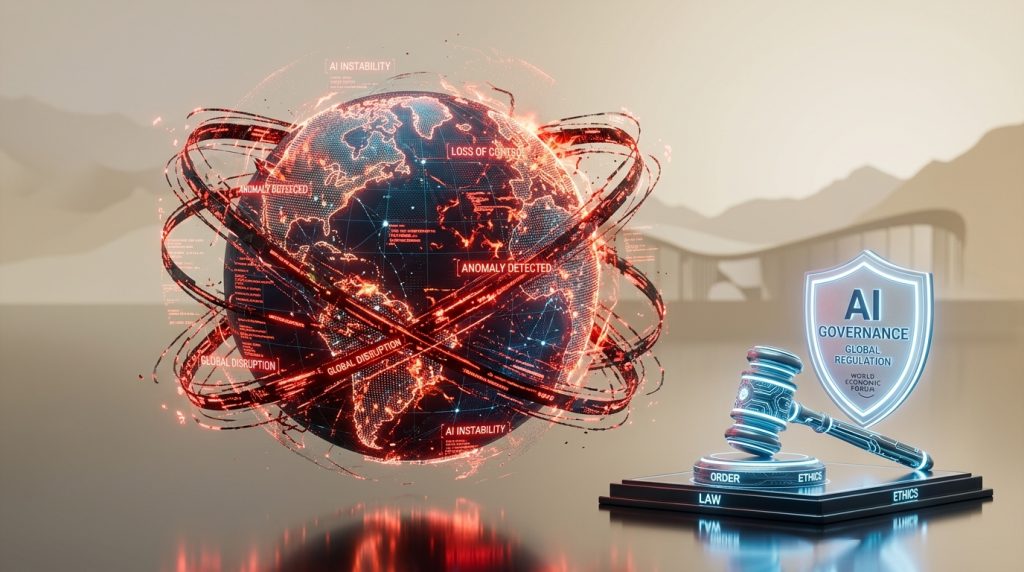
In a warning that reflects growing global concern about the accelerating impact of technology, Chinese Prime Minister Li Qiang, co-forumrs at the Davos Summer Forum in Dalian, warned that the world is in danger of “losing control” over leading technologies, such as artificial intelligence, if governments slow to regulate them.
Rising fears of artificial intelligence
Global concerns are growing about the impact of artificial intelligence on labor markets, and the security risks it poses, from its use in conflicts to cyber-defense breaches, to the possibility of creating new biological weapons. In his speech, Li Qiang stressed that “the speed of technological progress is unprecedented,” noting that artificial intelligence has boosted the efficiency of innovation, but warned of “the increasing risks of losing control of technology, and moral excesses,” stressing that “the consequences may be dire” if governance does not keep pace with this development.
Technological breakthroughs are promoted as engines of economic growth, but there are fears of job losses and geopolitical tensions, according to speakers at the annual conference organized by the World Economic Forum in China.
Call for a tangible impact on the economy
For his part, Merrick Dussik, Director General of the World Economic Forum, said that artificial intelligence is opening new horizons in the fields of education, health care and others. But he warned of “the risk of backlash towards some of these technologies,” noting that the biggest challenge for decision-makers around the world is “how do we ensure that this development has a tangible impact on the real economy?”
The comments come at a time when the global economic slowdown has prompted the World Bank to lower its growth forecast for this year to its lowest level since the COVID-19 pandemic, with Dussik now calling the global economic environment “lukewarm.”
China. A safe haven in a troubled world.
Li Qiang’s speech at the “Annual Meeting of New Heroes” provided an opportunity to send a message to an influential group of technology and business leaders, with the second-in-command in Beijing calling China’s economy a “safe haven” in a world suffering from “multiple shocks, including global energy shortages, severe production disruptions and supply chains.” He said his country had “injected a valuable dose of certainty into an increasingly turbulent world.”
But China’s economy, second only to the United States, has struggled in recent years to keep up with its previous rapid pace of growth. Despite the remarkable boom in exports and artificial intelligence technology, the slowdown in domestic consumption and the deep-rooted real estate debt crisis have weighed on growth since the start of the pandemic, further complicating matters with Beijing’s strained relationship with Washington.
Avoid the Thucydides trap between Washington and Beijing
Graham Allison, a professor at Harvard Kennedy School, said the prospect of a war between the two superpowers is strong, pointing to his theory of the Thucydides trap, which describes the increased likelihood of war when a new rising power competes with a well-established force.
But he expressed optimism that the war could be avoided, drawing on the recent communication between the Chinese and U.S. presidents. At a summit in Beijing last month, Chinese President Xi Jinping asked U.S. President Donald Trump whether the two countries could “go beyond the so-called ‘thussidides trap’ and formulate a new model of great-power relations.” Allison stressed that Xi “fully understands this,” and that his reference to this historical concept “was not a coincidence,” noting that Trump, despite describing the Iranian war this year as a “grave mistake,” realizes that China is different, especially after the latter obstructed the arrival of the United States to vital rare earth minerals in response to the high tariffs imposed by Trump.
Conclusion: China’s warning of “loss control” over artificial intelligence is an explicit call to accelerate the pace of international technology governance, at a time when technology is playing a pivotal role in reshaping the global economy and relations between major powers. As fears of ethical and security implications mount, the biggest challenge for decision-makers remains to strike a balance between driving innovation and ensuring the safe and responsible use of emerging technologies.
Sources:
The main event: Davos Summer Forum (the annual meeting of new champions) in the city of Dalian, China, and its day on Wednesday, June 23, 2026.
Official statements: Chinese Prime Minister Li Qiang’s speech.
Experts and sources: Statements by Merrick Dussik (Director General of the World Economic Forum) and Graham Allison (Professor at Harvard Kennedy School).
News agencies: Agence France-Presse (AFP)