



Hangzhou – China
The second session of the first China-Arab Digital Dialogue discussed the new requirements for digital infrastructure in light of the rapid expansion of artificial intelligence, cloud computing, smart cities and digital government services, with a focus on opportunities for cooperation between Arab countries and Chinese companies in developing large-scale projects.
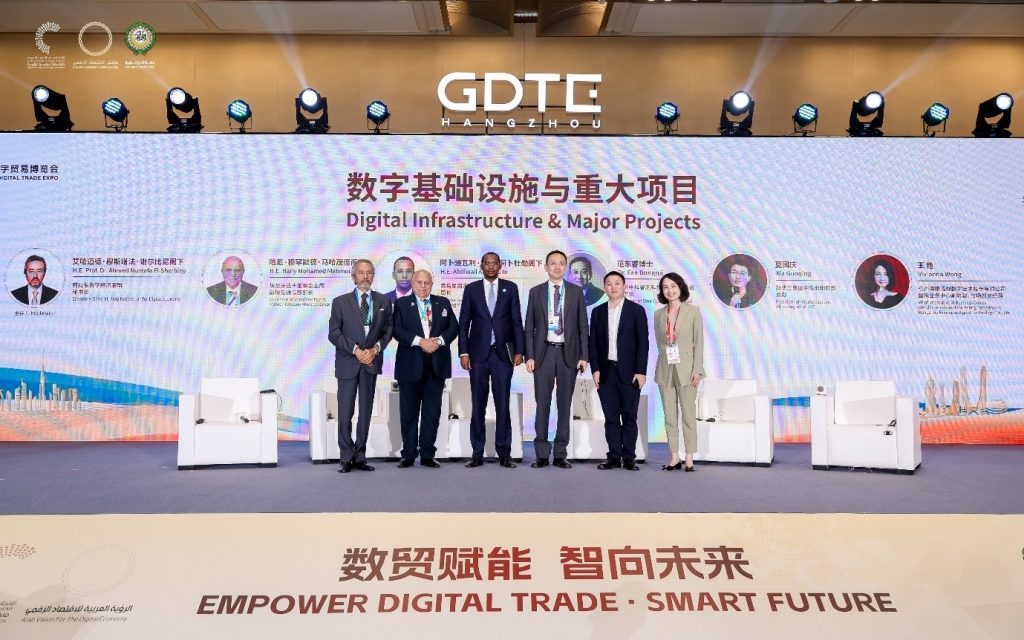
The session was titled “Digital Infrastructure and Mega Projects” , and was moderated by His Excellency Professor Dr. Ahmed Mustafa Al-Sherbini, Secretary General of the Arab Federation for Digital Economy, with the participation of Arab and Chinese leaders and experts representing the sectors of communications, digital identity, networks, smart cities and advanced technology.
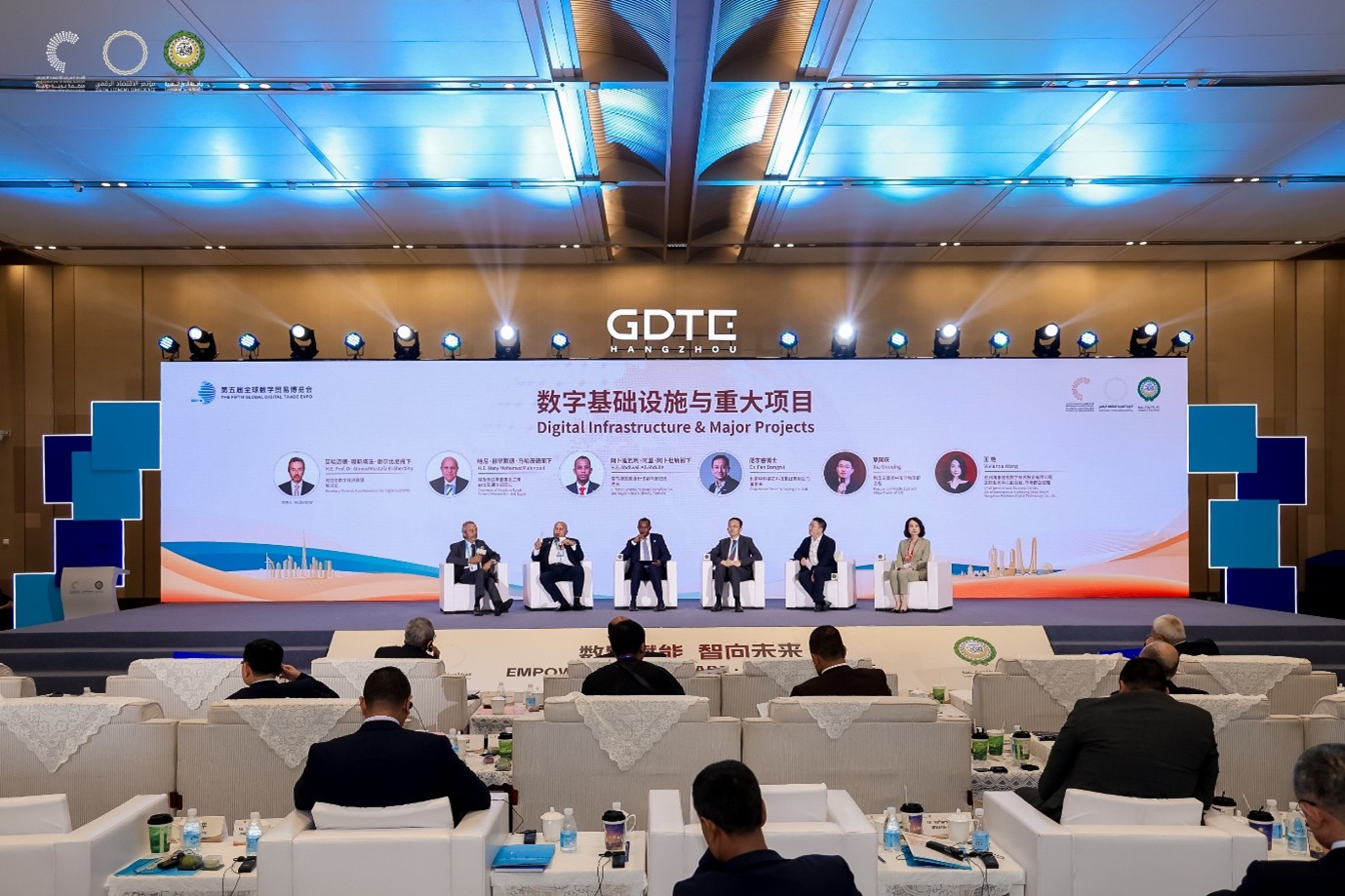
On the Arab side, His Excellency Engineer Hani Mohamed Mahmoud, Chairman of the Board of Directors of Vodafone Egypt and former Egyptian Minister of Communications and Information Technology, and His Excellency Abdi Wali Ali Abdullah, Director General of the National Authority for Identification and Registration in Somalia, participated.
On the Chinese side, Mr. Xia Guoqing, President of H3C Middle East and Africa, Mr. Wang Yan, General Manager of International Marketing at Hangzhou Hikvision Digital Technology , and Mr. Van Dongru, Chairman of SmartCore (Beijing) , participated .
The dialogue focused on the fact that modern digital infrastructure is no longer limited to communication networks, but has become an interconnected system that includes data centers, cloud computing, digital identity, security, government platforms, advanced connectivity, and smart infrastructure for cities and institutions .
The session addressed the challenges associated with the significant growth in computing needs resulting from artificial intelligence applications, and the new investments this necessitates in data centers, energy, and networks, along with the importance of building local capabilities that can operate and sustainably develop this infrastructure.
The participants also discussed the experience of digital identity as one of the essential components of the national infrastructure, and its role in facilitating governmental, financial and commercial services, while emphasizing the importance of coverage, trust, security and interoperability between different systems.
The issue of technology localization received significant attention in the dialogue, particularly given the differences in laws, regulatory requirements, and digital sovereignty needs between countries. The discussion focused on the necessity for cooperation models to move beyond simply supplying equipment and systems to building partnerships that encompass training, operation, maintenance, knowledge transfer, and the development of local capabilities.
The session also addressed opportunities for cooperation in smart cities and connected systems, and the accompanying need to balance the use of data and the improvement of service efficiency on the one hand, and the requirements of security, privacy and data governance on the other.
This area represents one of the most expandable avenues for Arab-Chinese cooperation, given the scale of digital transformation and infrastructure programs being implemented by Arab countries, in parallel with the extensive industrial and technological expertise developed by Chinese companies in communications networks, computing, and smart cities.
The session as a whole confirmed that the next phase requires a shift from thinking about technology as separate equipment to building an integrated digital infrastructure capable of supporting an economy increasingly based on data, artificial intelligence, and connected services