



Source: Al-Wafd Newspaper
Prof. Dr. Ali Mohammed Al-Khouri
The United Arab Emirates is undergoing a profound strategic transformation centered on two fundamental pillars for its economic and developmental future: the digital economy and renewable energy. This transformation is not merely a technological or environmental trend, but rather a comprehensive vision to reshape the country’s economic system, enhance its competitiveness on the global stage, and achieve its long-term sustainability. Combining these two pillars represents a smart response to global challenges such as fluctuating oil prices, the urgent need to address climate change, and the pursuit of diversifying income sources.
The UAE is a pioneer in adopting digital economy initiatives. The wise leadership, headed by His Highness Sheikh Mohammed bin Zayed Al Nahyan, President of the State, realized early on that the future cannot be built on traditional resources alone. Therefore, the country has invested heavily in developing the digital infrastructure, encouraging innovation and creating an attractive environment for technology companies and business people. These efforts are manifested in launching many strategies and initiatives such as the UAE Strategy for the Fourth Industrial Revolution, which aims to promote the use of advanced technologies such as artificial intelligence, the Internet of Things, robotics and 3D printing in various sectors.
In the services sector, the UAE is undergoing a remarkable digital transformation. The government provides integrated electronic and smart services to citizens, residents, and businesses, reducing bureaucracy and expediting procedures. Cities like Dubai and Abu Dhabi are striving to become truly smart cities, leveraging data and technology to improve quality of life, manage resources efficiently, and deliver innovative services in transportation, housing, healthcare, and education. For example, Dubai has launched initiatives such as Smart Dubai, which aims to make Dubai the happiest and most efficient city on Earth by integrating technology into all aspects of life.
The e-commerce and digital financial services sector is one of the sectors that has witnessed tremendous growth thanks to digital transformation. The UAE encourages the establishment of startups in this field and provides them with the necessary support to grow and expand. The country is also committed to developing a legislative and regulatory framework that supports innovation in the field of financial technology (FinTech), such as the use of blockchain and cryptocurrencies, with the aim of promoting financial inclusion and facilitating transactions.
In contrast, the shift towards renewable energy represents another key pillar of the UAE’s future vision. The country has set an ambitious goal to increase the proportion of clean energy in the national energy mix. This approach is not limited to compliance with global climate agreements, but is a strategic necessity to ensure energy security and diversify its sources. Solar energy is the most prominent area of investment in renewable energy in the UAE, given its geographical location which enjoys abundant hours of sunshine throughout the year.
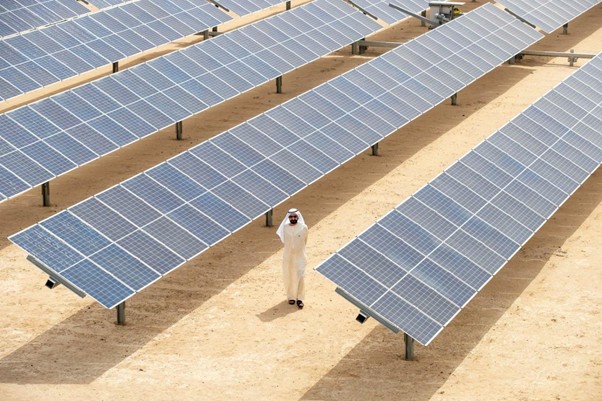
The UAE has some of the world’s largest and most advanced solar energy projects. The Mohammed bin Rashid Al Maktoum Solar Park in Dubai is a prime example, aiming to provide clean energy at competitive prices and forming a crucial element of the Dubai Clean Energy Strategy 2050, which seeks to make Dubai a global hub for clean energy and the green economy. These projects extend to include various technologies such as photovoltaic solar panels and concentrated solar power (CSP), which allows for energy storage for use during times when the sun is not available.
Investment in renewable energy is not limited to solar power; it also encompasses other sectors such as wind power, nuclear power, and green hydrogen. The Barakah Peaceful Nuclear Energy Plant is a massive strategic project aimed at providing clean and reliable energy in large quantities, and it represents a key element in the country’s plans to achieve carbon neutrality. The UAE is also exploring the potential for producing and exporting green hydrogen, which is seen as the fuel of the future in many industries.
The relationship between the digital economy and renewable energy in the UAE is complementary and reinforcing. Digital infrastructure plays a vital role in the efficient management and operation of renewable energy networks. For example, IoT and AI technologies are used to monitor the performance of solar panels, predict energy production, and improve the stability of the electrical grid. Digital systems also help in managing energy demand and seamlessly integrating intermittent renewable energy sources into the main grid.
On the other hand, the digital economy can drive expansion in the renewable energy sector. There are great opportunities in developing software solutions and digital platforms for managing renewable energy projects, analyzing data related to energy production and consumption, and enabling consumers to participate more effectively in the energy market. Technologies such as blockchain can also be used to track renewable energy certificates and ensure transparency in the markets.
Like any nation on this transformation journey, the UAE faces several challenges. Digital transformation requires significant investments in infrastructure and skills, as well as keeping pace with rapid technological advancements. Integrating renewable energy sources into the energy mix necessitates developing robust and resilient grids and addressing the intermittent nature of these sources. On a social level, there is a need to raise public awareness of the importance of these transformations and to develop a workforce capable of meeting the demands of the new digital economy.
However, strong political will, a clear strategic vision, and ongoing investments position the UAE ideally to overcome these challenges. The country aims to achieve a knowledge-based economy built on innovation and sustainability, with the digital economy and renewable energy as its backbone.
In conclusion, the UAE’s journey towards building a strong and robust digital economy, in parallel with the comprehensive shift towards renewable energy sources, represents a pioneering model at the regional and global levels. This ambitious vision not only aims to secure a prosperous future for future generations, but also contributes to finding solutions to global environmental and economic challenges.
The integration of these two pillars reflects a deep understanding of the requirements of the 21st century, and places the UAE at the forefront of countries leading the path of sustainable development and the transition towards a greener and more digital future.