



Source: Al-Wafd Newspaper
Prof. Dr. Ali Mohammed Al-Khouri
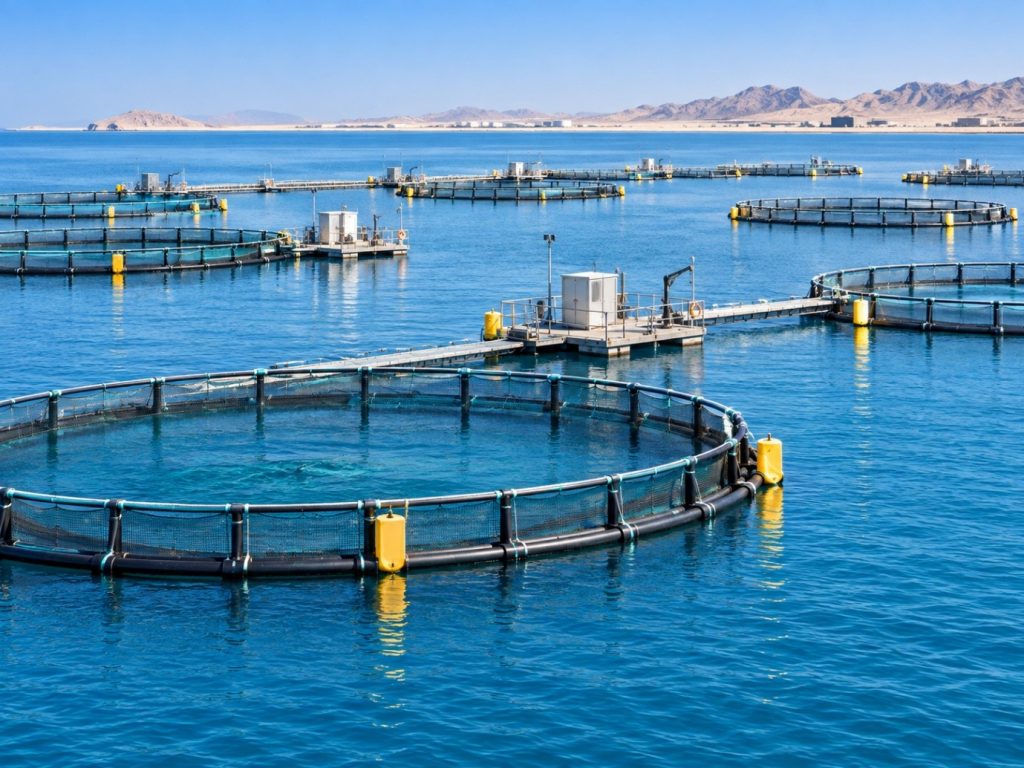
Aquaculture has become a key component of global food security. Natural marine fisheries have reached their biological limits in many parts of the world, while demand for marine protein continues to rise with population growth and improved income levels. Faced with this shift, the role of aquaculture has changed; it is no longer simply a substitute for marine fishing, but has become a major driver of growth in aquatic food production and a sector that is reshaping the landscape of agricultural and food investment.
Data from the Food and Agriculture Organization (FAO) shows that aquaculture production surpassed wild fishery production for the first time in history, reaching 130.9 million tons globally in 2022, with an initial estimated value of $313 billion. The combined total production from fisheries and aquaculture reached 223.2 million tons. This shift indicates a change in the center of gravity for seafood production from the open sea to regulated aquaculture, a trend likely to continue in the coming decades, while wild fishery production remains relatively stable.
This shift is changing the very foundations of the concept of food security. The ability to produce protein within national borders has become a strategic security imperative for countries, particularly those reliant on food imports or facing disruptions in global supply chains. From this perspective, aquaculture is of particular importance in the Arab world, where population growth, rising seafood consumption, and limited natural resources in several countries converge with the need to diversify economies beyond traditional sectors.
The Arab world possesses undeniable assets. Its coastlines stretch for thousands of kilometers along the Red Sea, the Arabian Gulf, the Mediterranean Sea, the Atlantic Ocean, and the Arabian Sea, in addition to vast areas suitable for inland agriculture. Furthermore, it boasts large consumer markets and investments seeking long-term productive sectors. However, these assets have not yet translated into a comprehensive Arab industry, as investment has often focused on expanding production before establishing the necessary infrastructure.
The aquaculture industry doesn’t begin with ponds; it begins with knowledge. It starts with fry production, breeding development, feed manufacturing, water management, and disease control, and ends with processing, marketing, and export. Every missing link in this chain increases production costs and dependence on imports. Therefore, the countries that lead the industry globally don’t achieve their dominance because of the sheer number of farms, but because they possess a comprehensive system for scientific research, production, and support services.
The technology underpinning this industry has changed profoundly over the past two decades. Modern farms no longer rely on increasing water area, but rather on increasing the productivity of each unit of water. Closed aquaculture systems, recirculating aquaculture (RAS), sensor technologies, artificial intelligence, computer vision, and continuous water quality analysis have become essential production tools in advanced farms. This transformation has led to reduced water consumption, decreased losses, improved growth rates, and a reduction in the spread of diseases—factors that are of paramount importance in Arab environments with limited water resources.
This opens a different avenue for investment. As we mentioned, future value will not be determined by the number of tanks or marine cages, but rather by owning the technologies that manage them. Companies that develop monitoring systems, smart feeding programs, environmental sensors, and bioanalytical technologies may achieve economic returns exceeding those of many traditional farms, because knowledge has become an integral part of the product itself, not a service added after production.
Fish feed is a prime example of this shift. It represents the largest share of operating costs in many fish farms, and a portion of global fish production relies on fishmeal and fish oil extracted from natural fisheries. Therefore, research is focused on developing feeds based on plant proteins, algae, insects, and alternative biological sources, aiming to reduce costs and alleviate pressure on natural fish stocks. Arab participation in these industries is no less important than investment in fish production itself, as it adds industrial value and reduces the import bill.
But the industry in the Arab world faces challenges that extend beyond funding. Regulatory procedures in some countries remain slow, licensing and environmental monitoring standards vary from market to market, and specialized laboratories for disease diagnosis, seed production, and breed improvement are still limited compared to the expected market size. Added to this is the shortage of qualified personnel to manage modern farms, a deficiency that cannot be compensated for by importing technology alone, as operating digital systems requires local expertise capable of developing, maintaining, and continuously improving them.
Climate change poses an additional challenge to the sector. Rising water temperatures, increased salinity in some areas, and more frequent extreme weather events all affect production, fish health, and operational efficiency. Therefore, investing in scientific research becomes essential to safeguarding those investments.
What the region needs is to view aquaculture as an integrated industry, not just a standalone agricultural activity. A successful aquaculture farm creates demand for feed, vaccines, laboratories, refrigerated transport, food processing, logistics, insurance, finance, and digital technologies. Every expansion in this chain amplifies the economic impact, expands employment opportunities, and increases added value within the national economy.
Global competition in this sector will not be decided by production volume, but rather by production efficiency and sustainability. Countries that build a system combining investment in scientific research and technology, legislation, and human capital will have a more stable position in the seafood market in the coming decades. The Arab world possesses the geographic location, markets, capital, and domestic demand—all sufficient elements to build a competitive regional industry. The decisive factor will remain the mechanism for investing in knowledge that will make these farms more productive, sustainable, and profitable.