



Source: Al-Wafd Newspaper
Prof. Dr. Ali Mohammed Al-Khouri
Each generation in the Middle East believes it faces a crisis different from those experienced by previous generations. Titles change, alliances shift, new conflicts emerge and others fade away, but the end result remains remarkably similar. After decades of wars, tensions, and temporary settlements, the region is still searching for long-awaited stability, and many of the questions raised half a century ago remain relevant today, albeit in different forms.
These crises have been interpreted in multiple ways. Some link them to political conflicts, others attribute them to foreign interventions, while still others focus on economic factors or social divisions. However, examining these factors in isolation is insufficient to grasp the full picture. The Middle East has never been a single arena for crisis, but rather a region where geography intersects with economics, where political decisions are influenced by natural resources, and where local interests intersect with the calculations of international powers.
Perhaps the most striking aspect of this region is that many of its strengths were simultaneously part of the root causes of its crises. The location that made the Middle East a link between Asia, Africa, and Europe also made it a constant arena of competition among major powers. The sea lanes that granted the region exceptional strategic importance frequently became flashpoints of tension and conflict. And the natural resources that provided wealth and influence to some countries became, at other times, a source of rivalry and political alignments.
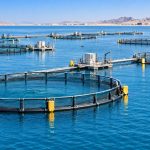
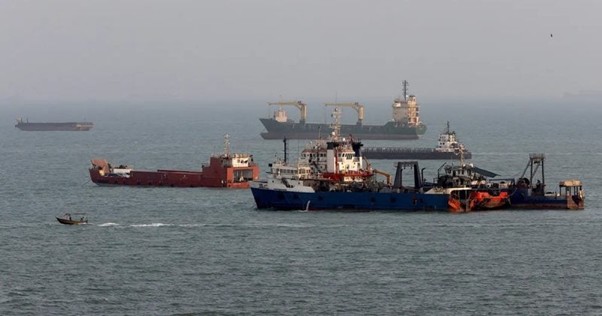
Therefore, it is difficult to understand the region’s crises in isolation from geography. Water, for example, is not merely an environmental or developmental issue; in several cases, it has become part of the equation of national security. Borders drawn by different historical circumstances continue to influence relations between neighboring countries. Furthermore, vital maritime routes, from the Strait of Hormuz to Bab el-Mandeb and the Suez Canal, have ensured the region’s constant presence in calculations of international trade and global energy security.
But geography alone does not explain everything. Over the past decades, the region has witnessed significant economic transformations, some of which have provided ample opportunities for growth, while others have created new challenges. Some countries have benefited from their natural resources to build modern infrastructure and improve living standards, while others have faced profound economic difficulties due to limited resources or the impact of protracted conflicts.
Over time, another problem emerged. Many economies in the region remained tied to a limited number of activities or resources, making them more vulnerable to global fluctuations. At the same time, large numbers of young people entered the labor market in economies that had not grown quickly enough to absorb these demographic shifts. As the gap between aspirations and available opportunities widened, economic issues became a backdrop to much of the social and political tension.
The political dimension has always been the most prominent in discussions concerning the Middle East. However, the problem does not lie in the existence of political disagreements themselves—these exist in most parts of the world—but rather in the absence of frameworks capable of managing them and transforming them into normal political competition instead of protracted crises. This is why many conflicts that began as limited disputes have ended up as long-term confrontations that have affected societies and economies for decades.
The region has also paid a heavy price for the transformation of some local disputes into arenas of regional and international competition. When external interests intertwine with internal divisions, addressing crises becomes more complex, and reaching stable and sustainable settlements becomes increasingly difficult.
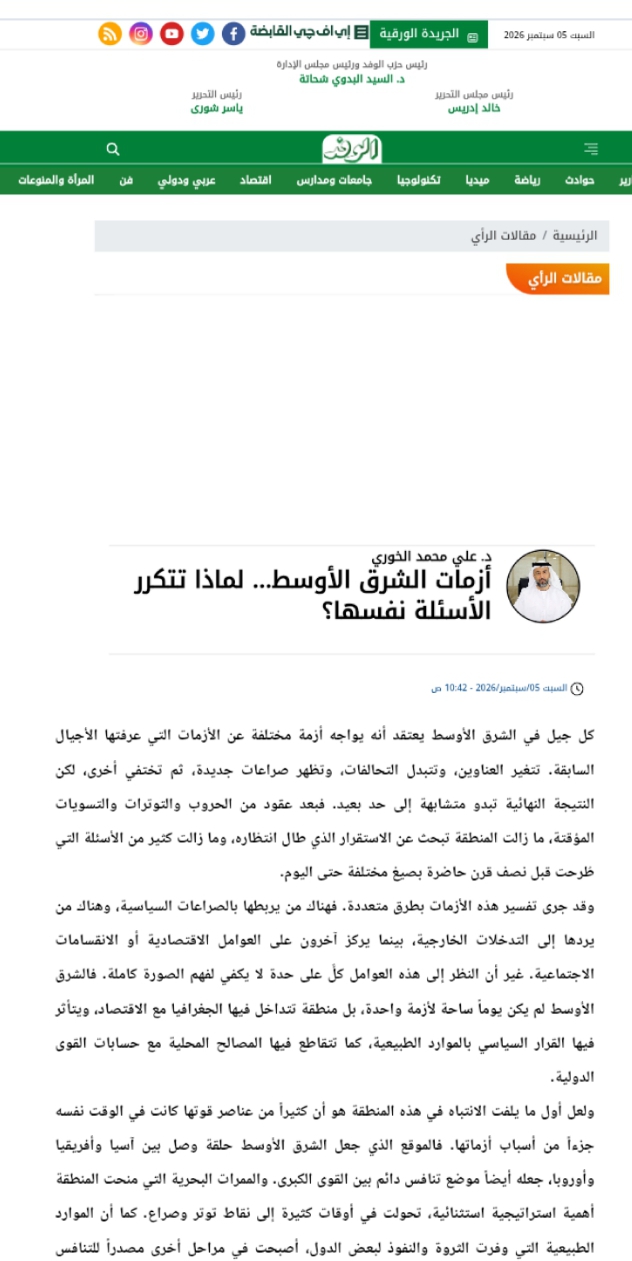
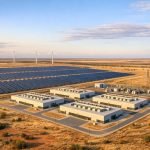
Despite this picture, the continued focus on crises alone does not provide a complete understanding of the region. The Middle East has witnessed significant development experiences in recent decades, and some of its countries have succeeded in building economic and administrative models different from those that prevailed previously. Furthermore, a number of regional economies have developed new sectors in technology, services, industry, and renewable energy, and have begun to ask questions more about the future than about the past.
Perhaps the most crucial question, therefore, is whether the region can transition from crisis management to building shared interests. International experience suggests that relations between states become more stable when linked to long-term economic and development projects, and when cooperation proves more effective than conflict. Consequently, issues such as water, energy, trade, and transportation may prove more influential in shaping regional relations in the future than many of the issues that dominated the landscape in recent decades.
Global economic shifts are also opening new opportunities for Middle Eastern countries. The world is witnessing rapid changes in the energy, technology, and supply chain sectors, areas in which the region possesses significant strengths if properly leveraged. Furthermore, its geographical location, which has been the source of much historical rivalry, can become an even greater source of economic power in a world where trade and logistics connectivity between continents is becoming increasingly important.
Perhaps what distinguishes the current phase is that many of the challenges facing the region can no longer be resolved through traditional means alone. Security is no longer separate from the economy, and the economy is no longer separate from education, technology, and natural resources. Therefore, addressing the crises in the Middle East requires a vision that views these issues as parts of a single picture, not as isolated problems that can be dealt with separately.
Perhaps this is why the region has remained mired in the same questions for so long. The problem has not always been a lack of resources or opportunities, but rather the difficulty of establishing a stable balance between geography, economics, and politics. Therefore, the key takeaway is that the future of the Middle East will be determined not only by its ability to end its current crises, but also by its capacity to build a different pattern of relationships and interests that makes stability a more viable option than conflict, and development a more prominent feature than the crises that have consumed so much of the region’s modern history.