



Abu Dhabi
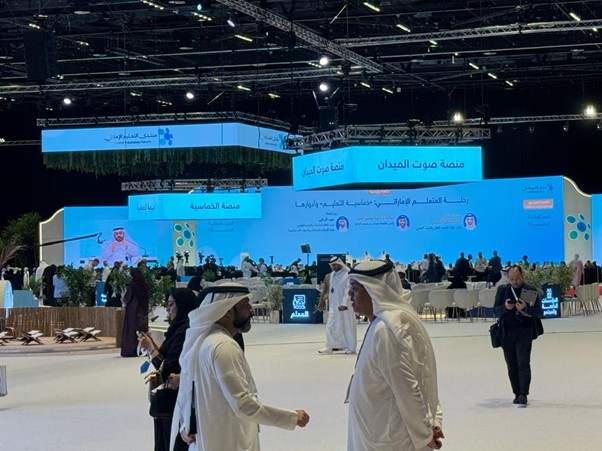
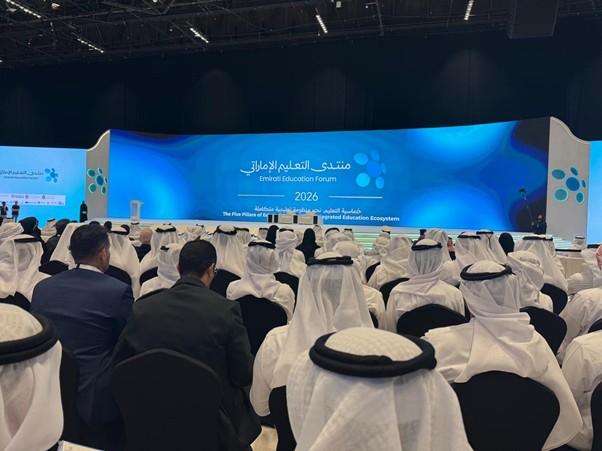
A delegation of leaders from the Arab Federation for Digital Economy attended the first edition of the “Emirati Education Forum 2026”, organized by the Emirates Center for Strategic Studies and Research, on Wednesday, at the Abu Dhabi National Exhibition Centre “ADNEC”, with the participation of officials, experts and specialists in the education sector, to discuss the future of the education system and its development priorities in the United Arab Emirates.
The forum was held under the slogan “The Five Pillars of Education: Towards an Integrated Educational System,” aiming to anticipate major transformations in the education sector, and to discuss ways of integration between the educational institution, the teacher, the family, legislative institutions, supporting bodies and society, in a way that places the student at the heart of the educational process and enhances his readiness for the requirements of the future.
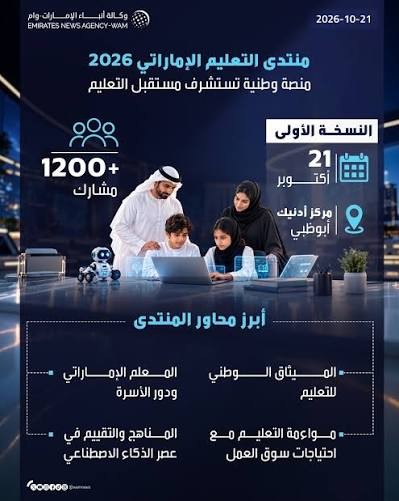
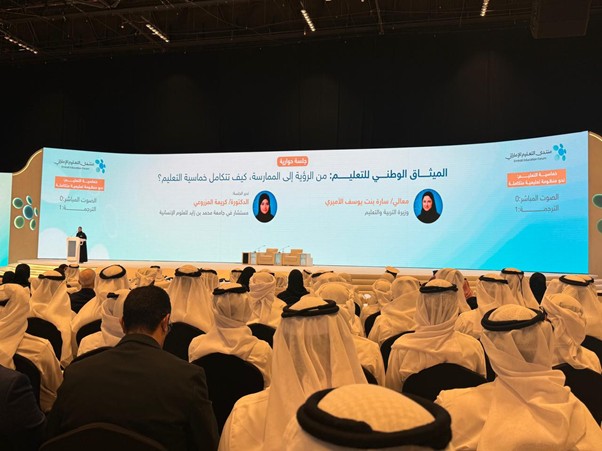
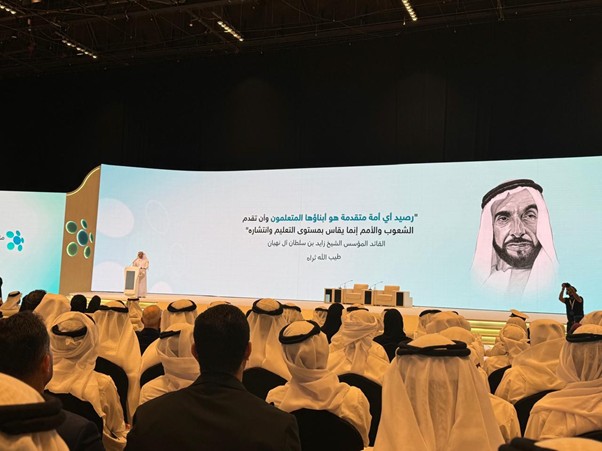
The forum’s program included a number of ministerial dialogues and specialized sessions, most notably the National Charter for Education, and its role in guiding the development of educational policies, curricula and programs, and translating the national vision of the learner into practices that contribute to developing the values, skills and competencies necessary to keep pace with future changes.
The Federation’s leadership’s follow-up on the forum’s work comes within the framework of the Arab Federation for Digital Economy’s interest in the relationship between digital transformation and the development of education, and the opportunities that modern technologies and artificial intelligence provide for modernizing learning methods, developing the performance of educational institutions, and preparing competencies capable of dealing with the requirements of the digital economy.
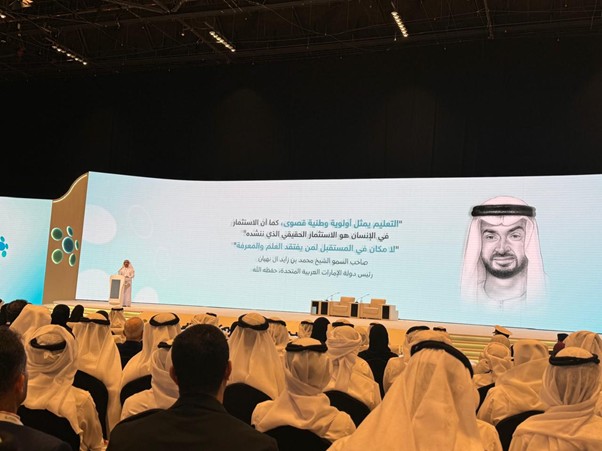
The Federation prioritizes initiatives that link education with capacity building and digital skills development, recognizing the importance of investing in human capital and developing knowledge and skills as fundamental pillars of a knowledge-based economy. Furthermore, monitoring national experiences in education development provides an opportunity to learn about modern trends and exchange perspectives on leveraging technology to prepare future generations for the jobs of the future and the rapidly evolving labor market.