


Source: Al-Wafd Newspaper
Prof. Dr. Ali Mohammed Al-Khouri
Arab countries today do not face a crisis in the number of schools or universities, nor in access to education, as was the case decades ago. Most countries have succeeded in significantly expanding education, and millions of students now enter schools and universities every year. However, the world they will enter after graduation is no longer the same as the world their parents entered years ago.
By 2030, the World Economic Forum predicts that the global labor market will undergo a transformation affecting approximately 22% of current jobs, with 170 million new jobs emerging and roughly 92 million disappearing. Around 39% of the skills required in today’s jobs will also change. These figures are not solely attributable to artificial intelligence, but also to digital, economic, and demographic shifts that are reshaping the global economy at an unprecedented pace.
These figures present Arab education with a starkly different reality. A student starting school this year may be working in a profession that didn’t exist when they entered school, and may be using tools and technologies that haven’t yet been introduced into many classrooms. Meanwhile, development plans in several education systems are still lagging behind the transformations occurring in the global economy.

This issue becomes even more critical when considering the demographics of the Arab region. Arab societies are among the youngest in the world, which presents a significant opportunity to build a more productive economy, but also makes the quality of education more crucial than ever. Every year, hundreds of thousands of young people enter the labor market, and the question is no longer the number of graduates, but their ability to compete in a constantly evolving market.
The indicators of success in education are no longer measured as they once were. Higher enrollment rates or an increase in the number of universities do not necessarily guarantee a workforce capable of leading the knowledge economy. The indicators that companies monitor today are very different; they look for analytical skills, teamwork, communication, data utilization, and the ability to work with modern technologies, rather than simply information storage or retrieval.
Therefore, the fundamental gap within many Arab education systems is no longer between the student and the school, but rather between what the student learns and what they will need a few years later. This gap becomes even more apparent when businesses struggle to attract talent with the necessary digital and cognitive skills, while thousands of graduates continue to search for employment opportunities.
A recent study by the International Labour Organization (ILO) and ESCWA indicates that demand in Arab labor markets is increasingly focused on cognitive, digital, and social skills, with significant growth in IT-related and advanced services jobs. This reflects a rapidly changing nature of the skills employers in the region seek.
Notably, a World Economic Forum report indicates that the Middle East and North Africa (MENA) region will be among the most rapidly changing in terms of skills required for employment in the coming years. Employers in the region anticipate that approximately 46% of current skills will change, a figure higher than the global average of 39%. This means that the pressures on Arab education systems will be greater than those faced by many other regions.
Updating curricula alone does not appear sufficient to address this reality. Education is a system that begins with teacher training, extends through teaching methods and assessment techniques, and culminates in the extent to which schools and universities are linked to the economy and scientific research. International experience has demonstrated that introducing smart devices or digital platforms does not alter educational outcomes if the underlying educational philosophy remains unchanged.
Scientific research is of particular importance in this transformation. Universities leading advanced economies no longer merely award degrees; they now produce knowledge, develop technologies, and collaborate with the private sector to devise solutions to economic and industrial problems. Economies where scientific research remains isolated from development find themselves forced to import knowledge rather than produce it.
The relationship between education and the economy has become more direct than ever before. Investments in artificial intelligence, cybersecurity, advanced technologies, and digital industries will not achieve their goals without the skilled workforce capable of operating and developing them. Therefore, education is no longer a service-oriented matter limited to schools and universities; it has become an integral part of economic growth and national competitiveness policies.
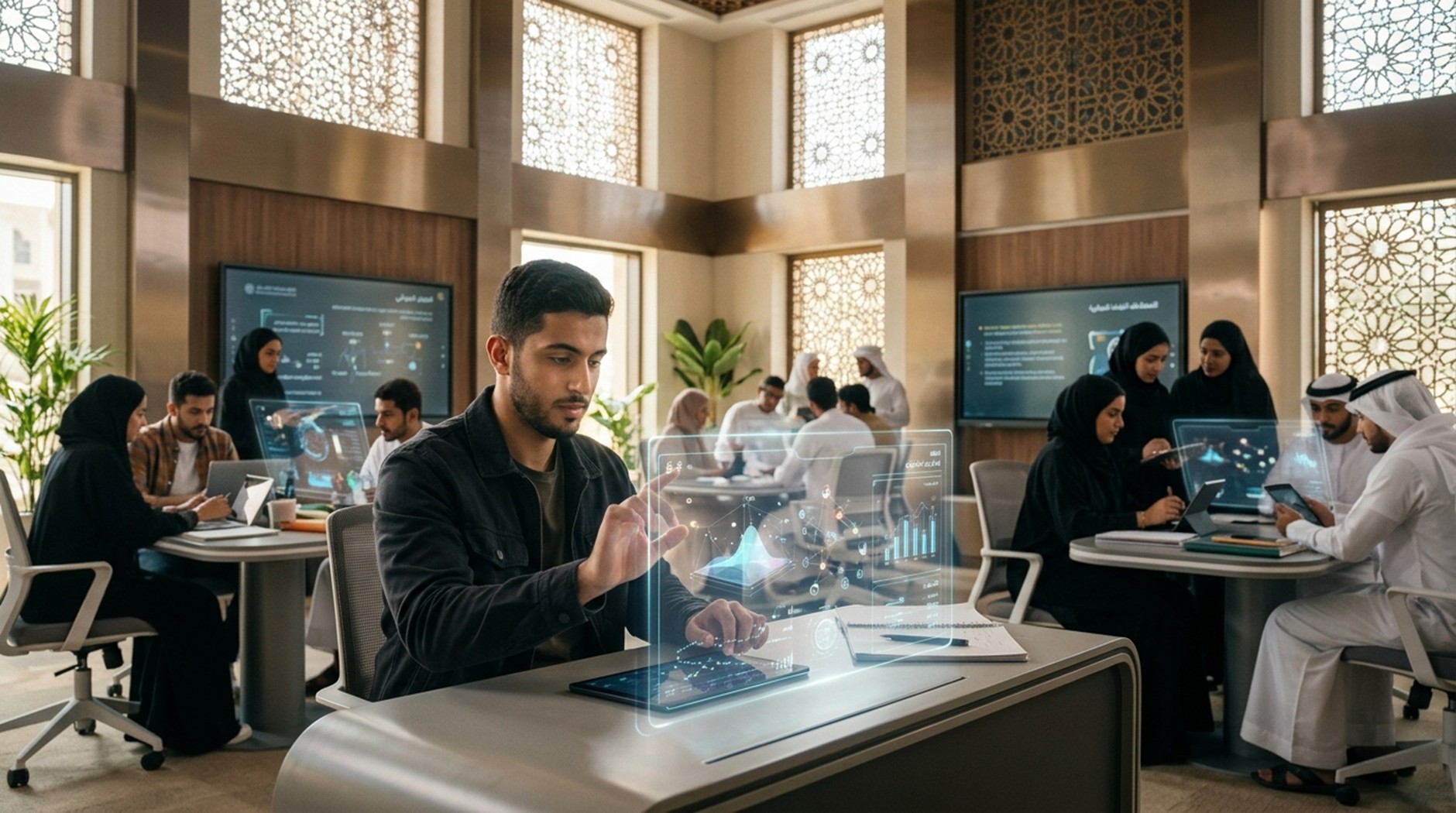
Several Arab countries are now moving in this direction by investing in artificial intelligence, digital transformation, and the knowledge economy, making educational development an economic necessity before it is an educational project. Every advancement achieved in these sectors will increase the need for skilled personnel with skills that differ from those deemed sufficient just a few years ago.
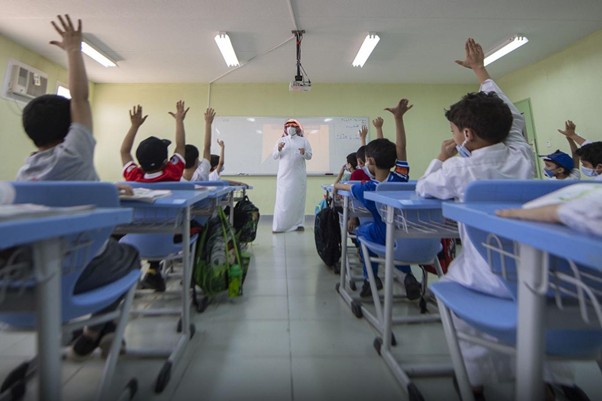
Therefore, the true measure of the success of Arab education in the coming years will not be the number of new schools, the number of graduates, or even the amount spent on education. Rather, it will be measured by its ability to prepare generations capable of lifelong learning, adapting to change, and participating in the production of knowledge and innovation. In a world where skills are changing at an unprecedented pace, education is becoming the most enduring and impactful investment in the future of Arab economies.