




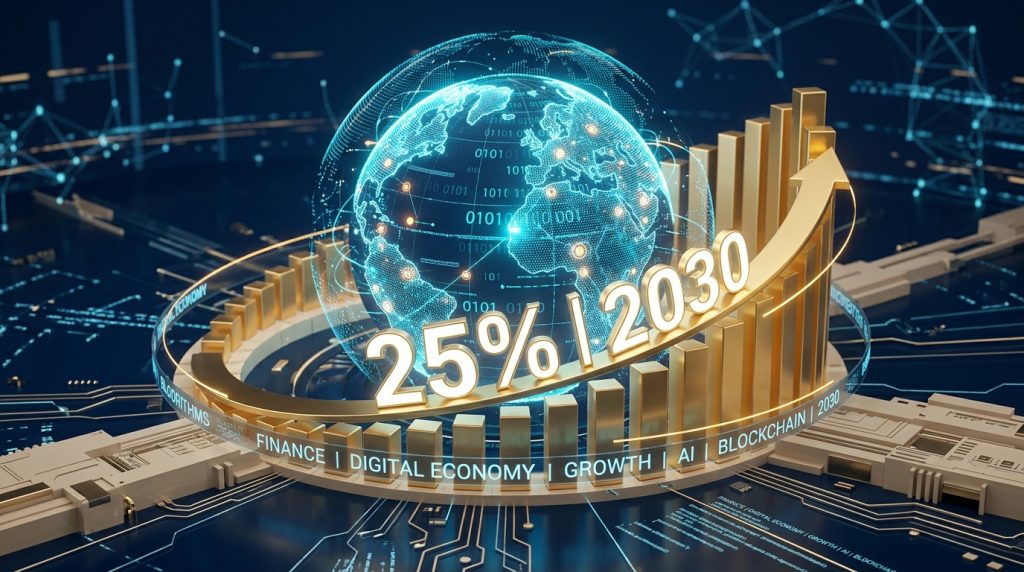
Digital Economy Projected to Jump to a Quarter of Global GDP by 2030
The digital economy is expected to jump to capture a quarter of global GDP by 2030, driven by the AI boom and accelerating digital transformation across various economic sectors.
From 15% to 25%: A Qualitative Leap in One Decade
The digital economy currently accounts for about 15% of global GDP, equivalent to roughly $16 trillion, according to World Economic Forum data. Projections indicate that this share will rise significantly in the coming years, with estimates reaching 25% by 2030.
Børge Brende, President and CEO of the World Economic Forum, affirmed that the digital economy will double in size by the end of the current decade, amid the major transformations led by AI and automation.
AI: The Main Engine of Transformation
This accelerated growth is mainly attributed to the massive expansion of AI applications across various industries. The most affected sectors include:
-
Financial services: Automated fraud detection systems and intelligent financial advisory
-
Healthcare: AI-supported diagnostics and medical data management
-
Manufacturing: Industrial automation and predictive maintenance
-
E-commerce: Recommendation systems and personalized marketing
World Bank data indicate that the digital economy is not only growing but is expected to create about 30 million new jobs by 2030, reinforcing its role as a key driver of employment and economic growth.
A Widening Gap Between Economies
Despite the expected global growth, data reveal stark disparity in digital economy adoption among countries:
| Country/Region | Digital Economy Share of GDP |
|---|---|
| United States | More than 50% |
| China | More than 30% |
| Global average | 15% |
Estimates indicate that the global digital economy share could reach 35–40% by 2030 in some scenarios, reflecting the accelerating pace of digital transformation in both advanced and developing economies.
Implications for the Structure of the Global Economy
This deep transformation carries fundamental implications for the structure of the global economy:
-
Reshaping value chains: Value shifting from physical assets to digital assets and data
-
Changing nature of work: Increased demand for digital and specialized skills
-
Shift in business models: From products to digital services and subscriptions
-
Regulatory challenges: The need for new legal frameworks to address data and digital sovereignty issues
Source
Source: World Economic Forum, World Bank data, and estimates from the Brazilian Digital Institute.