



Cairo
Source: Al-Wafd Newspaper
Prof. Dr. Ali Mohammed Al-Khouri
Arab societies have traditionally viewed education as the natural path to acquiring knowledge and building the future. This understanding was largely sufficient in earlier times, when schools transmitted knowledge, universities prepared graduates for the job market, and careers began within relatively stable professional paths. Today, however, the picture is entirely different.
The child entering school today will live in a world unlike the one we know today. The jobs available to them in twenty years may not even exist, and many of the skills they will need in the future are still developing. These changes come at a time when the global economy is undergoing significant shifts in the foundations of competitiveness and the sources of growth.
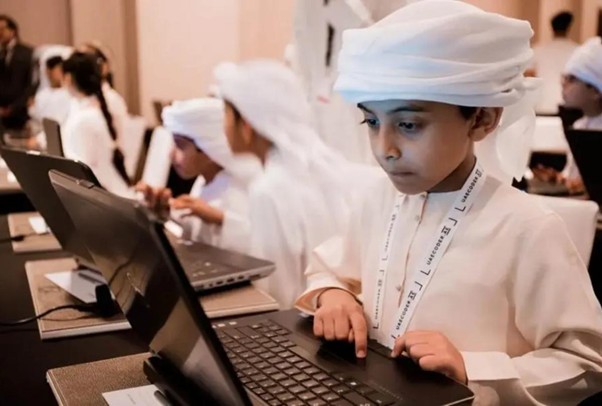
In past decades, natural resources, capital, and infrastructure were the primary indicators of economic strength. Today, however, knowledge and the ability to produce and utilize it are among the most influential factors determining a country’s position in the global economy. Therefore, investing in children’s education is not merely a social or developmental investment, but a strategic one that will determine the caliber of talent that will lead national economies and manage the institutions of the future.
This is where the importance of technology becomes apparent. Smartphones, digital platforms, artificial intelligence, and interactive games have all become ubiquitous in daily life, in ways previously unknown to earlier generations. As a result, children are now learning about the world through these media as much as they do through school and family.
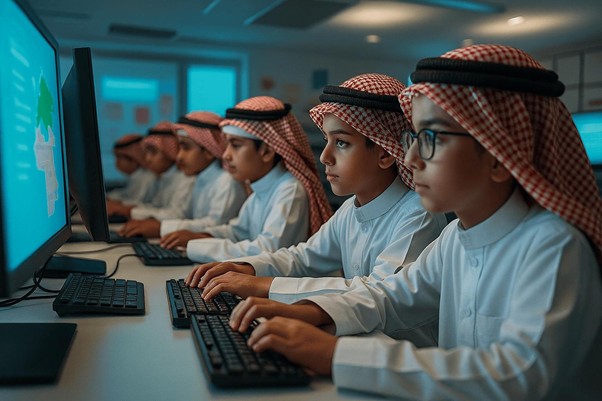
However, simply having technology doesn’t guarantee its usefulness. The difference lies not in the number of available devices or the speed of the internet connection, but rather in the nature of the relationship a child builds with these tools. There is a significant difference between a child who consumes digital content for long hours and a child who uses technology for learning, research, creativity, and problem-solving.
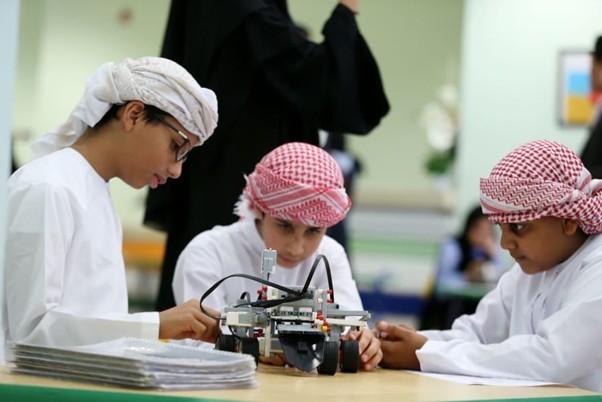
Therefore, the issue appears broader than simply teaching children how to use devices and applications. True skill is no longer about accessing information, as information is now readily available to almost everyone, but rather about the ability to understand, analyze, and use it correctly. This is what makes critical thinking, the ability to evaluate and differentiate, and understanding how to use information effectively increasingly important skills.
Furthermore, the transformations the world is witnessing are imposing different roles on educational systems than they did in the past. Education is now required to build skills that enable individuals to cope with a constantly changing reality. In a world where technology is constantly evolving, the ability to learn sometimes becomes more important than knowledge itself.
Hence, the importance of reviewing how educational curricula are structured becomes clear. Many Arab educational systems have made significant progress in expanding educational opportunities and improving school and university enrollment rates. However, the next phase requires focusing on the quality of skills students acquire and their relevance to the world that awaits them after graduation.
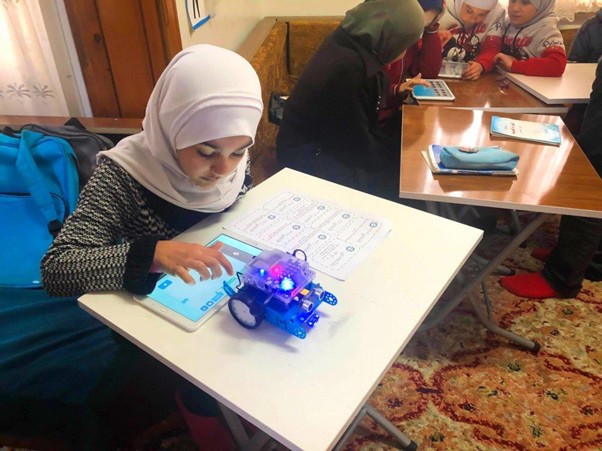
This isn’t just about programming or artificial intelligence skills. Technologies are constantly evolving, and new tools may emerge within a few years, replacing many existing ones. What remains essential are the skills of critical thinking, communication, problem-solving, and self-learning. These skills empower individuals to adapt to change, regardless of how tools and technologies evolve.
The role of the teacher is also undergoing a similar transformation. Teachers are no longer the sole source of information as they once were; their role has become more focused on guidance, skills development, and fostering students’ intellectual curiosity. This shift necessitates ongoing investment in teacher development and training to equip them to navigate educational environments vastly different from those schools experienced just a few years ago.
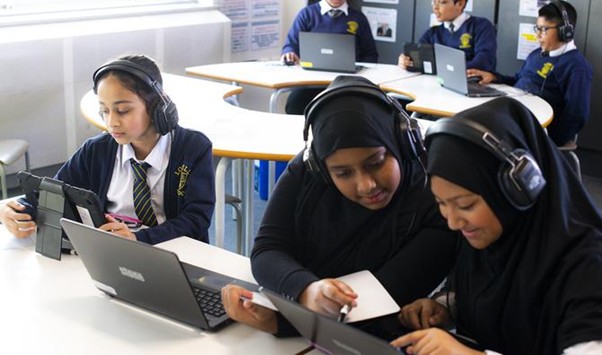
The family’s role remains crucial in this equation. Children spend a significant portion of their time outside of school and are exposed daily to a vast amount of digital content. Therefore, building healthy and balanced relationships with technology doesn’t begin solely in the classroom, but extends to the home, the community, and the child’s surrounding environment.
Furthermore, cultural and awareness policies should not be limited to warning against digital risks, but should extend to teaching children how to interact consciously and effectively with technology, and how to utilize it for learning, research, and creativity. The digital world presents real challenges related to privacy, misinformation, and digital addiction, but it also offers unprecedented opportunities for learning, innovation, and communication. The difference between these two aspects largely depends on the level of awareness and skills a child acquires in their early years.
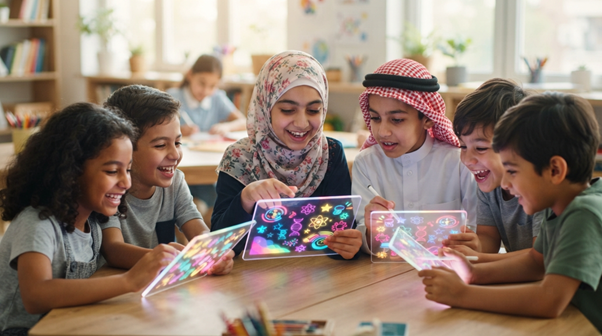
Looking at the experiences of countries that have made progress in technology and innovation, it becomes clear that the starting point was not in laboratories or large corporations, but in schools. These countries realized early on that building a competitive economy begins with building individuals capable of learning, thinking, and adapting to change.
Perhaps this is why it is difficult to judge the success of educational policies based on their immediate results. Some decisions do not show their effects in the first few years, but rather after a whole generation. Developed countries always view their economic and scientific progress as the result of long-term investments in education that enabled their technological and industrial achievements.

Therefore, Arab national strategies must view education as a project that transcends the boundaries of schools and curricula, aiming to bring about a genuine transformation in learning and thinking methods. There is also a growing need to adopt broader educational projects that contribute to a structural shift in culture and thought, focusing on developing capabilities, refining skills, and unleashing creative potential. Consequently, what is built today within schools may well be among the cornerstones shaping Arab economies and societies in the coming decades.