




The new Xiong’an region is not just a new Chinese city, it is a living laboratory to embody the future of smart cities. In a move that reflects an exceptional ambition, this region in northern China has become a major destination for artificial intelligence companies, attracting talent and investment with supportive policies and a clear vision for a future in which technology is interconnected in all the details of life.
An exceptional environment for startups
What distinguishes Xiong’an is not only the volume of investments, but the speed of decision-making. Startups here get funding before they prove the viability of their products in the market. For example, Stable AI received an initial investment of 20 million yuan (about $2.94 million) in the valuation of 300 million yuan, at a time when it had only initial theories and research findings. The company’s vice president described this support as a key turning point that enabled it to move from concept development to commercial growth.
This efficiency in government support is also reflected in the speed of transaction completion. Zhang Tianang, CEO of Stable AI, says the initial investment was completed in less than three months, including the period of assessment, due diligence and payment completion, which exceeded their expectations. This speed makes Xiong’an an attractive environment for tech companies looking for flexibility in a competitive environment.
Industrial complex growing rapidly
Since the opening of the Xuyongan Artificial Intelligence Complex in June 2025, it has shifted from a few offices to an integrated ecosystem of more than 60 specialized companies. The complex brings together companies that work side by side, creating integration in the value chain. Companies such as SimpleAI, which specialize in big data models, and Huaqing Zhiyan, which specializes in large language models, operate in a convergent location, providing them with opportunities to collaborate and provide common services to customers.
“We are focusing on basic research and innovation, and we are collaborating with Tsinghua University and research institutions to build public R&D platforms,” says Choi Hang, an official at the complex. This academic-industrial collaboration is the cornerstone of Xiong’an’s strategy.
Concrete technical achievements
Xiong’an’s ambitions were not limited to attracting companies, but sought tangible technical achievements:
The LimiX model of big data was developed by Wenzhun Intelligence in collaboration with Tsinghua University, the first public model in China to process structured data. It has been applied in more than 60 industrial scenarios, improved the accuracy of annual gas demand forecasts from 76 percent to 93 percent, and increased production efficiency in industries such as steel by six times.
Anying’s mobile brain-testing device: developed by a startup in Xiong’an, relies on artificial intelligence and microwave sensor technologies. The device aims to deliver screening services to ambulance and emergency sites for stroke patients, to reduce the period of time between the appearance of symptoms and the start of treatment.
Platform for International Cooperation
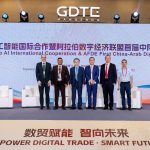
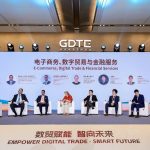
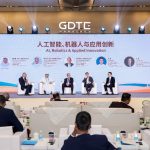
In March 2026, Xiong’an hosted the “Artificial Intelligence+” Forum at the Chongguantson Forum, with more than 400 experts, including academics and representatives from international companies such as Intel, Nvidia and IBM. International participants praised Xiong’an’s vision, with Thomas Roche, of United Waterwesh, describing the city as “built for the future with all technologies in mind, not only in modernization but in protecting the environment and ensuring work and life balance.”
Ambitious regional framework
The vision of artificial intelligence is not limited to Xiong’an alone, but extends to a broader regional framework. The Hebei Provincial Government has launched the “Artificial Intelligence+” action plan (2025-2027), which aims to integrate the technology into eight major industries, including steel, chemicals, automobiles, robotics, renewable energy, agriculture, education, and health care. This plan assigns a pivotal role to Chiungan as a leading region in innovation, while accelerating the construction of a public research and development platform for artificial intelligence and a specialized research institute.
Source: CGTN, China Daily, State Council Information Office, 36Kr, Renmin Xiong An platform, and reports from specialized news agencies.