




Source: Al-Wafd Newspaper
Prof. Dr. Ali Mohammed Al-Khouri
Throughout history, major economic transformations have been linked to the discovery of new areas of human activity. The seas opened up global trade routes, the Industrial Revolution reshaped production, and then the digital economy changed how people communicate, work, and conduct business. Today, the world stands at the threshold of a new era, one whose boundaries are no longer limited to land, sea, or cyberspace, but extend far beyond Earth’s atmosphere, where a new economy is taking shape at an unprecedented pace.
Space is no longer the exclusive domain of government space agencies or scientific missions, which once symbolized competition between superpowers. In recent years, it has transformed into one of the fastest-growing economic sectors, with private companies, investors, and investment funds becoming key players. The World Economic Forum estimates that the global space economy, currently valued at nearly $630 billion, could exceed $1.8 trillion by 2035—a growth rate far surpassing that of traditional economic sectors.
This growth is not due to an increase in the number of spaceflights, but rather to the changing nature of space itself. What was once considered an expensive scientific project has now become part of the infrastructure upon which the global economy depends. Communications, navigation, banking, aviation, supply chains, precision agriculture, disaster management, and weather forecasting all rely, to varying degrees, on satellites and data from space.
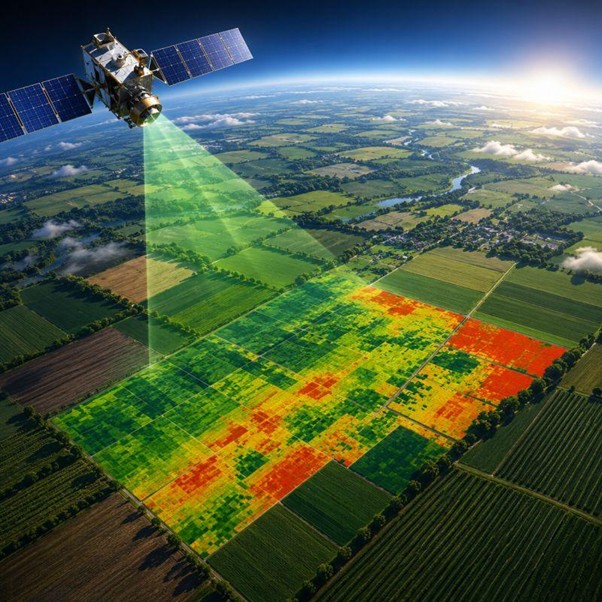
Therefore, the economic value of space is generated not so much in orbit as on Earth. A satellite that captures an image of a crop can help reduce water and fertilizer consumption and increase yields. Data that tracks the movement of ships and aircraft supports global trade and port management. And space navigation systems have become part of daily life, from map applications on smartphones to the management of transportation networks and logistics in the world’s largest economies.
This indicates a significant shift in the nature of space investment. In past decades, value was concentrated in building the rocket or launching the satellite. Today, however, the real value lies in the applications and services built upon this infrastructure. This is the same idea that emerged in the digital economy; it wasn’t the internet itself that became the primary source of value, but rather the companies and services that arose from it.
Therefore, global competition is no longer about possessing the capability to launch rockets, but rather about building an integrated economic system that begins with scientific research, passes through industry and advanced technologies, and ends with companies capable of transforming space data into economically valuable products and services. For this reason, the private sector has become a major driver of this transformation.
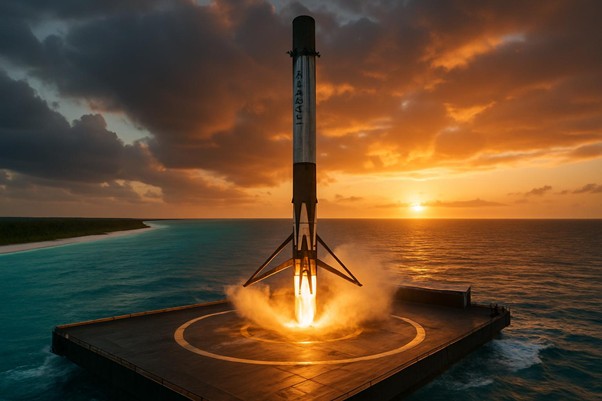
SpaceX exemplifies this shift. The development of reusable rockets has drastically reduced launch costs, opening the door for thousands of startups to enter the space economy. Other companies, such as Amazon through its Kuiper Project, and Earth observation and data analytics firms, have also been driven to expand their investments in space services, rather than solely focusing on manufacturing vehicles and rockets.
At the same time, governments have begun to view space as a productive sector no less important than energy, industry, or technology. The United States, China, the European Federation, India, Japan, and South Korea are all investing heavily in developing space industries, not only for scientific reasons, but also because they see this sector as a source of economic growth, job creation, innovation, and technological dominance.
The effects of the space economy extend far beyond the borders of major industrialized nations. Developing countries have become major beneficiaries of its services, whether in improving agricultural productivity, managing water resources, urban planning, forest monitoring, or responding to natural disasters. Satellites have also enabled communication and internet services to reach areas that were isolated for decades, contributing to the expansion of economic activity and improving access to education, healthcare, and financial services.
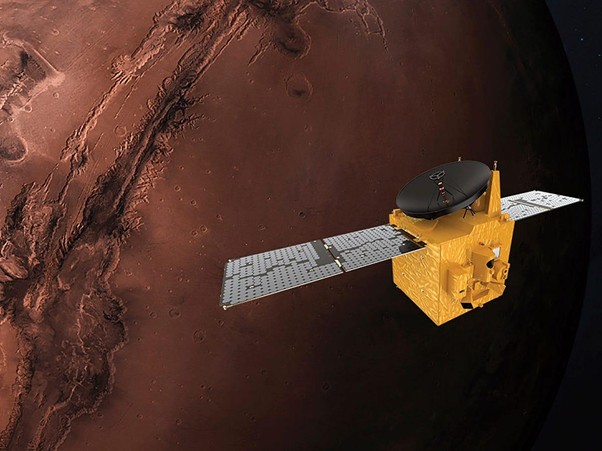
These transformations open up significant opportunities for Arab states. While the region does not yet possess a space industry comparable to major economies, it has valuable assets upon which to build. These include growing investments in space programs, advanced infrastructure in communications and energy, capital capable of long-term investment, and a strategic geographic location that makes the region a vital hub for communications, navigation, and logistics.
However, participating in the space economy doesn’t necessarily mean manufacturing rockets or sending astronauts. The greatest value can be derived from developing applications that rely on space data, and from establishing companies specializing in satellite image analysis, natural resource management, smart agriculture, logistics, cybersecurity, and artificial intelligence. These sectors represent the fastest-growing and most valuable part of the modern space economy.
Universities and research centers will also play a crucial role in this transformation. The space economy relies on advanced sciences, including artificial intelligence, microelectronics, materials science, robotics, advanced computing, and data analytics. Every investment in these fields has repercussions for other sectors within the economy, even those not directly related to space.
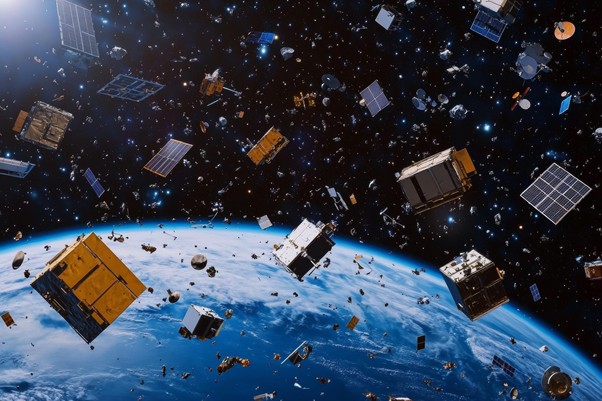
Conversely, this economy faces increasing challenges. The rapid expansion of satellite launches has led to a surge in space debris, threatening the safety of orbits and space assets. Furthermore, the absence of internationally agreed-upon rules regarding the exploitation of space resources and mining rights on asteroids and the Moon raises legal and political questions that will become increasingly important as extraterrestrial commercial activity expands.
The issue of benefit distribution is also prominent. If the space economy becomes a domain monopolized by a limited group of countries and companies, the technological gap could widen even further. However, if international institutions succeed in establishing rules that ensure open markets, encourage innovation, and facilitate knowledge sharing, this sector could become one of the biggest drivers of global development in the coming decades.
For the Arab world, the opportunity lies not in trying to replicate the experiences of major powers, but in carving out a clear position within the global space economy. Entering this sector requires building the necessary capabilities, from scientific research, engineering education, artificial intelligence, and data analysis, to developing applications and services that rely on space infrastructure. The more successful Arab economies are in directing their investments toward these areas, the better equipped they will be to integrate the space economy into their productive systems and build a new sector that adds real value to their economies in the coming decades.