



Forum of AI and Digital Policy Leaders in Arab Countries
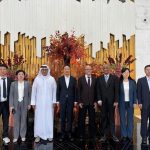
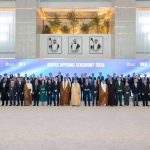
In partnership with the United Nations Development Programme (UNDP) and Ooredoo Group, the Doha Institute for Graduate Studies hosted the Forum of AI and Digital Policy Leaders in Arab Countries, which spanned two days and examined building inclusive and sustainable digital economies across the Arab region, with the participation of 85 experts and officials representing 15 countries in the communications sector, in addition to a number of Arab communications ministers.
Forum Opening and Official Statements
The forum’s proceedings began on Tuesday, September 1, 2026, organized by the Doha Institute for Graduate Studies in partnership with UNDP and Ooredoo Group, and in cooperation with the Global System for Mobile Communications Association (GSMA) and Women in AI.
In his opening remarks, the President of the Doha Institute for Graduate Studies, Abdul-Wahab Al-Afandi, expressed his aspiration for the forum to achieve its goals in addressing the most prominent challenges of the current phase, foremost among them possessing digital technology and harnessing it to serve the region’s economies. He noted that the forum combines knowledge and application and builds on the importance of participants’ roles in tackling complex challenges that require building balanced governance frameworks combining regulation with a push toward innovation.
For his part, Biplove Choudhary, Technical Representative and Head of the UNDP Office in Qatar, affirmed that digital transformation achieves great impact when connectivity services, public digital infrastructure, and emerging technologies are integrated within a comprehensive policy environment. He added that the digital policy framework provides countries with a practical tool to identify gaps and set priorities according to the specificity of their national contexts.
Hilal Mohammed Al-Khalifi, Chief Legal and Regulatory Officer at Ooredoo Group, said that digital transformation is capable of achieving significant economic and social value for the region, but technology alone is not enough; it requires appropriate policies, a supportive regulatory environment, and public-private cooperation. He added that the priority at the current stage is moving from setting frameworks to implementation.
Ministerial Session: Visions and Challenges
The forum’s proceedings began with an opening session titled “Building Inclusive and Sustainable Digital Economies in the Arab Region,” which discussed the future of digital transformation and the policies needed to promote sustainable economic growth and expand digital inclusion opportunities.
The session was attended by a number of Arab ministers and officials: Fadi Makki, Lebanon’s Minister of State for Administrative Development Affairs; Ziad Abdul-Warith Al-Hajjaji, Libya’s Minister of State for Digital Economy and Artificial Intelligence; Abdul-Razzaq Al-Natsheh, Palestine’s Minister of Communications and Digital Economy; along with Elena Silin, Regional Programmes Manager at UNDP, and Jawad Abbassi, GSMA’s Regional Director for the Middle East and North Africa.
Digital Policy Framework: From Vision to Implementation
The forum represents the next phase of the “Digital Policy Framework for Arab Countries” (DPF), launched by UNDP, Qatar’s Ministry of Communications and Information Technology, and Ooredoo Group at the MWC Doha conference in November 2025.
The framework focuses on three interconnected areas: networks and connectivity; data and public digital infrastructure; and intelligent systems and applications, including the responsible use of AI in health, education, agriculture, and public services.
Over the two days, participating countries learned how to assess their digital maturity using the digital policy framework, identified priority reforms, and began the journey of developing national digital policy roadmaps.
Remarks on AI and the Digital Economy
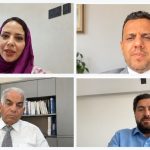
In remarks to Al-Araby Al-Jadeed on the sidelines of the forum, Lebanon’s Minister of State for Administrative Development Affairs, Fadi Makki, said that AI should not be treated as a project separate from digital transformation, but as part of an integrated governance system. He explained that digital transformation is an integrated process that starts from the basics, including digital infrastructure, data, digital identity, and legislation that builds trust.
For his part, GSMA’s Regional Director for the Middle East and North Africa, Jawad Abbassi, said that there are important success stories in Jordan, Egypt, Saudi Arabia, and the UAE, noting Arab companies that have managed to reach investors and markets beyond their countries’ borders. He added that the Arab region is still in many respects a consumer of technology rather than a producer of it, stressing the importance of developing the educational, legislative, and economic ecosystem to align with the requirements of the digital economy.
Development Gap and Opportunities
Arab countries stand before a historic opportunity to reshape their economies through digital transformation and AI, but the success of this transformation will depend on their ability to overcome gaps in infrastructure, skills, and economic inclusion. International Telecommunication Union data indicate that about 70% of the population of Arab countries uses the internet, compared to 74% globally, while mobile broadband coverage reaches about 95% of the population.
The International Monetary Fund indicates that Gulf Cooperation Council countries have come close to closing the digital gap with advanced economies in a number of digital access and usage indicators, while the UAE, Saudi Arabia, and Qatar occupy advanced Arab positions in digital infrastructure and e-government services.
The region, if it succeeds in closing the skills gap and facilitating the movement of capital, data, and digital services among Arab countries, has the opportunity to transform its market of more than 400 million people into one of the largest emerging digital markets in the world.
Sources
Al-Araby Al-Jadeed – “Qatar: International Forum Discusses AI and Digital Policies in Arab Countries” (September 2, 2026)
Gulf Times – “Ooredoo Group, UNDP, DI convene Arab digital policy leaders” (September 1, 2026)
UNDP – “UNDP, Ooredoo Group and Doha Institute for Graduate Studies convene Arab digital policy leaders” (September 2, 2026)
Qatar News Agency (QNA) – Reports on AI forums in Qatar (June 2026)
Arab Union for Digital Economy – “Artificial Intelligence in the Arab World”